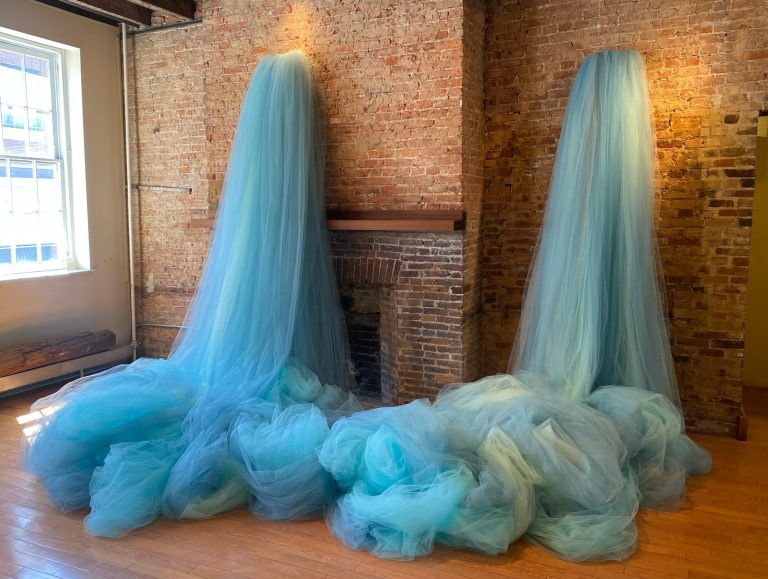
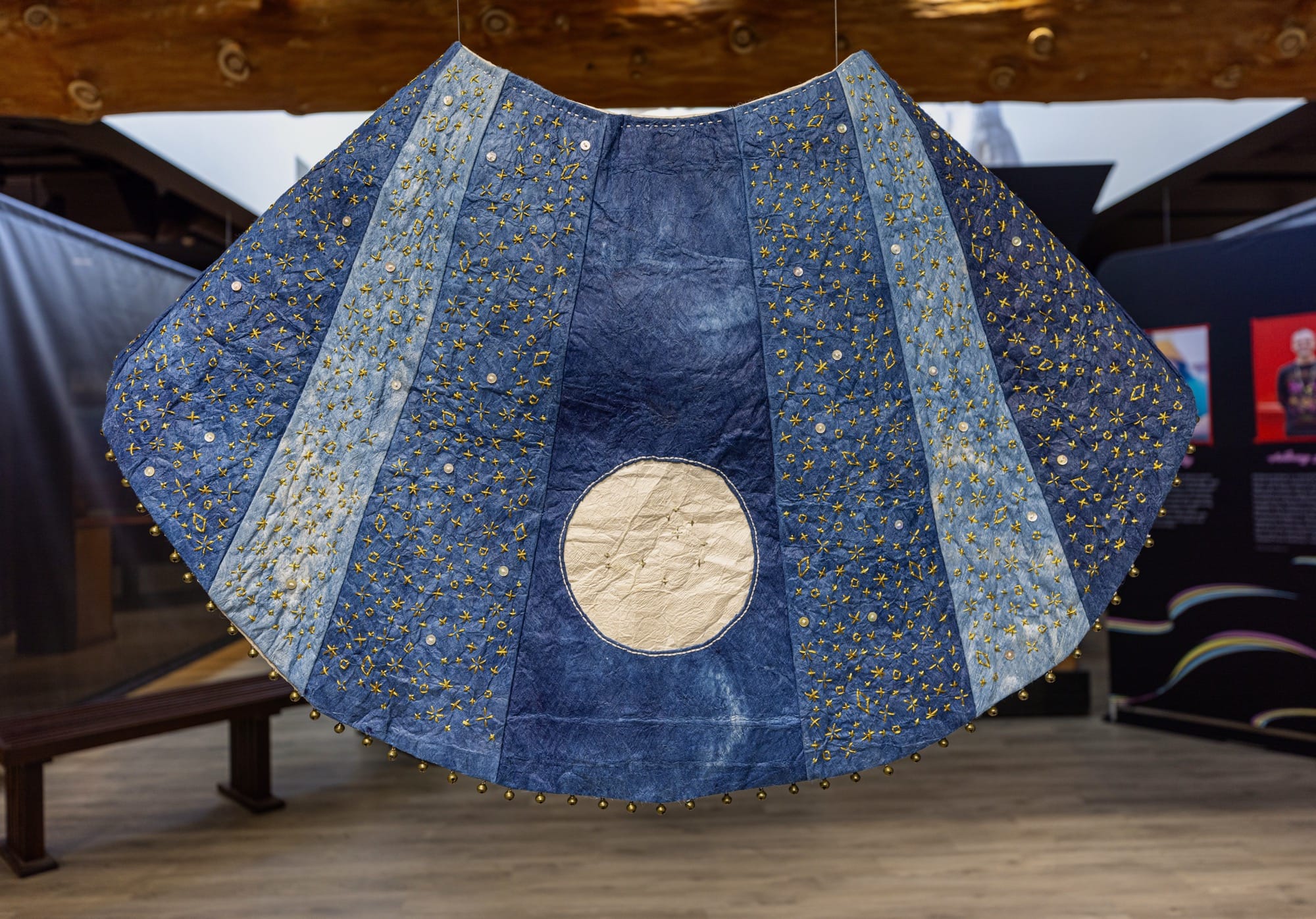
Reviewing a Hawaiian ancestral custom, Lehuauaka reimagates Kapa in daring textile works – colossal
[ad_1]
“My favourite factor about or It’s that it’s concurrently ancestral, historic and modern, ”says Lehuaukea (Kanaka Maoli), who not too long ago acquired the Walker Youngerd Basis subsidy for home rising artists. Kapa Kapa, Hawaiian indigenous observe observe, makes use of the interior bark of get upor paper day tree to create clothes and textile. For Lehuaukea, the method is the muse of a observe rooted within the artist’s Hawaiian line and in materials traditions.
Struggling fibers adequate to create canvas requires an intensive technique of soaking labor for bark. By means of a tough strategy of beating and stretching with devices comparable to If you’re withA skinny, foldable cloth seems. “It’s a very malleable materials that displays the present state of the pure surroundings and the encircling neighborhood and the private hand of the producer,” says Lehuauaka for Colossal. “It requires a degree of persistence and perseverance, additionally paying particular consideration to the character of the bark and pigments you’re employed with.”

Kapa is derived from historic Polynesian practices – it’s known as Tapa In different elements of the Pacific – and the Hawaiians have been normally developed by incorporating the watermarks, pure pigments and fermentation.
Historically, Kapa owned each sensible and religious qualities, as a result of it was used for day by day clothes and sheets, but in addition served as a hand provider or therapeutic. When the US annexed controversial the territory and the import of cotton was amplified on the finish of the 19th century, the observe disappeared.
Lehuauakea’s curiosity in Kapa appeared when their household moved to Oregon after they have been younger. Over time, the artist felt increasingly more disconnected by their residence and has sought a approach to conjure a reference to their Hawaien ancestors.
“I remembered that I came upon about Kapa as a baby and the way I used fashions to inform tales, so in my yr of college juniors I realized tips on how to carve” ohe kāpala or conventional carved bamboo printing instruments used for completed kapa, “says the artist. Then it was to learn to make the cellary itself, with the assistance of the Wesley Sen’s craftsman and mentor, stimulating Lehuauaka’s ardour for the surroundings.

Fascinated by the potential to proceed not solely a Kanaka Maoli artwork type, honored by time, “but in addition to expertise and push the bounds of the fabric, Lehuauakea makes large-scale installations, hand-sewn clothes, works suspended with combined media, and two-sized compositions” Kapa ”. The artist continues:
As an indigenous cultural practitioner and artist, I feel it is very important have a strong foundation within the conventional data of the observe earlier than making an attempt to develop on it or to experiment with extra modern expressions, as a result of I’m not distinctive on this work; I merely depend on a practice that has been transmitted by way of a number of generations earlier than me and I can solely hope that I’m able to encourage future generations to proceed it.
Lehuauacea is at present engaged on solo exhibitions on the Heart for Modern Artwork Santa Fe and Nunu High quality Artwork in New York, exploring concepts across the native Hawaiene cosmology, the heavenly cycles and the connection between the Hawaian language. Discover extra on the artist’s website.


[ad_2]
Source link