Buried for nearly 2,000 years, a monumental Dionisian fresco sees the sunshine of day in Pompeii – Colosal
[ad_1]
When Mount Vesuvius broke out in 79 CE, the big Explosion buried town of Pompeii in a tremendous 19 meters of ashes and particles. (A latest research concludes that within the neighboring metropolis of Herculaneum, the explosion was so intense that it has vitiated the mind of a younger man.) Because the excavations of the realm started in 1748, the invention after the invention revealed quick, mounted and complicated particulars on how life was nearly 2,000 years in the past.
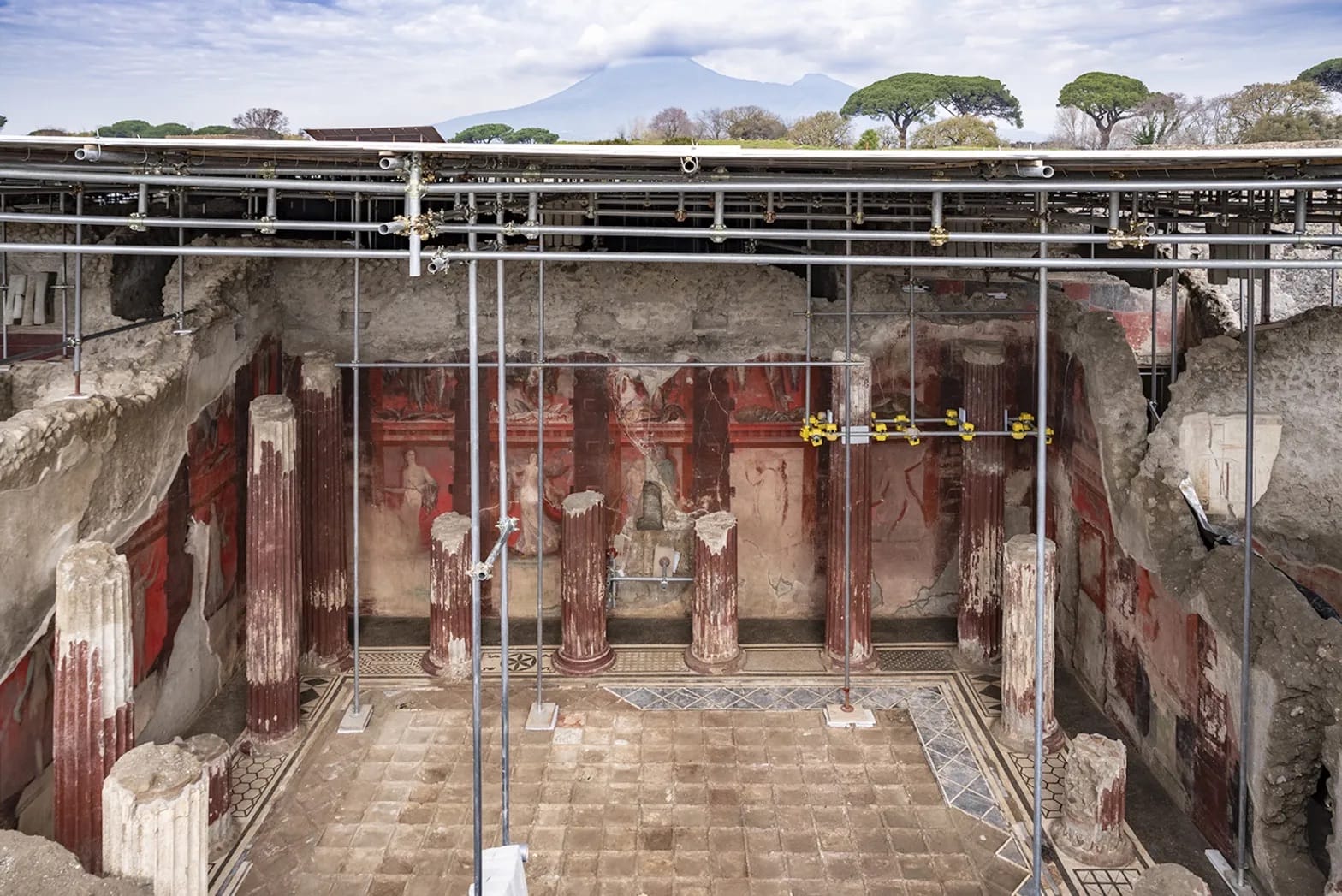
When Vesuviu buried every thing, the ash supplied a unprecedented protecting protection for frescoes and delicate buildings, akin to a latest expansive fresco in a banquet room that “sheds gentle on Dionysus’s mysteries within the classical world,” says an announcement from the Ministry of Tradition in Italy.

Broadly painted frieze archaeologists are known as “Thiasos’s Home” present Dionysus’s procession, the god of wine, together with satiri and bacchantes-known and that Maenade-which are depicted concurrently as dancers and hunters.
Within the heart of the composition, a girl is accompanied by Silenus, an older attendant and tutor of Dionysus, who holds a flashlight. The lady “signifies that it’s an initiation,” says the Ministry of Tradition, “a mortal girl who, by way of an evening ritual, is to be initiated within the mysteries of Dionisos, the God who dies and is reborn and guarantees the identical for his followers.”
Stretching three partitions of a fourth constructing had been opened in a garden-in the so-called Regio IX district, the portray depicts a fridge generally known as “megalography”, derived from Greek for “large portray” and which features a cycle of virtually life-sized figures. Archaeologists meet the fresco as much as about 40-30 BC, nearly 100 years previous till Vesuviu broke out.
Archaeologists often classify Roman portray and pump in 4 intervals or chronological kinds: inception (structural), architectural, decorative and complicated. Every model has tailored components from the earlier interval to generate new causes and tendencies.

The brand new instance of the banquet room is taken into account to be an indicative of the second model wherein the numbers or Tableaux are categorised within the Fake architectural niches and the Tompe-L’Il compositions. Curious for artwork historians, all figures are described on the pedestals “as if they’re statues,” says the Ministry of Tradition, “on the identical time, their actions, pores and skin and clothes make them look very alive.”
Analysis within the Regio IX district, which covers about three,200 sq. meters, began two years in the past. To this point, the excavations of the fully buried block has revealed two atrium homes – already partially explored within the 19th century – as well as two workshop homes, some residential rooms of a big domus, a black room with Saga Troieni and an altar with a uncommon blue background. Greater than 50 new rooms have been recognized and there’s nonetheless lots to find.
As archaeologists step by step detach to the traditional pile of volcanic detritus, the brand new discoveries akin to a meals stand and a primitive pizza proceed to look and encourage our understanding of historic Roman life. The location is open for public visits and you may discover extra on the archaeological park of the Pompeii web site.


[ad_2]
Source link