From Poland to Brazil: The Architectural Journey of Jorge Zalszupin
Jorge Zalszupin, born Jerzy Zalszupin in Warsaw in 1922, is a figure whose legacy transcends borders, marrying European influences with Brazilian vibrancy. His life journey, punctuated by the upheavals of World War II and the quest for a new beginning, showcases how architecture can reflect and shape cultural identities.
As a young man, Zalszupin was deeply influenced by the architectural works he encountered, particularly the designs of Le Corbusier. His early education was disrupted by the war, prompting his family to flee to Romania in search of safety. After completing his architecture studies in Budapest, Zalszupin moved to France, where he contributed to the post-war reconstruction of Dunkirk, honing his skills in a challenging environment.
In 1949, Zalszupin set his sights on Brazil, drawn by the promise of a fresh start. After gaining citizenship, he adopted the name Jorge, symbolizing his new life. It was in São Paulo that he found a canvas for his creativity, blending the rational design principles of Europe with the bold, organic forms inspired by Brazil’s rich natural resources.
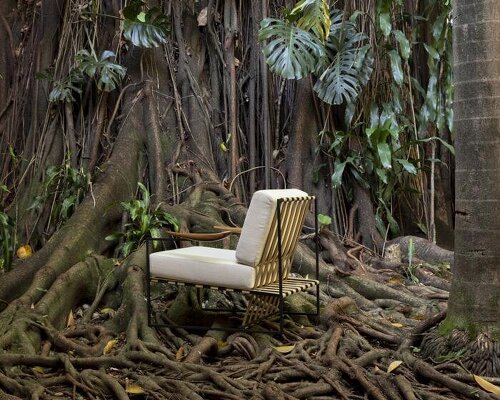
In the subsequent decades, Zalszupin established himself as a prominent figure in Brazilian Modernism. His furniture studio, L’Atelier, became renowned for its innovative use of materials like curved laminates and plastic. He employed a workforce of over 200, producing iconic pieces such as the Dinamarquesa armchair and the Tea Trolley, which exemplified the mid-century modern aesthetic with their elegant lines and functional designs.
Lissa Carmona, CEO of ETEL and curator of Casa Museu Zalszupin, has been instrumental in preserving Zalszupin’s legacy. She reminisces about her collaboration with him in the late 1990s, where their shared passion for design led to the curation of exhibitions such as “Warsaw – São Paulo – Milan: Jorge Zalszupin’s Brazilian Modernism.” The museum, located in Zalszupin’s former home, serves as a testament to his life and work, highlighting the interplay between his Polish roots and Brazilian experiences.
Carmona emphasizes the importance of Zalszupin’s architecture, noting how his home reflects a synthesis of cultures, featuring European wood alongside Brazilian materials. This unique blend is indicative of his broader design philosophy, which championed both functionality and aesthetic elegance.
His contributions extended beyond furniture design; in 1962, Zalszupin was commissioned by Oscar Niemeyer to furnish Brasília, Brazil’s newly established capital. This pivotal project further solidified his status as a key player in the architectural landscape of Brazil.
Today, Casa Museu Zalszupin stands as a living archive of his work, offering insights into mid-20th century Brazilian modernism and the personal narrative of a man who navigated two worlds. Carmona underscores the museum’s role in not only preserving Zalszupin’s designs but also promoting a deeper understanding of Brazil’s architectural heritage.
Jorge Zalszupin’s journey from the devastation of war-torn Europe to becoming an emblematic figure in Brazilian architecture is a story of resilience, creativity, and cultural fusion. His legacy continues to inspire new generations of designers and architects, illustrating the profound impact of personal history on artistic expression.
Source: www.designboom.com