A Kiwi's Revelations on Tokyo's Sweltering Summers
By Editor • August 23, 2026 • 3 min read
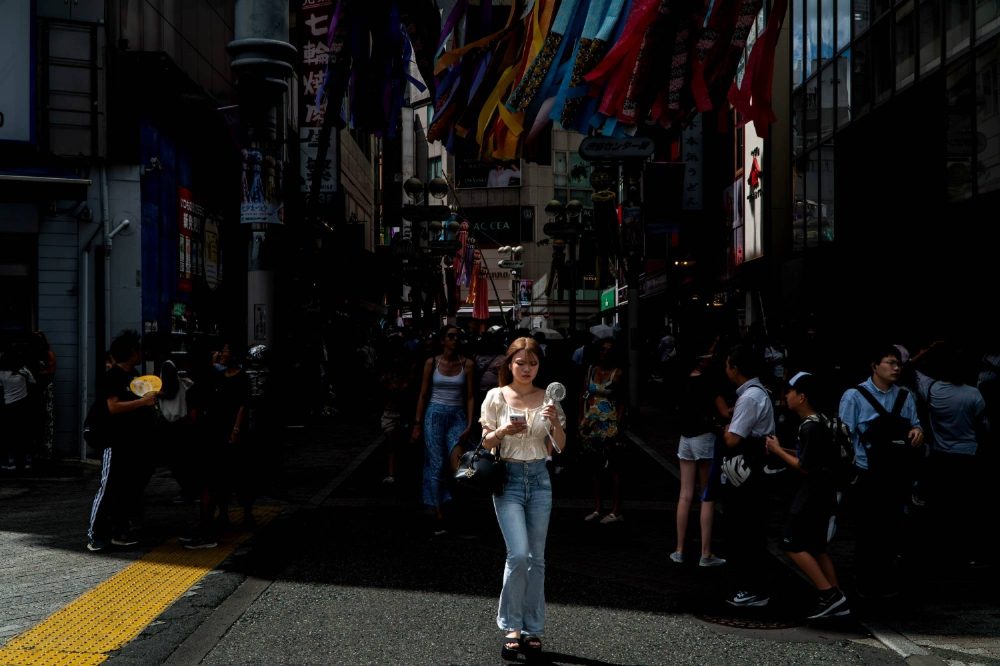
As I wandered through a sunflower field in Kiyose on what turned out to be Tokyo's hottest day of the year, I found myself grappling with an uncomfortable truth: the sweltering heat was nearly overwhelming. With the temperature soaring to 38 degrees Celsius, I was drenched in sweat, desperately seeking patches of shade while my handheld fan proved to be an inadequate ally against the oppressive warmth. Yet, curiously, the locals around me seemed unbothered, going about their day with relative ease.
People nearby were dressed in long sleeves and trousers, some posed for photos, while an elderly gentleman tended to his vegetable patch. Unlike my own struggle, they appeared to have adapted to the sweltering conditions. Having spent my childhood in Tokyo, I began to question whether the city’s summers had changed or if I had simply forgotten how to cope with them.
According to Kazutaka Oka, who leads the Climate Change Impacts Monitoring Research Section at the National Institute for Environmental Studies (NIES), Tokyo's average temperature has risen by approximately 3 degrees Celsius over the past century, with climate change contributing one degree and the urban heat island effect accounting for the rest. This phenomenon occurs as concrete and asphalt absorb and slowly release heat, exacerbated by air conditioning systems that further elevate outdoor temperatures.
Days when temperatures exceed 40 degrees Celsius, once a rarity in Japan, are now increasingly commonplace, prompting the Japan Meteorological Agency to coin the term kokushobi, meaning "cruelly hot day." This new terminology highlights the alarming frequency of extreme heat, which has led to an increased risk of heat-related illnesses — over 1,500 people die from heatstroke annually in Japan.
Oka points out that measuring heat solely by temperature fails to capture the full picture, particularly in Tokyo, where high humidity can make conditions feel even more oppressive. This humidity hampers the body's ability to cool itself through sweating, creating a challenging environment for those, like myself, who are unaccustomed to such weather.
In contrast to my home in New Zealand, where summer survival is often as simple as finding a beach and applying sunscreen, Tokyo has developed an entire culture around coping with heat. Portable fans, parasols, and convenience stores are transformed into sanctuaries from the sun. During my time there, I explored shops like Don Quijote, equipping myself with cooling products ranging from body wipes to portable electric fans.
Japan's historical adaptations to heat are also noteworthy. Traditional methods, such as using handheld uchiwa fans and bamboo screens, are still relevant. Midori Nemoto, climate change adaptation coordinator at NIES, emphasizes that adapting to extreme heat is not just about purchasing gadgets; it also involves changing our daily routines and behaviors. For instance, people tend to shift outdoor activities to the cooler evening hours as temperatures rise.
Nobody should simply accept extreme heat as the new normal, Nemoto cautions. If heat waves affect when and how people can safely engage in outdoor activities, it could have long-term implications for social customs and seasonal traditions. This year, she noted a concerning trend of warmer days arriving earlier in the spring and heat lingering even after sunset, raising the stakes for both mental well-being and food production.
As I reflect on my experiences in the heat, I realize that adapting to Tokyo's summer means learning to work with the climate rather than against it. Instead of seeking ways to beat the heat, I've learned to seek shade, stay hydrated, and sometimes retreat into air-conditioned spaces. While these strategies may seem modest against the backdrop of a warming planet, they represent a necessary step toward adaptation.
Ultimately, embracing Tokyo's summer comes with its rewards. As the intense heat begins to dissipate, the city transforms. Neighborhood festivals emerge, and the streets come alive with the sights and sounds of summer celebrations, reminding me of the magic that lies within the heat of the season.
Source: www.japantimes.co.jp