Nature as Canvas: The Rise of Experiential Dining in Outdoor Settings
By Editor • August 14, 2026 • 3 min read
In a growing trend of culinary innovation, artists are transforming the natural landscape into extraordinary dining experiences. Gone are the days of traditional table settings; instead, diners are now savoring meals in breathtaking outdoor environments, where the earth itself becomes part of the feast.
Recently, a unique picnic event in upstate New York showcased this avant-garde approach. Participants mingled on a flat rock beside a waterfall, where Charles Michel, an artist and self-proclaimed 'food futurist,' created a living canvas using vegetable purees and edible flowers. This immersive dining experience encouraged playful interaction with food, fostering a sense of gratitude and presence among the diners. “Nobody rushed toward the food. There was a collective pause,” Michel remarked, highlighting the shift from conventional dining norms to a more organic, communal approach.
The concept of earthwork dining, which Michel exemplifies, has been gaining momentum. Across various events, the boundaries of traditional dining have blurred, resulting in multi-course meals served on dirt-made placemats and nature-inspired settings. One striking example is 'The Ever-Changing Table' series, where leaves take the place of fine china, and the landscape frames the dining experience.
Even the sea has embraced this trend. The 'Banquet on the Sea' event, organized by culinary artist Alix Lacloche in Marseille, featured a menu crafted from local offerings and served on tables made from repurposed materials. With a focus on sustainability, this event not only delighted attendees but also sparked viral interest on social media, showcasing the allure of nature-infused dining.
The roots of such dining experiences can be traced back to artistic movements of the past. The Bread & Puppet Theater, a 1960s activist group, has long emphasized the importance of consuming food outside the confines of commercialism. Their approach has influenced contemporary projects like Jim Denevan’s 'Outstanding in the Field,' a traveling series that brings diners together in picturesque outdoor settings across the globe.
However, while Denevan’s events maintain some traditional dining elements, recent earthwork dinners, like Michel’s and Lacloche’s, break away from these conventions. “There were no individual plates, no courses; no clear distinction between audience and participant,” Michel explained. This shift emphasizes a more holistic and interactive dining experience.
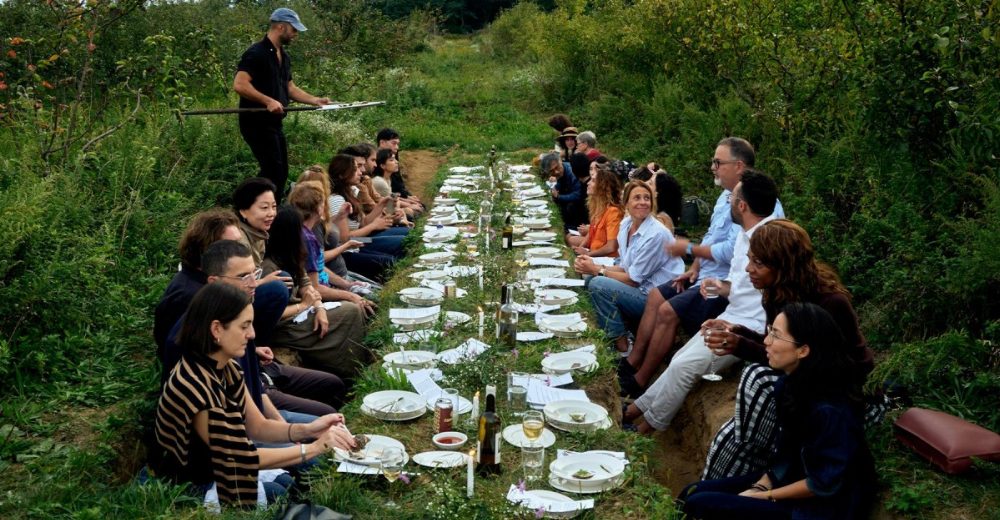
In a similar vein, the 'Farm Is Table' dinner at Treiber Farms in New York took the concept further by literally carving out the dining space in the earth itself. Guests dined on a multicourse meal while surrounded by the elements, enhancing their connection to the land and the produce. Co-organizer Allan Wexler noted that this event was part of a series leading up to a new book release, reflecting on the intersection of art and food.
As the popularity of earthwork dining grows, so does the commercial interest in these experiences. While many events strive for a genuine connection to nature, others leverage the visual appeal for marketing purposes, as seen in influencer-driven brand activations. Yet, at its heart, this trend continues to celebrate the fusion of art, food, and nature, creating memorable experiences that resonate on multiple levels.
Source: www.eater.com
#culinary art #earthwork dining #experiential dining #food futurism #nature