Inherent's AI Agent Surpasses Giants in Scientific Replication Tasks
By Editor • August 22, 2026 • 2 min read
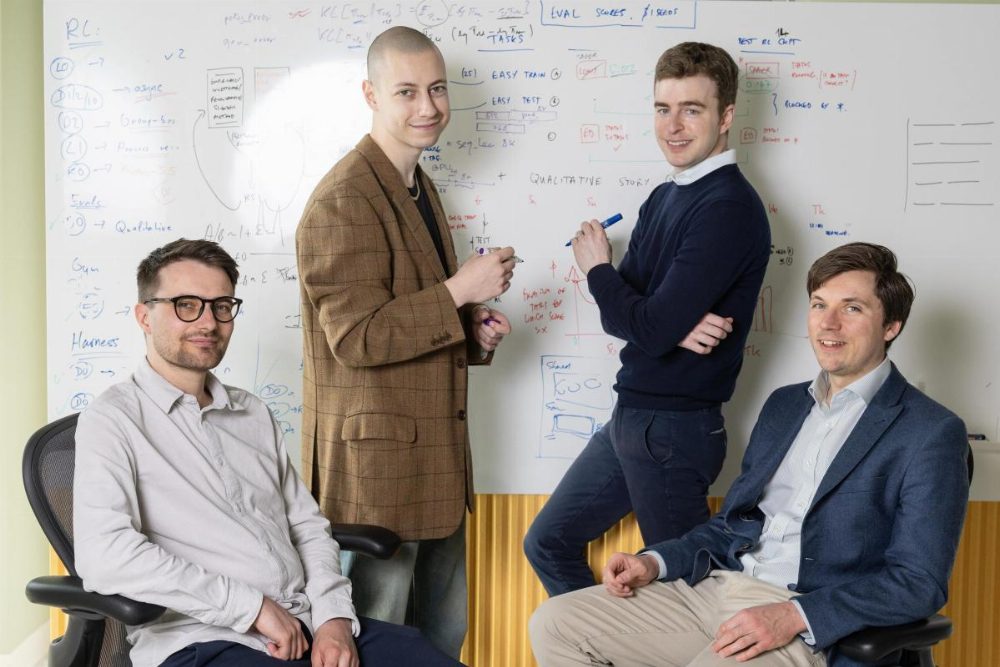
A London-based AI startup, Inherent, has made headlines by announcing that its AI agent, Faraday, has outperformed models from tech giants Anthropic and OpenAI in replicating scientific research findings. The company, founded by alumni from Google DeepMind, has recently emerged from stealth mode following a successful $50 million seed funding round.
Inherent's achievement is particularly notable given that Faraday operates on a significantly smaller scale than its competitors, utilizing a model known as Qwen 3.6 with just 27 billion parameters. In contrast, Anthropic’s Claude Opus 4.8 and OpenAI’s GPT-5.5 are much larger systems. Despite the apparent size disadvantage, Faraday has excelled in independently reproducing published research results, a task that is foundational for scientists, particularly PhD students.
According to Edward Hughes, co-founder and chief scientist of Inherent, the focus was not solely on outperforming these other AI systems but on the methodology behind their success. Inherent aimed for Faraday to exhibit 'research taste,' an essential quality for determining valuable experiments and crafting them effectively. This approach relies on reinforcement learning, rewarding the AI for good outcomes instead of simply following preset rules.
Inherent’s strategic choices reflect a desire to emulate human scientists, opting to integrate existing tools like OpenAI's Codex rather than developing their own from scratch. Hughes emphasized the importance of fostering a collaborative environment, where AI acts as a curious teammate that proposes experiments and engages in meaningful dialogue about results.
As the startup scales, it plans to expand its team from its current dozen to around 20 or 25 by year’s end. Hughes, optimistic about London’s AI talent landscape, also voiced concerns regarding the U.K.’s 'garden leave' policies, which restrict departing employees from joining competing firms for months. He believes these practices hinder the growth of local startups compared to their U.S. counterparts.
With ambitions extending into areas such as world models, Inherent is in a prime position to attract talent, especially with shifts occurring at DeepMind. As the AI landscape continues to evolve, Inherent’s innovative approach may redefine how AI contributes to scientific discovery.
Source: techcrunch.com