Netanyahu's Altalena Revival: A Political Theater Ahead of Elections
By Editor • August 31, 2026 • 3 min read
In a dramatic turn of events, the sunken arms ship Altalena has resurfaced in Israeli political discourse, stirring up a historical debate just as the nation gears up for pivotal elections on October 27. The wreckage, discovered off the coast of Tel Aviv on August 24, has been seized upon by Israel's right-wing government as a potent symbol to rally support and target their left-wing adversaries.
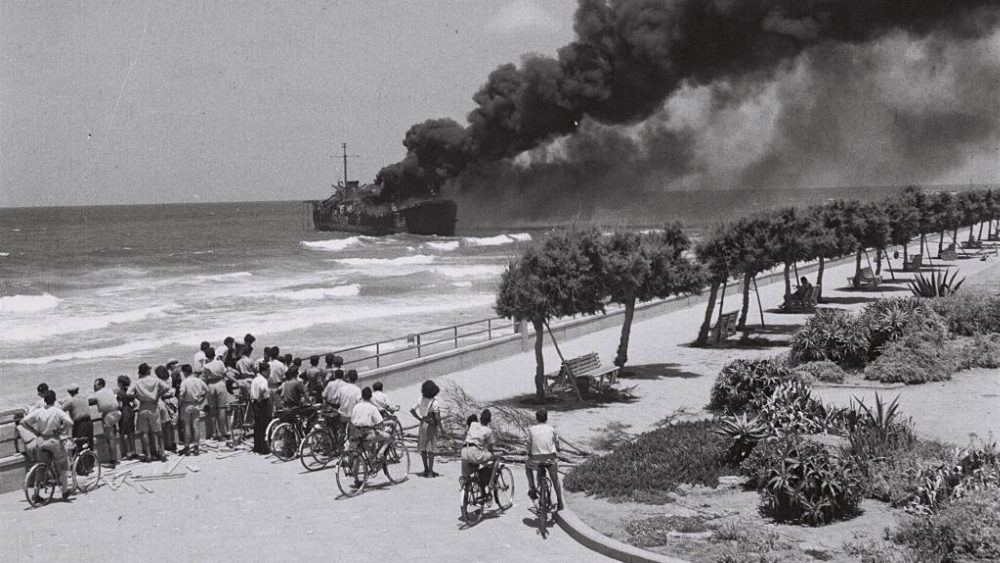
The Altalena, which was sunk in 1948 under orders from Israel's founders, has long been a flashpoint in the nation’s history. It represented a violent clash between the newly formed Israeli army and the right-wing Irgun militia, led by Menachem Begin, who later became Prime Minister. The recent findings have ignited conversations surrounding this historic conflict, which nearly escalated into civil war, offering a rich vein of political capital for the current leadership.
Heritage Minister Amichai Eliyahu and National Security Minister Itamar Ben-Gvir, both from the far-right Jewish supremacist party Otzma Yehudit, heralded the discovery as a significant moment in Israeli history. “At 12:30am, at a depth of 503 metres, west of the coast of Israel, the Altalena ship was located intact,” Eliyahu announced, emphasizing the emotional weight of the moment. Ben-Gvir echoed this sentiment, framing the discovery as a closure to a painful chapter in Israeli society.
Prime Minister Benjamin Netanyahu swiftly joined the chorus, proclaiming the find as a defining moment for the nation, and a tangible symbol for future generations. The Altalena, originally loaded with arms for the Irgun, was sunk during a confrontation that saw Israeli forces open fire on the ship, resulting in the deaths of 16 Irgun members and three soldiers. This historical incident remains a sensitive topic, encapsulating the tensions between the Israeli right and left that have persisted for decades.
As the elections loom, Netanyahu's remarks and the government's focus on the Altalena have raised eyebrows among critics. Local media, including the left-leaning Haaretz, have suggested that the timing is no accident, labeling it a strategic move to incite right-wing sentiments against the left. “Finding the Altalena shortly before the most fateful election in the country’s history provides excellent fuel for continuing the incitement against the ‘left’,” they argue.
Amotz Asa-El in the Jerusalem Post echoed this sentiment, asserting that Netanyahu's resurrection of the Altalena narrative is a tactic to redirect electoral discourse away from his administration's record. Meanwhile, prominent historian Saul Friedlander, who has personal ties to the Altalena, cautioned against using its memory for political gain, emphasizing that Begin had envisioned a unified Israeli defense force, rather than division.
Despite the political rhetoric, experts have expressed skepticism regarding the feasibility of actually raising the Altalena from the depths. Maritime archaeology expert Ehud Galili noted the complexities and costs associated with such an endeavor, suggesting that it may be more of a political symbol than a practical undertaking.
As Israel approaches what many are calling the most consequential elections in its history, the Altalena's legacy continues to resonate. It serves not only as a historical relic but also as a contemporary political tool, encapsulating the enduring tensions that shape the nation’s identity.
Source: www.france24.com