Rethinking Urban Living: David Gianotten on Contextualizing City Design
By Editor • August 22, 2026 • 2 min read
In the evolving landscape of urban design, the focus is shifting from mere production to enhancing the quality of life for residents. David Gianotten, managing partner and architect at OMA, emphasizes that the unique histories and conditions of cities like Amsterdam, Rome, and Taipei must guide urban planning decisions.
This perspective contrasts sharply with popular universal urban models such as the fifteen-minute city. This concept, which advocates for accessible neighborhoods where daily needs can be met within a short walk or bike ride, has gained traction in recent years. However, Gianotten warns against applying it as a one-size-fits-all solution. 'While I see the 15-minute city as a valuable framework, I would be cautious about treating it as a universal planning model,' he states.
Gianotten's focus lies in understanding the foundational conditions that can make a city more accessible—from infrastructure and public transport to local amenities and housing affordability. He points out that improvements in these areas can lead to increased land values, which, without protective measures, may drive up costs and threaten diversity.
Furthermore, Gianotten's skepticism about universal models arises from OMA's extensive work across diverse urban contexts. He illustrates this with OMA's research on shopping malls, originally conceived by Victor Gruen as civic centers, which transformed into symbols of suburban sprawl. In contrast, in densely populated regions like Hong Kong, malls are often integrated with public transit, showing how geographical context can reshape urban typologies.
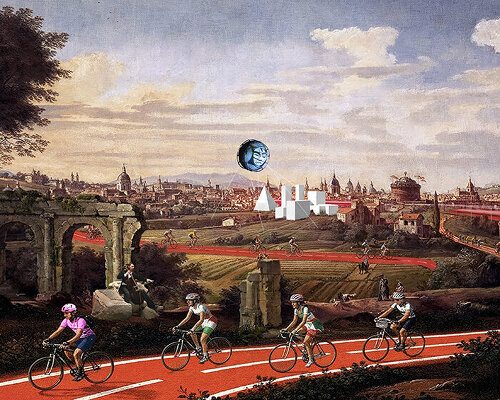
Gianotten argues that urban life is influenced by a confluence of factors including infrastructure, cultural habits, and political systems. He believes that strategies need to be tailored to specific conditions, as what works in one locale might not yield the same results elsewhere. For instance, OMA’s ongoing project, Roma Continua, considers Rome's future as a layered palimpsest, suggesting that urban transformation should build upon existing structures rather than erase them.
As OMA tackles large-scale urban projects, Gianotten asserts that architects play a crucial role in shaping community dynamics. 'Urban planning and architecture are intertwined with social, economic, and political structures,' he notes, highlighting that successful urban transformation often emerges from collaborative efforts rather than singular grand designs. He emphasizes the importance of engaging local communities in the planning process, as seen in OMA's redevelopment project in Taipei, which prioritizes the preservation of existing neighborhood qualities valued by residents.
Housing, a central theme in contemporary urbanism, poses its own challenges. In high-demand cities like Amsterdam, Gianotten advocates for a balance between increased density and quality of life. His approach is evident in OMA's Bajes Kwartier project, which revitalizes a former prison site into a mixed-use neighborhood with social housing and communal spaces, ensuring that the fabric of daily life is considered alongside housing supply.
Source: www.designboom.com
#community #David Gianotten #fifteen-minute city #housing #OMA #urban planning