South Korean Investors Face Heavy Losses Amid AI Stock Surge
By Editor • August 19, 2026 • 2 min read
In South Korea, a stock market boom fueled by the demand for AI-driven chips has left many rookie investors like Eun-bi grappling with significant financial losses. The civil servant, in her thirties, invested her savings in high-flying stocks such as SK Hynix, hoping to fund her wedding planned for next April. However, after the KOSPI index plummeted nearly 40% from its peak in June, Eun-bi's investment portfolio took a severe hit, resulting in tens of thousands of dollars in losses.
"Now I’m wondering if I should scale down the ceremony or skip the honeymoon," lamented Eun-bi, reflecting the uncertainty many new investors now face. She is among millions who enthusiastically participated in what was touted as South Korea's largest stock market rally, only to witness their gains evaporate rapidly.
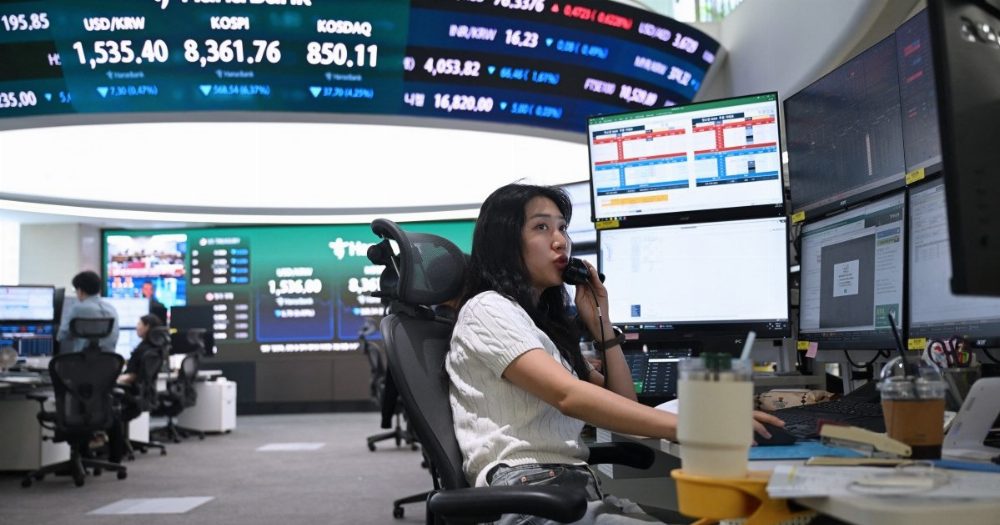
While the KOSPI has rebounded somewhat since July, the market remains highly volatile. On Wednesday, the index fell nearly 6%, adding to a recent history of sharp fluctuations. Although the KOSPI is up about 50% year-to-date, it remains over 30% below its all-time high. This instability has raised questions about the effectiveness of President Lee Jae Myung's policies aimed at revitalizing the stock market, which had historically lagged behind international markets.
Analysts point out that the KOSPI's dependence on major players like Samsung Electronics and SK Hynix—accounting for over half of the index—has amplified its volatility. The KOSPI skyrocketed by over 100% in the first half of the year, peaking at 9,385.59 on June 19, but much of that gain has now dissipated. Heavy borrowing has further exacerbated the situation, with margin loans dropping from 38.6 trillion won ($27.6 billion) in June to 28.9 trillion won ($20.7 billion) by the end of July as brokerages liquidated investors' holdings.
Government policy has played a role in this financial turbulence, with the administration approving riskier financial products like leveraged ETFs. These products, which track movements in shares of major companies, were introduced just before the market downturn, prompting criticism of the government's approach. President Lee's approval ratings have suffered amid the chaos, hitting their lowest levels since he took office.
Critics, including former justice minister Cho Kuk, have described the situation as a failure of policy, arguing that young investors who trusted governmental encouragement are now left with debts and trauma. Political analysts suggest the stock market's ups and downs may continue to influence South Korea's political landscape, as many Koreans become more attuned to market fluctuations.
Despite her losses, Eun-bi does not hold the government accountable for her situation. Instead, she views the experience as a lesson in investing. "I’ve come to think that from now on I should diversify across a range of fields and sectors," she said, indicating a cautious approach moving forward. As she prepares for her wedding, Eun-bi plans to monitor the market closely and convert her investments to cash to safeguard her financial future.
Source: www.aljazeera.com