Exploring Huế: Where Nature Reclaims Abandoned Attractions in Vietnam
By Editor • September 2, 2026 • 3 min read
While many tourists rush through Vietnam between Hanoi and Ho Chi Minh City, the city of Huế offers a captivating glimpse into the country’s imperial past and a unique blend of natural reclamation and historical remnants. Once the imperial capital of the Nguy? n Dynasty, Huế is a city steeped in history, yet it’s also a canvas of forgotten sites and crumbling structures.
Huế served as the throne for Vietnam's last emperors from 1802 until 1945, and its historical significance didn’t vanish with the end of the Nguy? n Dynasty. The French colonial rule that began in the 1880s left its mark, as emperors became mere figureheads under French administration. Today, the city grapples with how to preserve its rich architectural heritage while adapting to the waves of tourism surging through Vietnam.
As I wandered Huế's streets, the contrast between its well-preserved pagodas and temples and the haunting presence of dilapidated sites became apparent. One such site is the Long Thọ Cement Factory, an abandoned industrial complex that has turned into a popular photo opportunity for visitors. Though it’s off-limits for exploration, its skeletal remains can be glimpsed from the roadside, offering a hint of the city’s layered history.
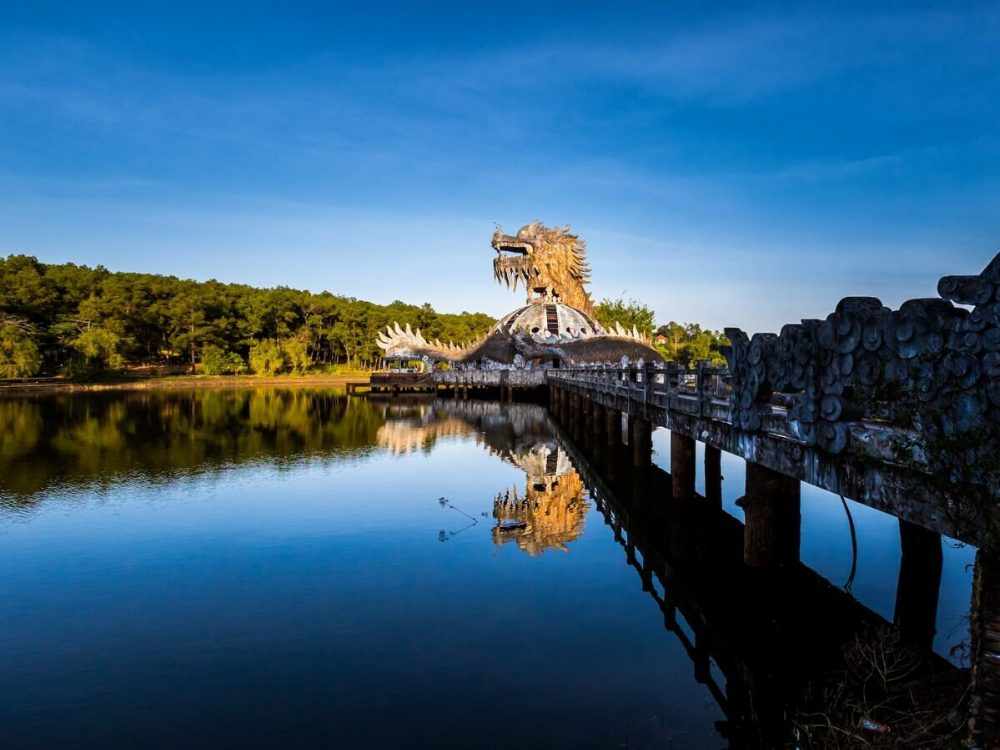
The following day, my adventure led me to Hồ Thủy Tiên water park, a surreal landscape where nature has intertwined with man-made structures. Opened in 2004 but closed two years later, this once-promising water park has transformed into a community space, attracting curiosity with its submerged waterslides and dragon-shaped aquarium. For an entrance fee of under $1, visitors can enjoy the park’s eerie ambiance, now a popular backdrop for music videos and Instagram shots.
“Foreign tourists are fascinated by Thủy Tiên Lake,” remarked Peter Pham from Huế Private Excursions. “It feels like a hidden adventure.” The park's tranquility amidst its ruins provides a stark contrast to the bustling tourist sites, making it a unique experience.
There’s also an intriguing local legend about crocodiles that were once kept in the aquarium. After the park's closure, stories circulated that they escaped into the surrounding waters, feeding on chickens brought by curious locals. While these tales have been debunked, they add to the charm of the park's history.
Beyond water parks, Huế is home to remnants of French colonial architecture that speak volumes about its past. An Định Palace, for instance, showcases a blend of Vietnamese and European styles, having undergone significant reconstruction in the early 20th century. Though the palace has been restored, signs of its previous neglect remain visible, embodying the city’s struggle between decay and preservation.
As the tourism industry booms, with a record 21 million visitors expected in 2025, Huế officials emphasize the importance of sustainable development alongside conservation efforts. The Huế Monuments Conservation Centre insists that preserving historical sites is essential not only for tourism but also for the cultural identity of local communities.
However, the push to protect Huế’s legacy faces challenges. Of the 240 colonial buildings documented in 2000, only about 77 remain today, with critics arguing against the destruction of these landmarks. Some residents advocate for their preservation, viewing them as vital pieces of Vietnam’s historical narrative. “It’s part of our history, whether you like it or not,” Pham emphasizes, highlighting the educational opportunities that these structures could provide for future generations.
As Huế continues to evolve, its juxtaposition of the old and the new, the preserved and the decayed, paints a vivid picture of a city balancing the weight of its past with the demands of modern tourism.
Source: matadornetwork.com
#abandoned sites #French colonial architecture #Huế #tourism #Vietnam