Surge in Solar Power Plants Marks First Half of 2023 in the U.S.
By Editor • August 15, 2026 • 2 min read
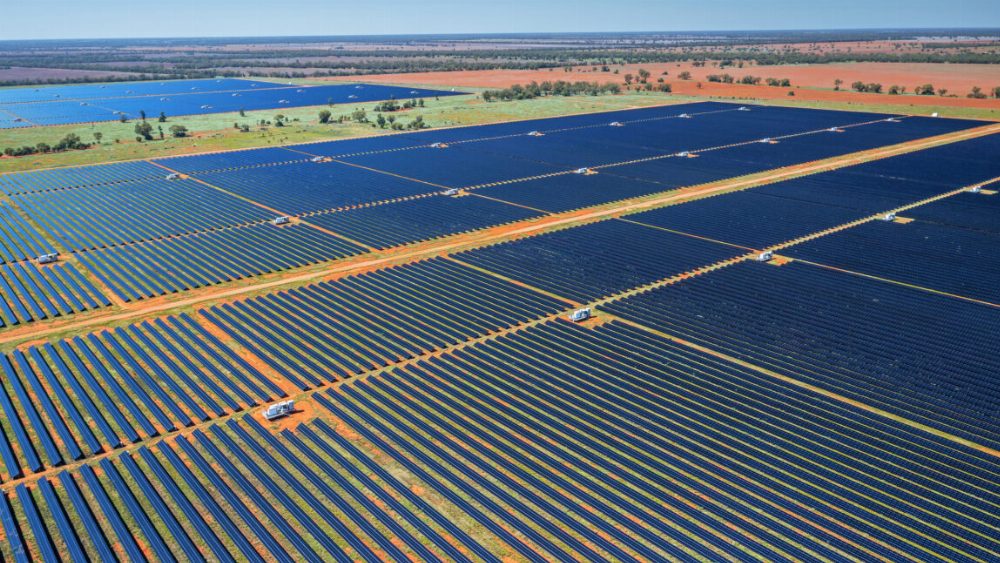
The U.S. energy landscape has witnessed a remarkable transformation in the first half of 2023, with 368 utility-scale power plants coming online, dominated primarily by solar energy. According to the U.S. Energy Information Administration, the trend indicates a significant shift towards renewable sources amid evolving energy needs.
Leading the charge are the SunZia Wind South and SunZia Wind North projects in New Mexico, contributing a massive 3,650 megawatts of capacity. Despite their scale, these wind farms represent a nostalgic echo of previous wind energy booms rather than a resurgence in onshore wind development, which has faced regulatory and public skepticism.
Following closely is the Trumbull Energy Center in Ohio, a natural gas facility boasting a capacity of 900 megawatts. This plant is part of a broader expansion of natural gas power within the PJM Interconnection grid region, which spans the Mid-Atlantic and Midwest.
Interestingly, the Vineyard Wind project off the coast of Massachusetts is the fourth-largest addition. Like SunZia, it has been in the pipeline for years, suggesting a trend of slow-moving offshore developments. However, the fifth-largest project, Green River Energy Center in Utah, is more indicative of current trends, featuring a balanced capacity of 400 megawatts each from solar and battery storage.
Utility-scale solar has clearly taken the lead, with 207 projects launched, followed by 95 battery installations. In contrast, the natural gas sector saw only 22 combustion turbine projects and 21 internal combustion engine projects come online. The anticipated wave of new natural gas plants is expected to materialize in the coming years.
When examining capacity, utility-scale solar has added an impressive 11,458 megawatts, while batteries contributed 8,207 megawatts. The onshore wind projects, primarily from SunZia, accounted for 5,473 megawatts, while combined-cycle natural gas plants contributed a modest 2,707 megawatts.
Three states—Texas, New Mexico, and Arizona—are responsible for nearly half of this new capacity. Texas, in particular, stands out with its focus on gas and battery projects designed to enhance grid reliability. Notably, despite its leadership in onshore wind, Texas did not see any new wind projects launched in the first half of 2023.
As Eric Gimon from Energy Innovation highlights, the era of utility-scale solar, often paired with batteries, is here to stay, setting the stage for future developments in both solar and natural gas.
Source: arstechnica.com
#natural gas #renewable energy #solar energy #Texas #wind power