China's Nuclear Surge: Powering the Path to a Renewable Future
By Editor • August 23, 2026 • 2 min read
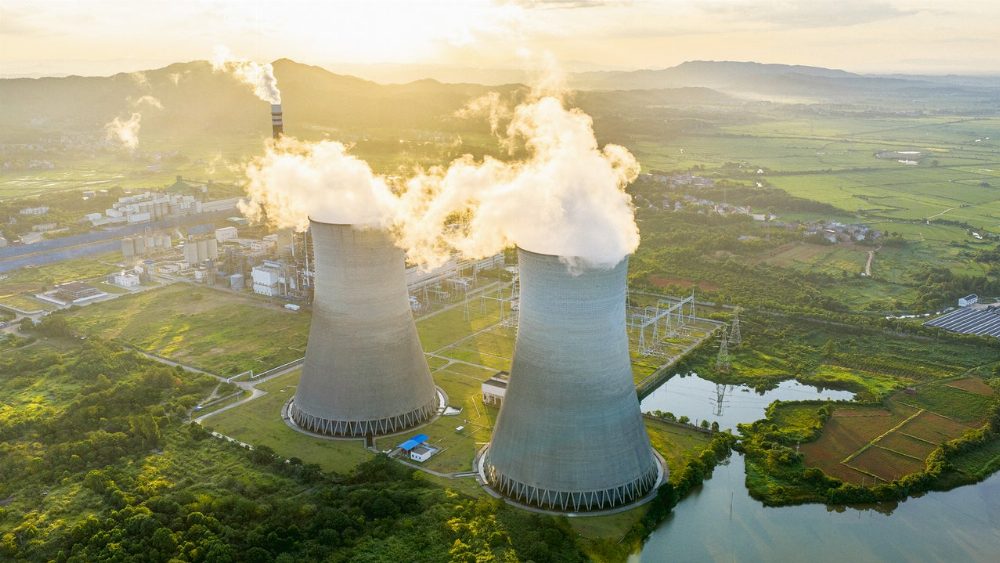
China is charging ahead in its nuclear energy ambitions, connecting 27 new reactors to its grid between late 2016 and August 2026, a staggering achievement when compared to the United States, which added just two in the same timeframe. This rapid expansion highlights China’s dominance in nuclear power plant (NPP) construction, as noted by Jacopo Buongiorno, a professor at MIT.
The nation’s growing appetite for electricity, rooted in Deng Xiaoping’s 1978 economic reforms, has necessitated a reliable power generation framework. While renewables are increasingly meeting this demand, the intermittent nature of wind and solar requires a stable back-up source—hence the reliance on nuclear energy.
China’s electricity consumption soared past 10 trillion kilowatt-hours in 2025, propelled by advancements in manufacturing and artificial intelligence. Remarkably, the nation’s energy demand increased by 503 TWh that year, roughly equivalent to adding a German-sized electrical consumption. Despite this surge, nuclear energy accounts for only about 5% of China’s energy mix, with coal still dominating at nearly half.
The intricate design of China's power grid underscores the importance of nuclear energy. Building a robust grid involves more than merely connecting power plants; it requires careful balance to prevent outages. To achieve this, China has invested in an ultra-high-voltage grid to distribute electricity from renewable sources and a fleet of nuclear reactors that provide consistent power regardless of weather variations.
Nuclear energy is crucial as it delivers a continuous baseload output, essential for stabilizing a grid that is heavily reliant on intermittent generation. Currently, China operates 64 commercial reactors, generating 63.9 gigawatts, the second-largest fleet globally. Plans are underway to construct an additional 37 reactors, aiming for a total capacity of 110 gigawatts by 2030, with a target for non-fossil fuels to make up 50% of the energy mix.
The rapid construction of nuclear facilities in China can be attributed to the standardization of reactor designs, primarily the Hualong One and CAP1000 models. This consistency has allowed domestic manufacturers to streamline production, reducing construction time to about five years per reactor, compared to the decade or more typically seen in Western projects. Buongiorno emphasizes that China's operational reactors are secure, and the new plants being built are expected to maintain this safety record.
State financing also plays a significant role in expediting the nuclear build-out. Developers benefit from low-interest loans, making the cost of electricity for a 1-gigawatt reactor roughly $42 per megawatt-hour—about half the cost of similar projects in the West. This financing model, coupled with stable energy policies, has proven effective in facilitating large-scale nuclear projects.
However, China faces limitations in reactor placement, as commercial units are only permitted along the coast. A moratorium on inland reactor approvals, enacted after the Fukushima disaster, limits the number of potential sites. Lifting this ban could unlock numerous locations suitable for additional reactors and significantly expand China’s nuclear capacity.
Source: www.fastcompany.com
#China #Electricity #nuclear energy #Power Grid #renewable energy