Cork: The Eco-Friendly Material Revolutionizing Modern Design
By Editor • August 15, 2026 • 2 min read
As the design world shifts towards sustainability, cork is emerging as a favored material for its remarkable eco-friendly properties. This versatile resource, harvested from the bark of cork oak trees, stands out due to its lightweight nature, durability, and ability to be both biodegradable and recyclable, making it a prime candidate for various applications in furniture and architecture.
With its natural elasticity and water-resistant qualities, cork is being integrated into innovative designs, offering solutions that marry functionality with environmental consciousness. Designers are increasingly attracted to its potential, using cork in products ranging from seating arrangements to home accessories. Its shock-absorbing capabilities also contribute to making products more practical and long-lasting.
Among the notable designs is Kidou, created by Isabel Vera, which reimagines modular seating. This flexible system allows users to rearrange components to fit diverse needs, transforming a simple row of stools into a small stage or a cozy reading nook. The lightweight cork construction ensures that these pieces are easy to move, while the warm tones and smooth textures create an inviting atmosphere that complements various interior styles.
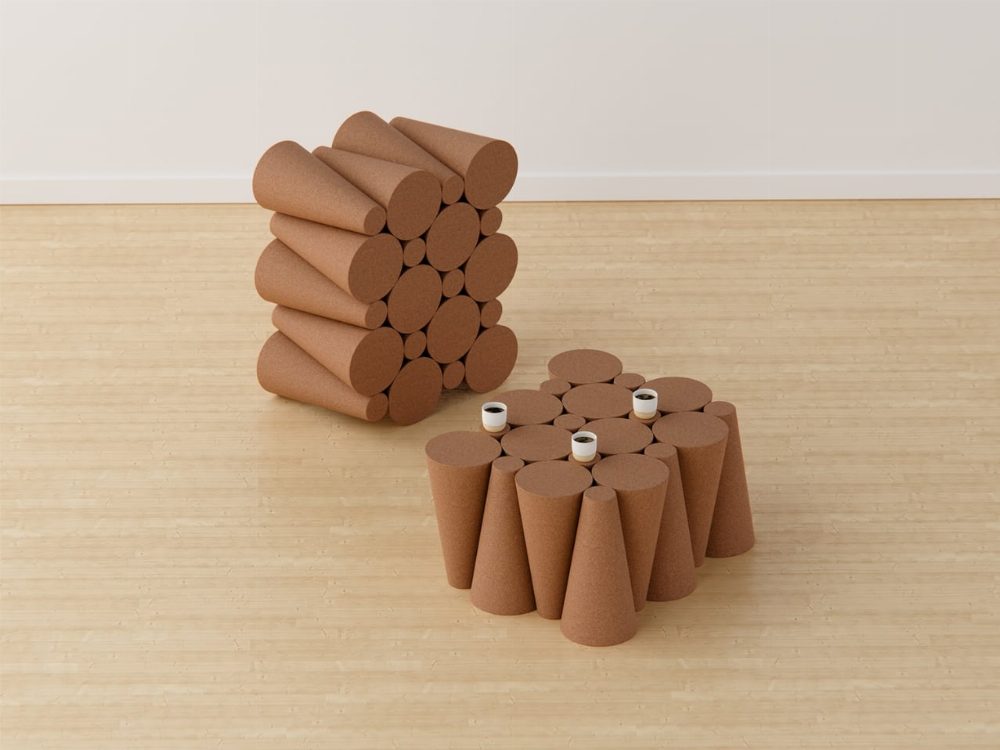
Additionally, the Polka Coffee Table by Liam de la Bedoyere exemplifies the playful potential of cork in everyday items. Its innovative design features inverted cork cones that act as built-in coasters, merging functionality with a vibrant aesthetic. This table not only serves a practical purpose but also stands out as a conversation starter in any setting, showcasing how cork can enliven mundane objects with creativity.
Architects are also embracing cork, utilizing its insulation properties in projects like Nina’s House by Nina+Co and ROAR Architects. This renovation of a 1970s clergy house highlights the material's ability to enhance energy efficiency and provide acoustic comfort. The expanded cork panels enveloping the building contribute to a visually striking exterior while ensuring warmth and inviting charm.
The material's versatility extends beyond furniture and architecture to innovative product designs like minimalist stools by Erika Avery and Stu Cole. These adaptable pieces can transform from individual seats to a bench, reflecting a growing trend towards multifunctional, sustainable solutions that reduce waste. The strong cork bases not only ensure stability but also maintain a natural aesthetic, further emphasizing the material's appeal.
As designers continue to explore cork's potential in various industries, its eco-friendly characteristics make it increasingly relevant in today’s market. The demand for sustainable materials is on the rise, and cork's renewability, combined with its diverse applications, positions it as a frontrunner in modern design.
Source: www.yankodesign.com
#architecture #cork #furniture #modular seating #sustainable design