Desperate Rescue Efforts Continue as Nearly 3,000 Remain Missing After Flooding in Nepal and China
By Editor • August 29, 2026 • 2 min read
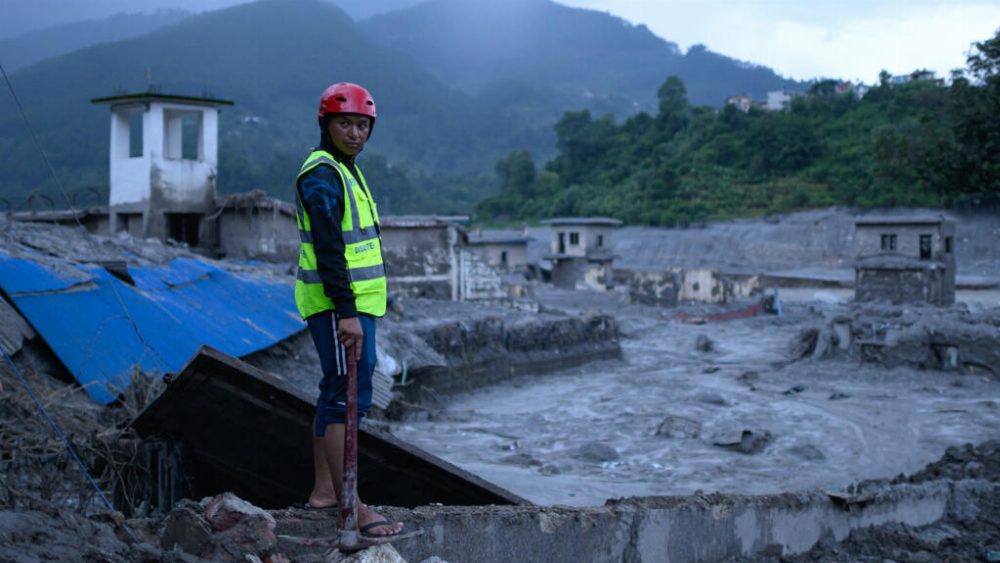
As rescue teams race against time to find survivors after catastrophic flooding in the Himalayan region, nearly 3,000 individuals remain unaccounted for. The disaster, triggered by a glacial collapse along the Nepal-China border, has devastated entire villages and left at least 682 confirmed dead, with 675 bodies recovered in Nepal and seven in China.
Efforts on the ground intensified on Saturday, with rescuers focusing on the Trishuli 3A hydroelectric site, where it is believed that over 100 workers may still be trapped. A breakthrough occurred when the Nepali army successfully inserted a pipe into a tunnel at this site, raising hopes for a rescue.
The US Geological Survey attributes the flooding to a glacial collapse, a phenomenon that climate experts warn is becoming more prevalent as global temperatures rise. UN climate chief Simon Steill highlighted the precariousness of mountain ecosystems, stating that humanity’s reliance on fossil fuels is exacerbating such tragedies.
Survivors are left grappling with uncertainty and loss. Buddhi Ram Dangol, a resident of Nuwakot district in Nepal, lamented, "All the settlements near the river were swept away; there is nothing left." Meanwhile, at a military base in Bidur, families anxiously searched for their missing loved ones among lists of those rescued. Kalka Sharda was desperate to find his son, a worker at the hydropower plant, but his name was nowhere to be found.
The missing list also includes 933 hydropower workers and 517 foreigners, including trekkers and pilgrims to the sacred Mount Kailash. The Isha Foundation reported that 80 of its members were in the area at the time of the disaster, with their location in Gyirong, China, being completely obliterated.
Authorities have estimated that the reconstruction costs could reach billions of dollars. Nepal's Foreign Minister Shisir Khanal emphasized the urgent need for rescue operations, calling for specialized assistance such as heavy-lift drones and technology to locate those trapped. He also noted the need for forensic testing kits to identify bodies, as many may be decomposing quickly due to their exposure to water.
Adding to the complexity of the rescue efforts is the threat of further flooding from newly formed lakes created by the initial deluge of ice and mud. While Chinese officials reported that one such lake had been "essentially drained," the situation remains precarious, with concerns about additional flooding impacting ongoing rescue operations.
Source: www.france24.com
#China #climate change #flooding #glacial collapse #Nepal #rescue efforts