Exploring Circular Design: Lessons from Space Waste Management
By Editor • August 26, 2026 • 3 min read
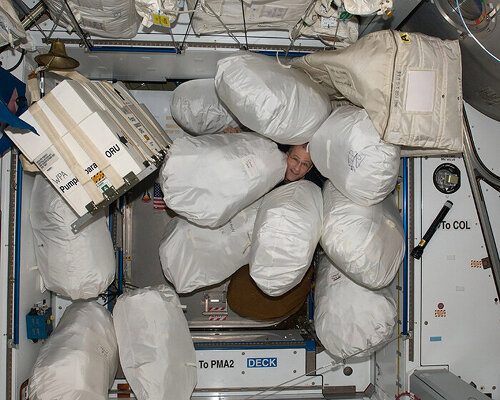
The challenges of waste management in space provide a unique lens through which to examine circular design principles. For astronauts on the International Space Station (ISS), the ongoing battle with waste is not just about disposal; it’s about resource recovery and sustainability in an environment where every ounce counts.
In the confined quarters of the ISS, every item discarded has significant implications. Spacecraft rely on regular cargo resupply missions from Earth, which bring necessary supplies but also contribute to the waste challenge. Discarded materials, including food packaging and hygiene products, are collected and eventually sent back to Earth to burn up upon reentry. This approach may work now, but it raises concerns for future missions to destinations like the Moon or Mars, where resupply options will be severely limited.
One innovative aspect of waste management on the ISS is the Environmental Control and Life Support System (ECLSS), which recycles water from humidity, wastewater, and even urine. This system has achieved impressive recovery rates of around 98 percent, transforming what is typically seen as waste on Earth into a valuable resource. However, maintaining such a system requires significant infrastructure and energy, highlighting the complexities of achieving true circularity.
Furthermore, the air within the ISS undergoes a similar recycling process. Astronauts consume oxygen and exhale carbon dioxide, which must be removed from the cabin air. Oxygen is regenerated through water electrolysis, while carbon dioxide is processed to recover water. Yet, the system isn't entirely closed, as methane is produced as a by-product. This illustrates the ongoing challenges of waste recovery: while resources can be reclaimed, the process often generates residues that complicate the cycle.
One of the more ambitious projects addressing these issues is ESA’s Micro-Ecological Life Support System Alternative (MELiSSA). This initiative aims to create a closed-loop ecosystem that utilizes microorganisms and plants to convert waste into usable resources. By breaking down organic waste and utilizing photosynthetic organisms, MELiSSA seeks to mimic natural processes that could be vital for long-term space habitats. This ecosystemic approach suggests that habitats can be viewed as interconnected systems rather than isolated units, a concept that resonates with sustainable building practices on Earth.
Nevertheless, solid waste remains a stubborn hurdle in space. Unlike gases and liquids, solid waste consists of various materials that complicate recovery. NASA’s Trash Compaction and Processing System (TCPS) attempts to address this by compacting and stabilizing solid waste for potential reuse, such as integrating it into the spacecraft's protective environment. This shift in perspective emphasizes that circular design doesn’t always equate to recycling materials back to their original state; sometimes, finding a new use is the most practical solution.
Another innovative solution being explored is NASA's Refabricator, which converts discarded plastics into feedstock for 3D printing. This approach merges recycling with additive manufacturing, enabling astronauts to create new tools or components on demand. However, the challenges of plastic recycling—such as material degradation and contamination—underscore the need for cautious optimism regarding infinite recycling.
Ultimately, the lessons learned from space waste management can inform sustainable design on Earth. As we develop buildings and products, prioritizing repairability alongside recycling could extend the lifecycle of materials. Crafting adaptable structures and components will be essential for a future where resource recovery becomes increasingly critical, both in space and on our home planet.
Source: www.designboom.com