Jason Arday: A Controversial Legacy of Truth and Myth
By Editor • August 26, 2026 • 3 min read
The passing of Jason Arday has ignited a fierce debate over his legacy, creating a split narrative that reveals deep-seated tensions in how society perceives truth and storytelling. On one side, traditional media outlets paint Arday as a fabricator whose extraordinary claims about his life lack credible evidence. On the other, a growing faction within left-leaning circles positions him as a martyr, a brilliant academic wronged by a racist media.
Arday, a Cambridge University academic who passed away on August 14, claimed to have experienced profound challenges due to autism, including being nonverbal until the age of 11. He purportedly learned to read at 18 and went on to become a respected professor. Yet, according to The New York Times, his life story has been described as having 'no precedent in medical literature.' Allegations regarding his experiences—such as being threatened by a knife-wielding man and receiving a pig's head as a racist intimidation tactic—could not be substantiated, leading some to question the veracity of his narrative.
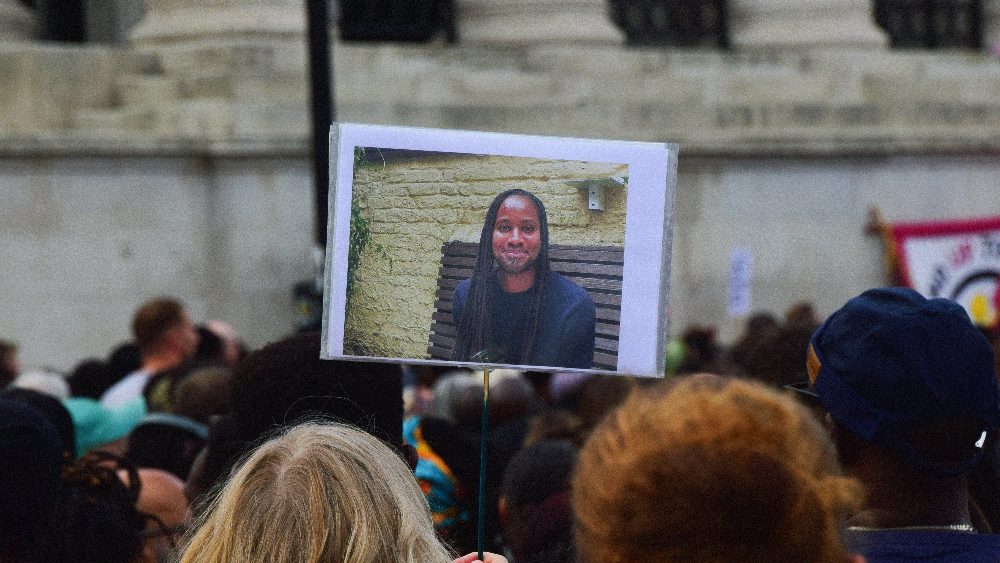
In stark contrast, leftist activists and social media users have rallied around Arday, asserting that he did nothing deserving of the scrutiny he faced. Supporters have generously raised over $300,000 for his family and propelled his memoir to bestseller status in the UK. At a memorial rally in London, attendees displayed signs proclaiming, 'Rest in Power Professor Jason Arday,' despite his resignation from the title just days prior to his death. This rallying cry is rooted in a belief that he was unjustly stripped of his academic accolades.
For many of Arday's backers, admitting any fault in the media's coverage is seen as an endorsement of the very forces they believe conspired against him. They argue that he is a victim of a 'lynching,' dismissing the allegations of his fabulism as irrelevant. This emotionally charged position reflects a broader cultural battle, where defending Arday signals opposition to perceived media bias and racism.
The crux of the controversy lies in whether the media's treatment of Arday was warranted. With over 200 articles published about him this year alone, many proponents argue that even if he committed minor infractions, the media's response was excessive. Some academics have downplayed his alleged plagiarism, asserting that it should not be considered a significant issue. Jason Stanley, in a blog post, controversially stated, 'the meaning of plagiarism does not cover mere overlap of sentences,' a claim that might shock students who are taught the opposite.
Supporters also claim Arday was 'cleared of plagiarism' by Liverpool John Moores University, where he earned his doctorate. While this assertion is technically accurate—Cambridge University initially declined to investigate, deferring to Liverpool John Moores—Cambridge later pledged to examine the allegations after Arday's death. The narrative that he was entirely exonerated overlooks the serious implications of alleged academic fraud, including accusations that he fabricated quotes from interviewees in a prior research paper.
As the posthumous defense of Arday continues, it has become apparent that the narrative surrounding him has shifted significantly. During his life, Arday was known to modify his accounts in response to scrutiny, such as clarifying that his claim of running 600 miles in six days included rest breaks, or adjusting his fundraising claims to acknowledge the contributions of unnamed collectives.
Some defenders have resorted to dubious comparisons, suggesting that because the charities associated with Arday raised significant funds, his claims—such as raising £5 million—should be viewed as credible. This line of reasoning has been met with skepticism and ridicule, illustrating the lengths to which some will go to defend his reputation.
The Good Law Project, a nonprofit known for its controversial legal challenges, played a prominent role in advocating for Arday, labeling initial media coverage as a 'malicious' attack. However, as evidence mounted against Arday, even some of his initial supporters began to withdraw their endorsements, highlighting the complexity and evolving nature of this narrative.
Source: www.theatlantic.com
#Cambridge University #Good Law Project #Jason Arday #plagiarism #racism