NASA's Visualization Reveals the Widespread Impact of Wildfire Smoke
By Editor • August 17, 2026 • 1 min read
The skies in major cities like New York and Detroit have recently taken on a disturbing orange hue, a grim reminder of the ongoing wildfire crisis in Canada. This summer marks the fourth consecutive year that smoke from these fires has led to alarming air quality issues across vast distances.
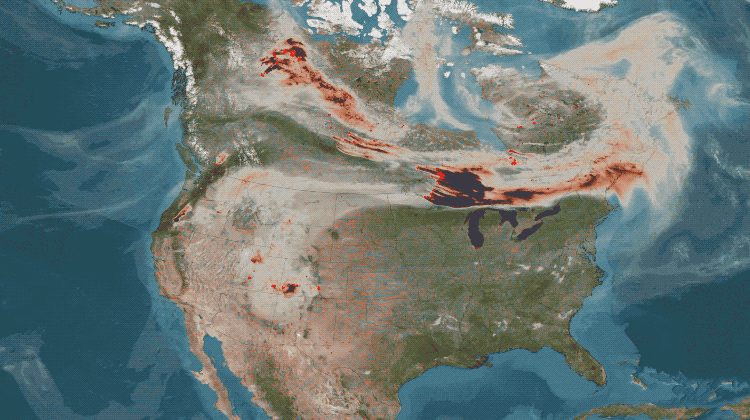
A NASA visualization captures the extensive reach of smoke generated by hundreds of North American wildfires between mid-July and early August, illustrating the far-reaching consequences of these natural disasters.
Wildfire smoke can rise to altitudes of 2 to 3 miles, allowing it to travel quickly due to faster winds at those heights. According to Dan Jaffe, an atmospheric science professor at the University of Washington, tiny smoke particles can linger in the atmosphere for over a week, complicating air quality concerns as they spread.
In a striking example, Detroit experienced a spike in pollution levels in July, becoming the world’s most polluted city for a time due to a temperature inversion that trapped smoke close to the ground. This phenomenon was exacerbated by additional fires in northern Minnesota.
While political discussions about accountability arise, such as President Trump’s desire to penalize Canada, the reality is that climate change plays a significant role in the increasing frequency and intensity of wildfires. A recent study underscores that this year’s Canadian fires were twice as likely due to climate-related factors.
Source: www.fastcompany.com