Redefining Terror: How Britain’s Laws Shift the Narrative on Protest
By Editor • August 18, 2026 • 3 min read
The landscape of protest in the UK is undergoing a seismic shift as legal definitions of terrorism expand, blurring the lines between dissent and criminality. Tony Greenstein, a prominent Jewish anti-Zionist and co-founder of the Palestine Solidarity Campaign, criticizes how Britain's Terrorism Act 2000 has been applied, particularly in the context of political activism.
Under the current legislation, actions that cause property damage for political or ideological reasons can be classified as terrorism. This expansive interpretation was met with skepticism during its inception, with concerns voiced by figures such as Labour MP Alan Simpson, who cautioned that such definitions could fundamentally alter the relationship between civil protests and government authority.
The Supreme Court has echoed these concerns, labeling the legal definition of terrorism as "very far-reaching," while David Anderson QC described it as "remarkably broad" and potentially damaging to public trust in the system. The implications of this broad definition are troubling; it allows for the criminalization of individuals who engage in lawful protests against oppressive regimes, effectively labeling them as terrorists.
The government's discretion in designating which organizations are proscribed under terrorism laws adds another layer of complexity. For instance, while the Kurdistan Workers' Party (PKK) is banned, its Syrian counterpart, the Democratic Union Party (PYD), is not, due to its alliance with Western forces against ISIS. This selective approach raises questions about the motivations behind such decisions.
In a controversial move, the UK government extended its proscription of Hamas to include its political wing in 2021, a decision that has drawn criticism for equating non-violent political members with those who engage in armed conflict. This shift has allowed Israel to frame its actions against Palestinian civilian structures as legitimate counter-terrorism, thus complicating the discourse surrounding state versus non-state violence.
The case of Palestine Action, a British direct-action group targeting arms manufacturers that support Israel, highlights the worrying trend of criminalizing protest. In July 2025, the government designated the group as a terrorist organization under the Terrorism Act, a decision that sparked concern among human rights advocates, including UN Human Rights Chief Volker Turk, who warned against applying counter-terrorism laws to non-terrorist conduct.
A judicial battle ensued, with the Divisional Court initially ruling against the ban, only for the Court of Appeal to reverse that decision. Lady Chief Justice Sue Carr's comparison of Palestine Action to the Suffragettes, who engaged in their own form of militant activism, drew parallels that challenge the sanitized narrative of historical protest.
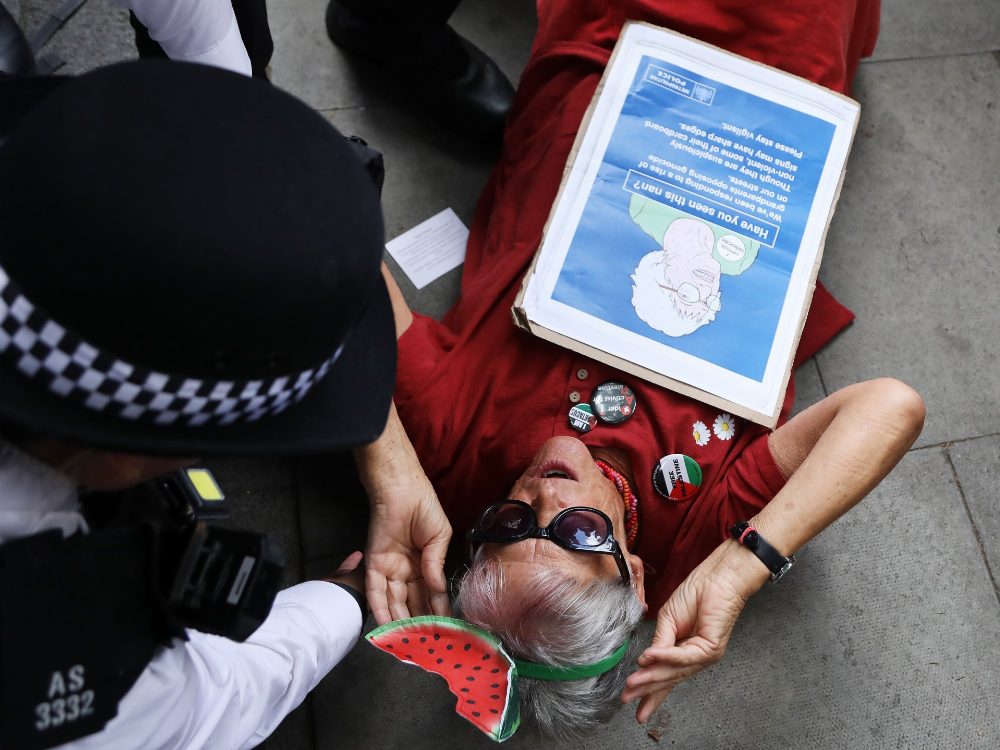
The repercussions of the ban extend beyond the group itself; the act of supporting Palestine Action has become a criminal offense. Since the proscription, nearly 4,000 individuals have been arrested for expressing support for the organization. Notably, the demographic profile of those arrested has shifted dramatically, with the average age of a “terrorist” suspect rising from 31 to 59, predominantly involving women.
Greenstein's upcoming trial, where he faces charges for inviting support for Hamas, underscores the chilling reality of how protest and political expression are increasingly being prosecuted under terrorism legislation. As he aptly notes, the redefinition of terrorism risks eroding the very foundations of civil liberties and the right to dissent.
Source: www.aljazeera.com