Reju Aims to Revolutionize Polyester Recycling and Combat Textile Waste
By Editor • August 31, 2026 • 2 min read
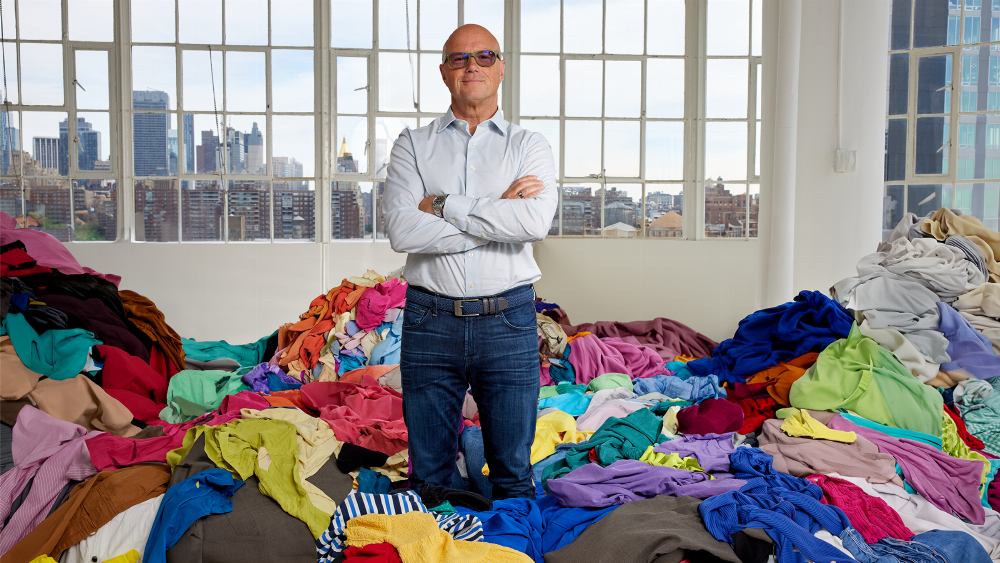
In an ambitious effort to tackle the growing issue of textile waste, Reju, led by former industry executive Patrik Frisk, is set to transform discarded polyester into reusable materials. Frisk, who has a long history with leading sportswear brands, founded Reju in 2023 to address the uncomfortable reality of polyester's lifecycle and its contribution to landfill waste.
Polyester, the most widely used synthetic fiber globally, sees over 124 million tons produced each year. Its durability and versatility make it a staple in outdoor gear and clothing. However, a staggering statistic reveals that less than one percent of textile waste is recycled back into new fibers, leading to a linear cycle that ends in disposal. Frisk's mission with Reju is to disrupt this cycle, ensuring that polyester can be reincarnated rather than discarded.
Located in Paris, with a pilot recycling facility in Frankfurt, Reju is experimenting with innovative chemical recycling techniques. At their Regeneration Hub, the team is focused on breaking down blended fabrics into pure polyester components. The first step involves stripping garments of non-fabric components and shredding them. The challenge lies in the fact that polyester garments often consist of a mix of fibers, complicating the recycling process.
Reju's technology utilizes chemical methods to separate these blended fibers, breaking down the polyester into its monomer form. This results in a high-quality powder that can be reformed into polyester pellets, which are then spun back into yarn and fabric.
Frisk envisions collaborations with major brands like Under Armour and The North Face in the future, aiming to integrate recycled polyester back into the production chain. He emphasizes that the goal is to utilize existing materials rather than continually extracting new resources.
Despite the promise of Reju’s innovative approach, challenges remain, particularly related to cost. Frisk acknowledges that while the recycling process is expensive, similar costs are already incurred when recycling plastic waste from bottles and fishing nets. He argues that mechanical recycling tends to degrade the quality of polyester over time, making Reju’s method a superior alternative.
Looking ahead, Reju has plans to establish two facilities in the U.S. with a Regeneration Hub set to open in Rochester, New York, by 2029. This facility will focus on maximizing value from low-quality textile waste. Reju has partnered with Goodwill of the Finger Lakes to enhance their recycling efforts, ensuring that textiles that can’t be repaired are transformed into new materials.
The company aims to regenerate the equivalent of 300 million garments annually by the time its New York facility is operational. With polyester as the starting point, Reju hopes to expand its recycling initiatives beyond just one material, offering hope to environmentally conscious consumers.
Source: www.outsideonline.com