Rescue Efforts Intensify Amidst Nepal-Tibet Flooding Crisis
By Editor • August 28, 2026 • 2 min read
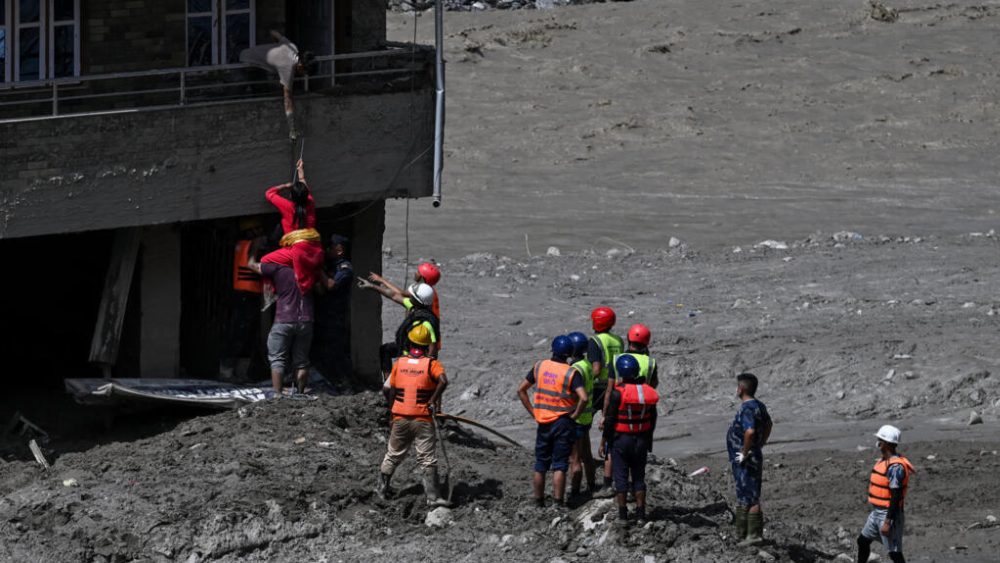
In the wake of a catastrophic flash flood that struck the border region of Nepal and Tibet on Wednesday, emergency responders are racing against time to locate survivors and provide medical assistance to the injured. The disaster has claimed the lives of over 500 individuals, with more than 1,400 still unaccounted for, complicating rescue operations in an area defined by its challenging terrain.
Rescue efforts faced a setback on Friday as water overflowed from a barrier lake created by debris from the flood, halting operations temporarily. Although teams resumed their search, the threat of additional flooding looms large, particularly given the forecast of heavy rains in the coming days. An official from Nepal’s Disaster Management Authority noted that these lakes pose a significant risk, as they are precariously holding back millions of cubic meters of water.
Simon Cook, a glaciologist from the University of Dundee, highlighted the danger posed by the unstable natural dam formed from loose rock and mud. He expressed concern that increasing water levels could either breach the dam or cause it to collapse altogether. As conditions continue to deteriorate, the urgency of the rescue mission intensifies.
Specialists in disaster response have characterized this situation as one of the most complex rescue missions imaginable. Daniel Nohrstedt from the University of Uppsala emphasized the difficulties inherent in navigating such rugged environments, where access is severely limited. The floods have devastated infrastructure, destroying bridges and rendering many roads impassable due to mudslides.
Helicopters are currently the most viable option for rescue operations, with over 3,000 individuals having been airlifted from the affected areas. However, even aerial rescues are fraught with peril, as landing conditions are precarious and weather patterns unpredictable. Nohrstedt cautioned that the risk of helicopter accidents is heightened, particularly when attempting to land in chaotic conditions.
As rescue teams grapple with the immediate challenges posed by the terrain and weather, they must also coordinate the efforts of multiple organizations, both governmental and non-governmental. David Alexander from University College London remarked on the communication difficulties that arise in mountainous regions, where radio signals can be blocked.
The gravity of the situation is underscored by the impending forecast of heavy rains, which could exacerbate the already critical conditions and lead to further flooding. Satellite images indicated that the larger of the two lakes is expanding without any visible outlets to relieve the pressure, raising alarms among experts who liken the scenario to the aftermath of an earthquake.
With time slipping away and the weather turning ominous, rescue crews are caught in a precarious balance between the necessity to act swiftly and the inherent dangers of their environment. The combination of treacherous terrain, forecasted rain, and the threat of additional floods places both rescuers and survivors at risk as efforts continue in this dire situation.
Source: www.france24.com