Revolutionizing Domestic Spaces: The Legacy of the Frankfurt Kitchen
By Editor • August 17, 2026 • 2 min read
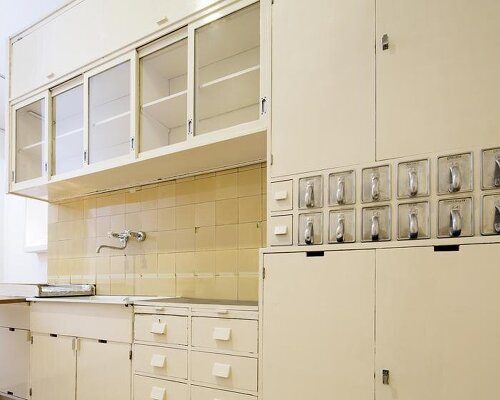
In the 1920s, a groundbreaking architectural project emerged in Germany that would redefine domestic life for countless families: the Frankfurt Kitchen, designed by Margarete Schütte-Lihotzky. As part of the ambitious New Frankfurt housing initiative, this compact kitchen was conceived during the Weimar Republic's quest for efficient living solutions following World War I.
Curator Sebastian Hackenschmidt from the Museum of Applied Arts, Vienna (MAK), highlights the widespread impact of Schütte-Lihotzky's design, noting that tens of thousands of these kitchens were produced. Many have sadly been lost to time through destruction or renovation, yet museums worldwide have succeeded in preserving original models, allowing for a glimpse into this pivotal moment in design history.
The kitchen itself was a marvel of practicality, featuring an innovative layout that allowed a single cook to move seamlessly between key areas such as the oven, sink, and cabinetry. Hackenschmidt explains that the kitchen was a 1920s experimentation hub, aligning with contemporary architectural trends that emphasized efficiency and rationalization. This shift echoed Le Corbusier's vision of a 'machine for living,' as architects sought to eliminate historical excess in favor of standardized, industrialized designs.
At MAK, the blue-hued replica of the Frankfurt Kitchen represents not just a mere reproduction, but an idealized version crafted with input from Schütte-Lihotzky herself. The museum's collaboration with the Forschungsgruppe Schütte-Lihotzky, a feminist art historians' group, resulted in a faithful recreation that honors the original architect's ethos and convictions.
Meanwhile, at the Museum Angewandte in Frankfurt, a restored original kitchen from the Bornheimer Hang housing estate showcases the essential elements of Schütte-Lihotzky's design—aluminum storage containers, built-in cabinetry, and a two-basin sink. Conservator Christian Dressen took the unique approach of revealing the kitchen's original painted surfaces while retaining signs of wear and tear, emphasizing its lived-in history.
Schütte-Lihotzky's vision for the kitchen was to create a space where all tools were within easy reach, promoting efficiency in food preparation. Although the kitchens featured minimal appliances—typically just a stove, oven, and electric light—every detail was thoughtfully planned to enhance functionality. For instance, soft pinewood was used primarily, while the flour container was crafted from oak to deter mealworms. Interestingly, the blue color of the kitchen, not a standard feature but present in the MAK replica, was believed to ward off flies.
Despite its success, the Frankfurt Kitchen was not exempt from criticism. Schütte-Lihotzky aimed to empower women by streamlining domestic work, enabling them to reclaim time for personal pursuits—education, family, and leisure. Yet, some critics argued that the design merely reinforced traditional gender roles. Hackenschmidt defends Schütte-Lihotzky’s intent, emphasizing that her goal was to liberate women from the drudgery of household chores by making them more efficient.
Today, the Frankfurt Kitchen stands as a design classic, reflecting a synthesis of ideas that have shaped modern cooking spaces. Schütte-Lihotzky’s innovative approach continues to resonate, highlighting the enduring significance of her vision for efficient, functional domestic environments.
Source: www.designboom.com
#design history #efficiency #Frankfurt Kitchen #Margarete Schütte-Lihotzky #New Frankfurt