South African Teens Soar to Victory in NASA Space Design Contest
By Editor • August 21, 2026 • 2 min read
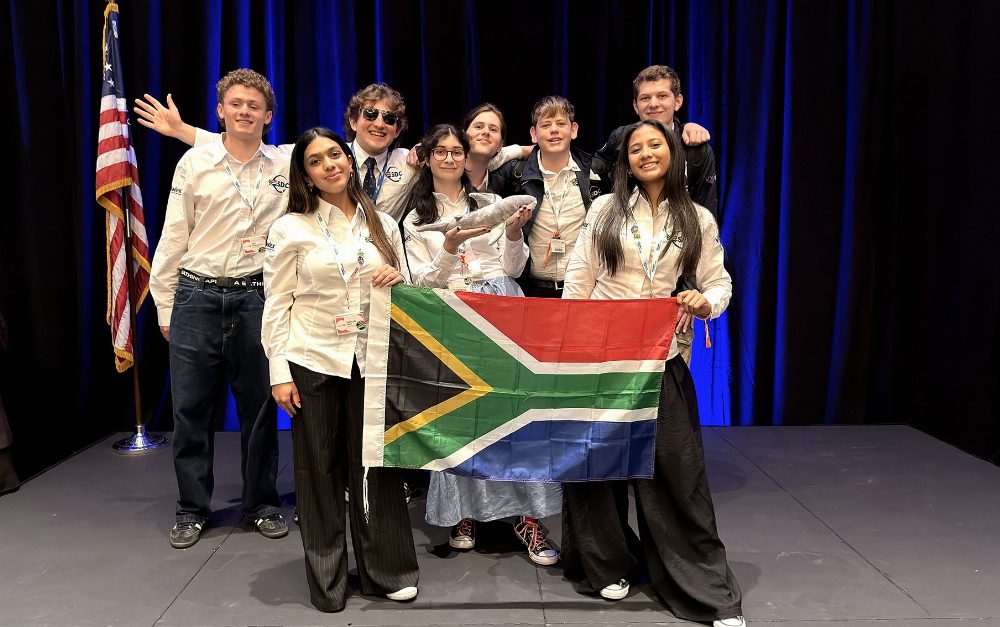
Seven teenagers from the Western Cape have made history by becoming the first South African team to compete and win at the International Space Settlement Design Competition, hosted at NASA’s Kennedy Space Center in Florida. The moment was surreal for Benjamin Honigwachs, a student from Bishops Diocesan College, who initially thought the announcement of their victory was a prank. "I was just filled with joy and relief that all of our hard work paid off," he said.
The team, dubbed Rockdonnell, comprised students from various countries, marking it as the first team in the competition's history to integrate representatives from every inhabited continent. Their winning project, named Hermes, was a conceptual spacecraft designed to transport 3,000 passengers across the inner Solar System.
The journey to Florida was no small feat. The team earned their spot by competing against 109 students from nine schools in a rigorous national round at the University of Cape Town, enduring a challenging two-day simulation under pressure. Ethan Schoombee likened the selection process to winning the lottery, expressing disbelief at the opportunity they received.
Preparations were intense, with the team training every Friday under competition founder Jagger Cooper-Doubell, refining their skills in pitching and engineering design. Zayaan Abdurahman shared the weight of responsibility they felt, saying, "Being a member of the first South African team was a blessing… we were representing the entire continent." Joseph Allderman noted the pressure but felt determined to showcase South Africa's talent in STEM fields.
Upon arriving in Florida, the team quickly integrated into a larger group of 60 students to tackle the design of Hermes. Despite facing language barriers and different design philosophies, they managed to collaborate effectively. Dean Weich explained how the diversity helped them approach problems from multiple angles.
Team members took on specialized roles, with Honigwachs leading the ship's structural design, while Allderman and Schoombee focused on propulsion and navigation. Allderman emphasized the challenge of calculating engine specifications for a journey to Mercury, while Schoombee advocated for realistic nuclear fission energy over theoretical fusion.
As the competition intensified, each division raced against time to finalize their aspects of the project due to dependencies on the designs from other teams. Omar explained the challenge of budgeting in a time-constrained environment. After a whirlwind of collaboration, Rockdonnell presented their final proposal to NASA judges, ultimately winning first place and earning Allderman the Anita Gale Creative Genius Prize.
Their victory has sparked excitement back in South Africa, with plans for a national expansion of the South African Space Design Competition to inspire more students. Omar expressed hope that their achievement would demonstrate that South Africa can compete on the global stage.
Source: www.dailymaverick.co.za