Tesla's Flying Dreams vs. BYD's Grounded Innovation: A Tale of Two Vehicles
By Editor • August 14, 2026 • 2 min read
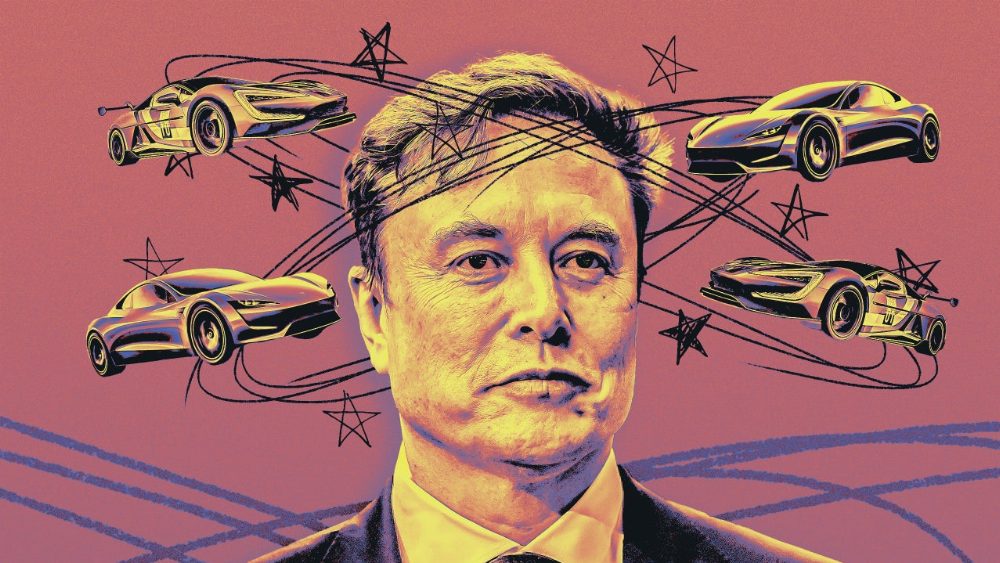
In a bold move, Elon Musk is reportedly set to unveil a 'flying car'—not a conventional flying taxi, but a futuristic Tesla Roadster equipped with SpaceX technology. According to sources from The Information, this next-generation vehicle will feature cold gas thrusters, allowing it to execute gravity-defying stunts, including racing onto a magnetized ramp and hovering in mid-air.
Scheduled for demonstration at SpaceX's testing facility in McGregor, Texas, this limited-edition Roadster is expected to rekindle the excitement surrounding Tesla’s design ethos, which many feel has waned over the years. However, skepticism looms over whether this ambitious project will translate into a viable product, as the flying capabilities may not offer any significant advancements to the automotive industry.
The hype surrounding Tesla's flying car comes amidst a challenging period for the company, facing increasing competition from rivals like BYD. The Chinese automaker has successfully launched the Yangwang U9, a street-legal supercar equipped with a remarkable 'jumping suspension.' This technology enables the U9 to leap over obstacles, providing a practical solution for navigating rough terrain, a feat Tesla's flying Roadster has yet to prove.
Since the onset of 2024, BYD has been delivering their jumping suspension vehicles, which use advanced hydraulic actuators and a sophisticated sensor suite to execute impressive jumps. During tests, the U9 autonomously cleared a 20-foot gap over a water-filled pothole, showcasing its ability to adapt to extreme road conditions while ensuring passenger comfort.
While Tesla’s flying car is anticipated to be a costly novelty, with an estimated price ranging from hundreds of thousands to millions of dollars, BYD's U9 is available for around $233,000. This stark contrast emphasizes the practicality of BYD's offering, which is already on the market, as opposed to Musk's speculative flying model, which may end up being more of a publicity stunt than a commercial reality.
The excitement surrounding Tesla’s latest announcement echoes previous ventures, such as the Cybertruck, which has faced its own set of challenges, including multiple recalls for various technical issues. Musk's ambitious vision has often outpaced reality, leaving observers questioning whether the latest endeavor will be another case of style over substance.
With Tesla's recent struggles, including the discontinuation of the Model S and Model X, the company finds itself at a crossroads. As it attempts to reclaim its innovative edge, its competition continues to roll out tangible advancements. The Yangwang U9, with its focus on utility and performance, serves as a reminder that in the race for automotive supremacy, practicality can oftentimes overshadow wild aspirations.
Source: www.fastcompany.com