Trump's Claims vs. Economic Reality: The U.S. Needs Canada More Than Ever
By Editor • August 26, 2026 • 2 min read
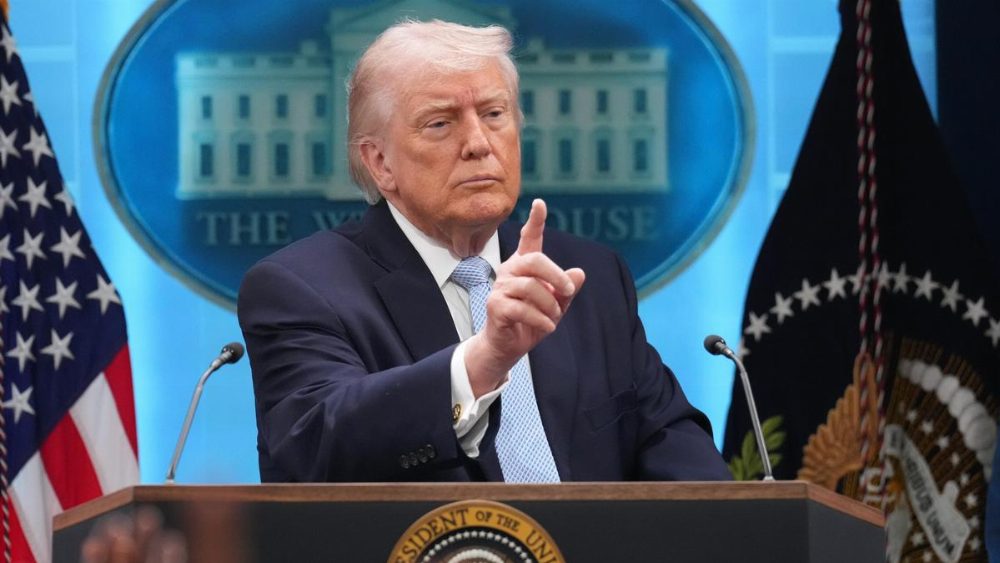
In a striking contradiction to his rhetoric, President Donald Trump recently asserted that the United States does not require Canada, a claim that starkly contrasts with the economic interdependence of the two nations. While Trump boldly declared, "WE DON'T NEED CANADA, THEY NEED US!" the reality is that the U.S. heavily relies on Canadian resources to fuel its economy.
Every day, approximately 4 million barrels of Canadian crude oil travel south to the U.S., accounting for nearly 20% of American petroleum consumption. This essential supply underpins various industries, notably in automotive manufacturing, where parts frequently cross the border multiple times before final assembly. In fact, Canada is the U.S.'s second-largest trading partner after Mexico, with trade reaching around $872 billion last year.
Despite imposing a hefty 50% tariff on Canadian aluminum, Trump recently acknowledged the dire need for this metal, admitting, "This country desperately needs aluminium. We don't have it. We get it all from Canada for the most part, and we need it badly." This admission highlights the deep-seated economic ties that contradict his statements.
Experts like Daniel Béland, a political science professor at McGill University, argue that Trump's assertion is "absolutely false," given the U.S. reliance on Canadian oil and natural gas. With energy being a significant factor in the U.S. trade deficit with Canada, Trump's claims of unfair trade practices ring hollow when examined through the lens of mutual dependency.
Last year, the U.S. recorded a substantial goods deficit with Canada, primarily driven by energy imports. Without these imports, the U.S. would have actually experienced a trade surplus. As trade negotiations falter, the White House has painted the relationship in negative terms, citing a supposed $50 billion annual loss to Canada over the past decade, a figure heavily influenced by energy purchases that support the U.S. economy.
As tensions rise in trade discussions, Alberta Premier Danielle Smith has voiced opposition to leveraging energy exports as a bargaining chip, fearing it would harm her province. Meanwhile, former Alberta Premier Jason Kenney suggested that Canada should consider export taxes on vital resources if the U.S. escalates its tariffs further. He warned that American consumers, particularly farmers and auto manufacturers, would feel the impact of such retaliatory measures.
Moreover, Canadian potash, crucial for American agriculture, is another area where the U.S. is heavily reliant, with over 80% of potash imports sourced from Canada. Trump’s ambassador to the Netherlands, Pete Hoekstra, emphasized this need, stating, "We need potash."
As the U.S. economy grapples with rising demands, especially in the tech sector, Canada stands as a critical ally. Prime Minister Mark Carney highlighted that Canadian electricity imports, which accounted for 85% of U.S. needs in 2023, could be pivotal in meeting the surging energy demands driven by artificial intelligence.
Source: www.thehindu.com