Vivodyne's Innovative Approach Aims to Bridge AI and Cancer Research
By Editor • August 19, 2026 • 2 min read
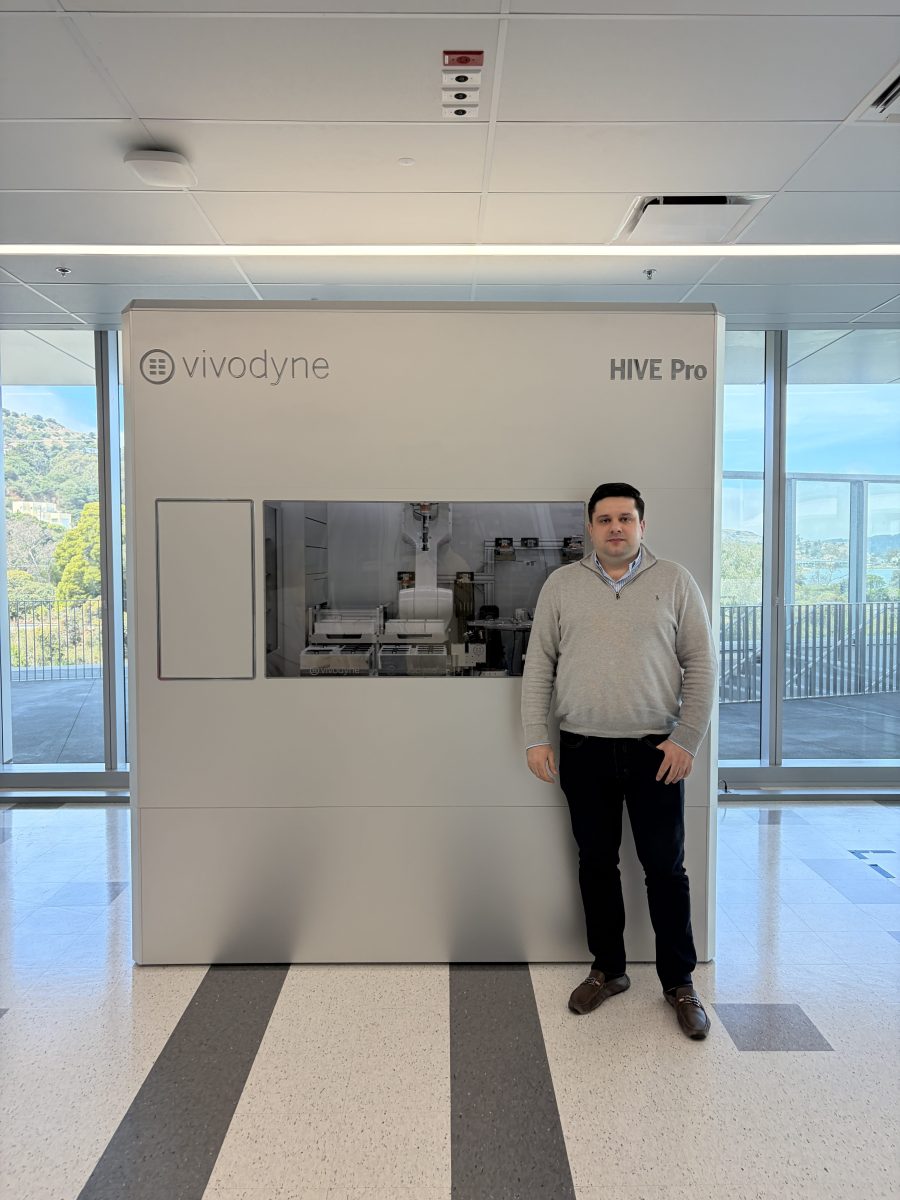
In the quest to revolutionize cancer treatment, Vivodyne, a biotech startup, is challenging the prevailing narrative surrounding AI's role in drug discovery. According to the company’s CEO and co-founder, Andrei Georgescu, existing AI models are hampered by a critical lack of reliable biological data, primarily derived from traditional animal testing and isolated studies of cells and proteins.
Vivodyne has developed a groundbreaking solution: HIVE, modular robotic labs capable of cultivating 20 different types of human tissues. These labs autonomously administer dosages and monitor responses, generating causal biological data that the current AI frameworks desperately need. Georgescu emphasizes, "Absent human testing, what are these models going to do? They’re going to cure cancer in mice." This sentiment echoes broader skepticism, as even Anthropic’s CEO, Dario Amodei, recently remarked on the overuse of claims that AI will cure cancer, highlighting the need for tangible results over lofty promises.
Despite AI's potential, the reality remains that only a handful of AI-designed drugs have advanced to human trials, with most failing to overcome significant hurdles. For instance, while Alphafold marked a major advancement in understanding life's building blocks, it has yet to yield a new drug. Isomorphic Labs, built on the foundation of Alphafold, anticipates its first trials to begin by the end of this year.
Georgescu argues that the biotech industry needs a “sanity check,” as 90% of drugs that show efficacy in animal testing fail to gain regulatory approval for human use. In contrast, Vivodyne aims to leverage its innovative human tissue models, which boast impressive predictive accuracies — 94% for liver cells and 96% for airway tissue, with bone marrow achieving a perfect concordance rate in chemotherapy drug tests.
Recently, the company opened what it claims is the world’s largest “human data center” in the San Francisco area, having secured nearly $80 million in funding from Khosla Ventures. Georgescu asserts that their system is already yielding twice the throughput of existing animal trials in the U.S., which could significantly streamline the drug development process.
Beyond immediate applications, Vivodyne envisions its autonomous biology labs as instrumental in generating crucial causal data to inform future AI models on human biology. Georgescu points out that current models often fail to establish causality, training instead on static snapshots of cellular states. By enabling real-time tracking of hundreds of thousands of experiments, Vivodyne hopes to facilitate the development of AI models capable of targeting multiple pathways, a necessity for addressing complex diseases.
Source: techcrunch.com