Fermi Explorer Mission Aims for Alpha Centauri with AI-Designed Trajectory
By Editor • September 1, 2026 • 2 min read
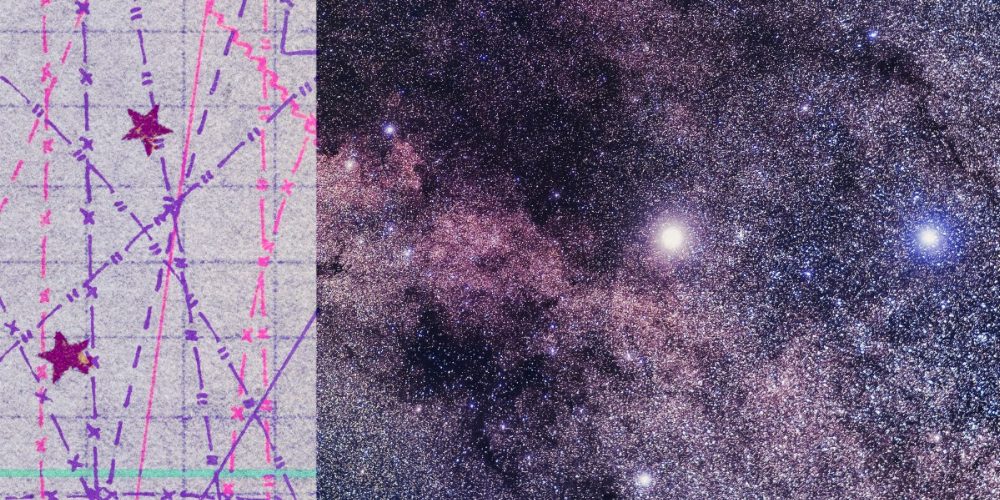
The Fermi Explorer Mission is setting its sights on Alpha Centauri, the closest star system to Earth, with a plan to launch a spacecraft by 2029. This ambitious project, driven by the nonprofit organization, aims to explore the stars using a unique trajectory devised by an artificial intelligence system developed by Physical Superintelligence (PSI).
The spacecraft's journey to Alpha Centauri, located 4.4 light-years away, is projected to take an astonishing 80,000 years. Funded initially by a $58 million investment from Breakthrough Energy, a group founded by Bill Gates, PSI's AI has enabled the mission to focus on a feasible path to interstellar travel unlike previous attempts.
Notably, this is not the first initiative aimed at reaching Alpha Centauri. In 2016, Yuri Milner introduced the Breakthrough Starshot project, proposing to send tiny probes at a fifth of the speed of light using powerful lasers. Despite a $100 million commitment for proof of concept, no spacecraft has launched in the decade since.
Philip Johnston, cofounder and president of the Fermi Explorer Mission, emphasizes a different approach: “We didn’t want to do another Breakthrough Starshot. We’re dead set on something actually launching.” The mission’s budget stands at $15 million, a fraction of its predecessors, and aims to carry a payload of at least one kilogram, including artistic and scientific items, as well as a copy of the Golden Record.
Engineering an interstellar spacecraft poses considerable challenges. To date, the Voyager 1 probe, launched in 1977, has traveled less than 1% of the distance to Alpha Centauri, taking over 70,000 years to reach its current location. Johnston and his team faced a significant hurdle in balancing the spacecraft's power and weight to maintain efficiency.
During a podcast discussion, Johnston shared his challenges, prompting physicist Alex Wissner-Gross to utilize PSI’s AI system, Get Physics Done. The AI’s unexpected breakthrough came just a week later, proposing a novel trajectory that leveraged solar energy effectively while minimizing weight and maximizing thrust.
This innovative path would have the spacecraft orbit closely around the sun, harnessing increased solar energy with each pass to propel itself forward. While the AI model's creativity was surprising, it lacks the nuanced judgment of human researchers, often veering into less promising lines of inquiry.
Despite the challenges, Johnston acknowledges that even if the Fermi probe successfully launches, it may not be the first to reach Alpha Centauri. He predicts that advancements in spacecraft technology will outpace their efforts, potentially rendering their journey obsolete.
Beyond engineering feats, the Fermi mission also seeks to tackle the age-old question posed by physicist Enrico Fermi regarding extraterrestrial life. As the mission progresses, it raises profound implications about the rarity of intelligent life and its potential for self-destruction. Johnston warns that if intelligent civilizations consistently fail to thrive long enough to explore, it may point to a troubling reality about our place in the universe.
Source: www.technologyreview.com
#AI trajectory #Alpha Centauri #Fermi Explorer Mission #interstellar travel #PSI