Reimagining Nightlife: The Quest for Spectacle in a Mundane World
By Editor • September 15, 2026 • 2 min read
The allure of nightlife has transformed significantly over the decades, prompting scholars and artists alike to delve into its sociopolitical implications. A recent exploration by a researcher, who focused on nightclubs for their master's thesis, argues that these spaces have historically served as vital sanctuaries for communities in need, advocating for their preservation.
The research draws on the concept of 'night' as a constructed experience, shaped by societal norms and commercial interests. Lucius Burckhardt, a design historian, suggested that night is not merely the absence of light but rather a series of decisions regarding when and where people are encouraged to engage with the world. This perspective reveals how artificial light and modern conveniences have altered our relationship with darkness, an idea echoed by Ivan Chtcheglov in his visionary 1953 work, 'Formulary for a New Urbanism.'
The Spectacle of Modern Life
Chtcheglov's assertion that 'the hacienda must be built' resonates deeply in today’s context, where moments of genuine engagement are often lost in a sea of curated experiences. He envisioned a future where artificial constructs could extend daylight into the night, a proposal that sparked debate over the sanctity of the starry sky as a human right. While such a project never came to fruition, the underlying desire for more authentic experiences persists.
Guy Debord's critique of modern spectacle highlights a shift in how we perceive reality. He argued that our lives are increasingly defined by representations rather than direct experiences. With the current saturation of visual stimuli—immersive art installations, light festivals, and social media pop-ups—what remains elusive is the kind of spectacle that fosters real connection and emotional depth.
The Haçienda: A Cultural Landmark
The Haçienda nightclub in Manchester, birthed from Chtcheglov's ideology, stands as a testament to the power of communal spaces. Founded by Factory Records in the 1980s, its design invited patrons to take ownership of the environment, thereby reshaping the narrative of rave culture in Britain. Despite its closure and subsequent demolition, the legacy of the Haçienda endures.
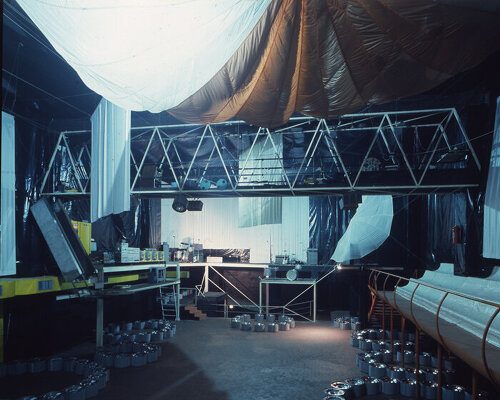
In contrast, Italy's architectural innovations in discotheques during the 1960s saw spaces like Space Electronic embrace the chaotic nature of nightlife. These venues were designed to dissolve the boundaries between performance and audience, creating immersive experiences that transcended mere entertainment. The ongoing challenge is to cultivate these environments today, where individuals can reclaim their agency within the spectacle.
Ultimately, the exploration of nightlife and spectacle invites us to reconsider how we interact with our surroundings. It raises fundamental questions about our engagement with the world and the potential for moments of wonder to emerge in an increasingly predictable existence.
Source: www.designboom.com
#Chtcheglov #Debord #Haçienda #nightlife #spectacle #urbanism