Smugglers Shift to Mega-Dinghies Amid Crackdown on Small Boat Crossings
By Editor • September 3, 2026 • 3 min read
A recent investigation by the BBC reveals that a decline in smaller boats illegally transporting migrants from France to the UK has prompted smuggling gangs to adapt their methods. They are increasingly relying on larger vessels, dubbed "mega-dinghies," to carry more people at once, as seen in recent arrivals on British shores.
One particularly striking incident involved a 15-meter boat that carried a record 230 migrants, drawing sharp criticism from media and politicians alike, who claimed the government has "lost control" over the situation. French authorities are also facing scrutiny for their perceived inaction in stopping these crossings.
The BBC's team observed the evolving tactics of smugglers along the northern French coast, where they encountered hostile gangs. These groups are now collaborating to maximize the number of migrants transported in fewer, larger boats, highlighting a shift in strategy due to dwindling supplies of smaller vessels.
To combat this issue, UK and French officials are ramping up police presence along the French coastline. This new initiative coincides with an upcoming meeting between UK Prime Minister Andy Burnham and French President Emmanuel Macron, marking their first talks since Burnham took office.
Gang members have indicated a growing stockpile of "mega-dinghies" amid fears for migrant safety. Emergency services are particularly concerned, especially after a tragic incident on August 4, when 170 people had to be rescued after a vessel caught fire in the Channel.
French police assert that they now intercept around two-thirds of small boats before they reach the coast, leading to fewer opportunities for crossings. Consequently, the price for passage has surged, with gangs now charging as much as €2,000 (£1,700) per person, up from €1,300 just a year prior. Payment is now required in cash to ensure commitment.
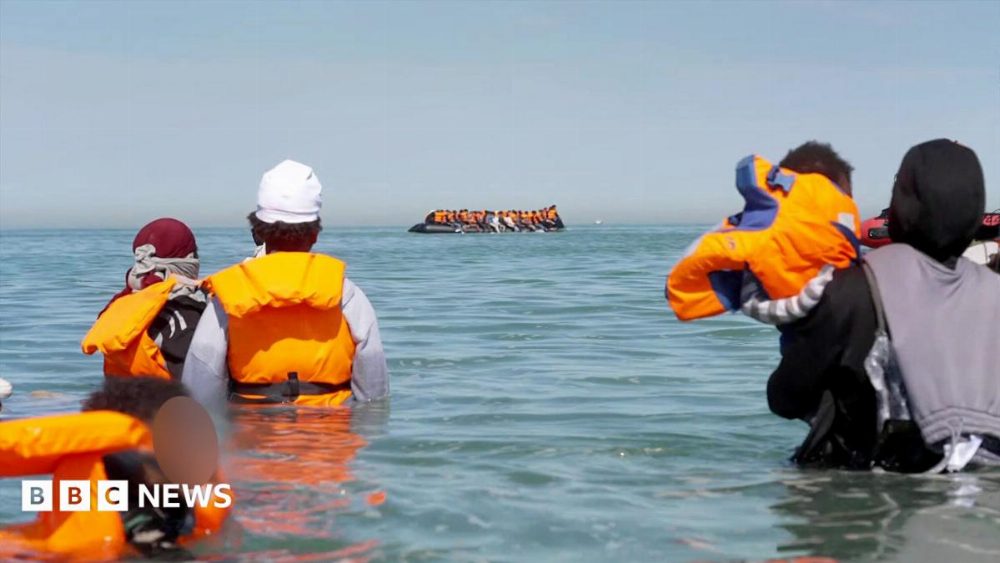
During a recent observation at Gravelines beach, the BBC witnessed a methodical boarding process of migrants, who donned bright orange life jackets and followed instructions without haste. Their so-called "taxi boat" had traveled from even further away, including Belgium, to evade detection. The presence of French police has made nighttime crossings more challenging, prompting smugglers to operate during daylight hours.
As a group of migrants awaited their pick-up, some expressed their hopes of reaching the UK, with many hailing from Afghanistan. After a series of collections, one boat successfully departed with 82 individuals on board, navigating through one of the busiest shipping lanes in the world.
Statistics show that between January and September 2026, a total of 16,513 migrants crossed the English Channel in small boats, representing a 43% decrease compared to the previous year. These crossings have become the most prevalent method for entering the UK illegally since 2020, with 40% of asylum applications during the July 2025 to June 2026 period attributed to small boat arrivals.
While the average number of migrants per boat has risen significantly, overcrowding has increased the dangers associated with these crossings. The United Nations reported at least 84 deaths in 2024 connected to Channel crossings, underscoring the risks involved. Despite these dangers, the UK government remains committed to dismantling the smuggling networks facilitating these crossings.
The situation in Gravelines reflects a stark reality for those left behind, as families dealing with despair and exhaustion contrast sharply with holiday-goers enjoying the beach. Local residents often ignore the plight of migrants, leading to feelings of guilt among those who witness the ongoing struggles of these individuals as they await their next opportunity to cross.
Source: www.bbc.co.uk
#Channel crossings #France #mega-dinghies #migrant smuggling #UK