Trump's Evolving Iran Strategy: A New Phase of Tension or Tactical Maneuvering?
By Editor • September 1, 2026 • 3 min read
As the conflict between the United States and Iran reaches its six-month mark, President Donald Trump has hinted at a potential shift in strategy. Following recent missile exchanges, Trump declared, "We’re going to hit them hard… there will be a response," indicating a readiness for renewed military action against Iran.
The recent escalation began after the U.S. targeted Iranian military sites on Larak Island, claiming to have destroyed rocket launchers linked to the Islamic Revolutionary Guard Corps (IRGC). This prompted Iran to retaliate with missile strikes on U.S. bases in Jordan, though Jordanian forces reported intercepting several of those missiles. The back-and-forth has reignited concerns over an intensification of hostilities.
In a broader context, reports suggest that the U.S. may be transitioning to a “no war, no peace” strategy, wherein it would conduct periodic strikes without engaging in a full-scale war. This approach reflects a shift from earlier military campaigns to a potentially more sustainable, albeit precarious, form of engagement, as both nations grapple with the consequences of their actions.
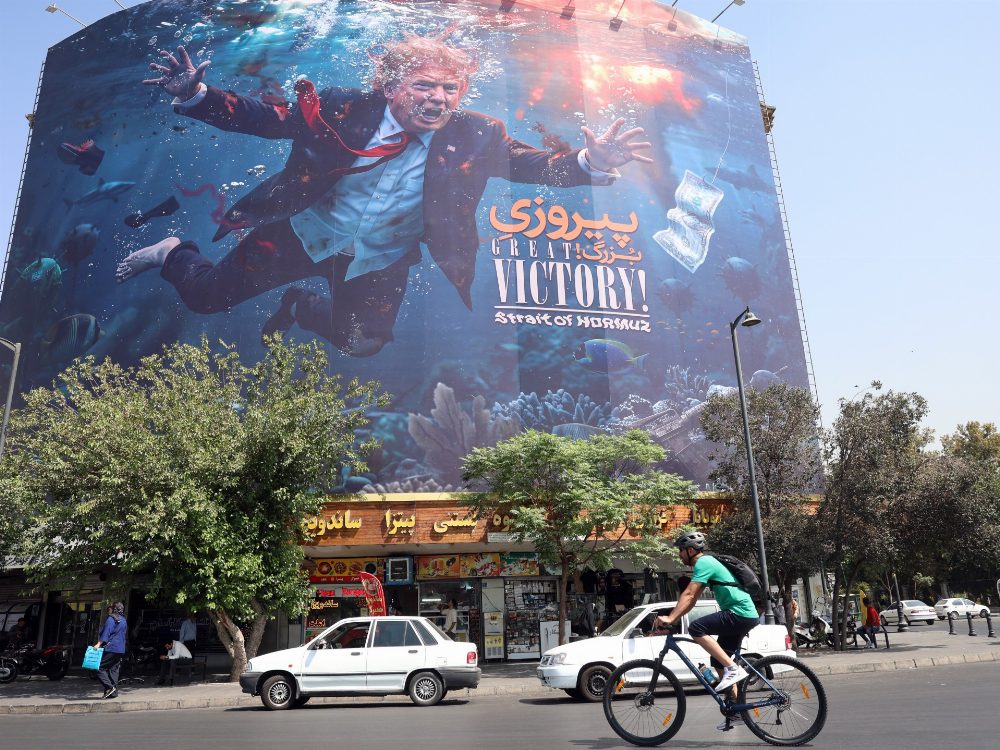
Trump noted during a press briefing that while the fighting has resumed, it does not necessarily signal a return to an all-out war, claiming the Strait of Hormuz remains secure and asserting that Iran's military and economic infrastructure has been significantly weakened. However, analysts caution that the unpredictability of sporadic strikes could lead to further escalation.
Iran's President Masoud Pezeshkian has offered a ceasefire contingent upon the U.S. halting its military actions and adhering to a now-defunct interim deal established in June, which aimed to reduce tensions and facilitate broader discussions. The failure of this agreement, largely due to vague terms and mutual accusations of violations, has left both sides in a precarious position.
The Trump administration’s tactics have evolved considerably since the onset of hostilities, shifting from an initial military offensive to economic sanctions aimed at crippling Iran's financial resources. Treasury Secretary Scott Bessent recently announced intensified economic measures targeting Iranian oil sales and other revenue streams, while dismissing claims that Iran’s economy is stable.
Despite these assertions, Iranian officials, including Central Bank Governor Abdolnaser Hemmati, have countered that their economic situation is not as dire as portrayed by the U.S., insisting they possess sufficient foreign currency reserves.
Experts warn that ongoing military and economic pressures could lead to a drawn-out conflict, with no clear resolution in sight. Trita Parsi of the Quincy Institute highlighted the danger of a strategy characterized by intermittent bombing, stating that it risks entrenching a state of perpetual warfare.
As the seventh month of conflict looms, both Washington and Tehran seem hesitant to escalate to full-scale war but remain committed to defending their interests militarily. Observers suggest that this unsteady balance may be at risk, particularly if neither side is willing to return to negotiations. The U.S. administration appears to be prioritizing military pressure over diplomatic solutions, potentially delaying meaningful dialogue until after the upcoming midterm elections.
Traffic through the strategically vital Strait of Hormuz has plummeted, with instances of maritime navigation reduced to a fraction of pre-war levels. As tensions continue to mount, experts caution that every new military exchange increases the risk of a broader conflict, underlining the urgent need for a return to diplomatic discussions to avert further violence.
Source: www.aljazeera.com