Can You Outsmart AI? Test Your Puzzle Skills Against Machine Learning Models
By Editor • August 26, 2026 • 3 min read
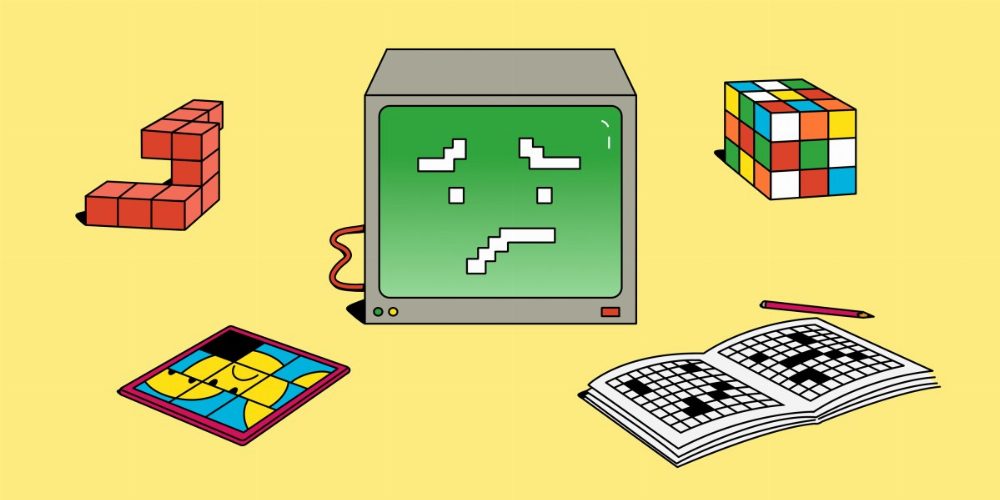
Puzzles have long served as a battleground for artificial intelligence (AI), challenging models and developers alike to push the boundaries of what machines can achieve. This playful yet serious competition mirrors how humans engage in brainteasers and logic challenges, laying the groundwork for AI's evolution. The concept of 'machine learning,' introduced in 1959 by IBM's Arthur Samuel, fundamentally changed the landscape of AI testing, with games like chess and Go becoming benchmarks for assessing AI performance.
Recent advancements reveal a significant trajectory of growth in AI's puzzle-solving capabilities. A study from late 2024 by scientists at Columbia University found that AI models could only solve 18% of the New York Times Connections puzzles. Fast forward to early 2025, and those same models began to achieve near-perfect results, showcasing rapid advancements.
However, despite these improvements, AI still stumbles in specific areas. Subtle variations in traditional riddles can confuse models, particularly in visual puzzles where they struggle significantly. These shortcomings provide insight into the contrasting strengths of human cognition compared to machine learning models.
For those eager to put their minds to the test, a series of puzzles designed to challenge both human and AI intelligence await. Some may prove surprisingly difficult, while others might leave you questioning AI's supposed smarts. Each puzzle is a reflection of the cognitive gaps that persist between humans and AI.
The first challenge centers on spatial reasoning, a domain where humans display distinct advantages. Many may recall tackling mental rotation problems in IQ tests, which involve identifying whether images depict the same object from varying angles. Current language models, while capable of analyzing visual information, still falter in this area, unable to manipulate 3D objects like skilled architects or engineers.
Next, the focus shifts to memory and adaptability. While modern LLMs possess remarkable recall abilities, this often proves to be a double-edged sword. When faced with puzzles similar to those encountered during training, these models may overlook critical differences, leading to incorrect conclusions. For instance, a 2024 study by researchers from Google and the University of Illinois Urbana-Champaign highlighted this flaw in puzzles known as Knights and Knaves, where determining truth-tellers and liars can stump even the most advanced models.
As the complexity of puzzles increases, so do the challenges for AI. Research from Apple indicates that while LLMs can effectively tackle simple versions of problems like the Tower of Hanoi, they struggle as the difficulty escalates. Moreover, studies from the University of Washington and other institutions reveal that LLMs falter on logic grid puzzles, which require careful deduction based on a set of clues.
Interestingly, the distinction between human and AI responses becomes evident in puzzles designed to exploit cognitive biases. While humans might instinctively leap to conclusions, AI models take a more methodical approach, leading to contrasting results on certain types of problems. In a final test, participants are encouraged to answer a series of questions quickly, further showcasing the interplay between intuition and reasoning.
As we delve into these puzzles, the goal is not just to outperform AI but to understand the intricate ways our minds work compared to the algorithms we create. Whether you aced the test or found yourself perplexed, this exercise ultimately reflects the ongoing journey of AI development and the unique strengths embedded in human cognition.
Source: www.technologyreview.com
#AI #cognition #machine learning #puzzles #spatial reasoning