César Pelli's Legacy Lives On Through Lola Mora Museum Completion
By Editor • August 31, 2026 • 2 min read
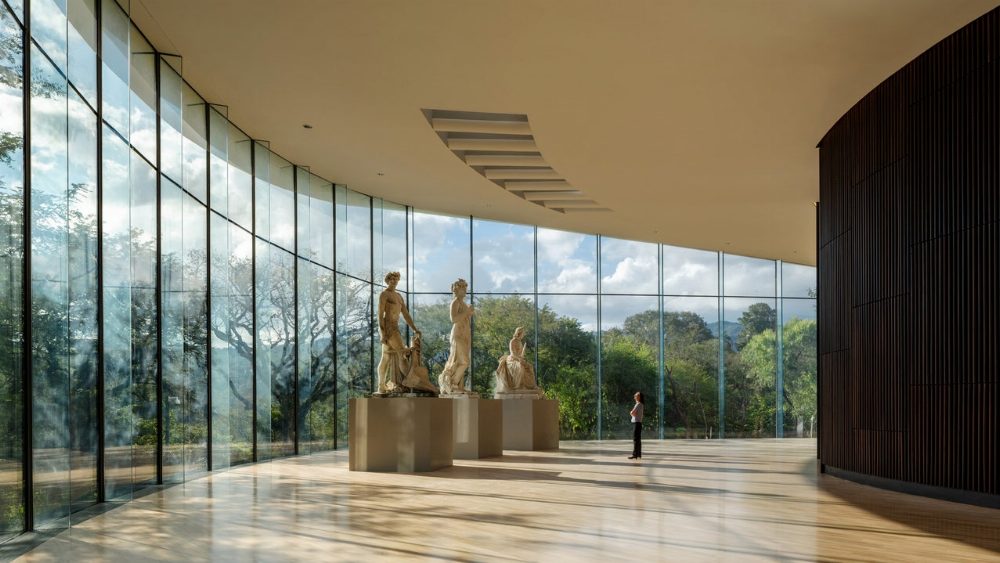
The architectural world bids farewell to César Pelli, renowned for iconic skyscrapers like the Salesforce Tower and Petronas Towers, with the completion of his last design—the Lola Mora Cultural Center in Argentina. This museum, dedicated to the Beaux Arts sculptor Lola Mora, reflects Pelli's deep connection to his roots and his commitment to honoring overlooked artistic contributions.
Located in San Salvador de Jujuy, the museum spans 32,000 square feet and features a unique, leaf-like design that harmonizes with the surrounding forest. The main gallery, encased in glass, offers a panoramic view of the landscape while showcasing Mora's six marble sculptures, originally intended for Argentina's National Congress in 1903 but removed due to political backlash.
Rafael Pelli, César's son and a partner at Pelli Clarke & Partners, expressed the significance of the project, stating, "This is probably the one that had the greatest meaning for him personally." César Pelli worked on this project until his passing in 2019 and deeply resonated with Mora's story—a tale of resilience and talent thwarted by conservative politics. Despite being celebrated in her time, Mora's career was cut short when a new government deemed her art inappropriate.
The sculptures, which embody virtues like liberty and justice, were neglected and left outdoors, succumbing to decay. A decade ago, Jujuy's governor sought to restore them by commissioning the museum, prompting Pelli to bring his vision to life. Designers Susana La Porta Drago and Axel Zemborain took the lead on the project, emphasizing Mora's underappreciated legacy. La Porta Drago noted, "What really intrigued us all very much is how she was capable of bouncing back and reinventing herself."
Initially, Pelli resisted the idea of housing the sculptures in an enclosed space, preferring their display outdoors. However, expert advice regarding their preservation led to a compromise: the gallery was designed to be as open to nature as possible, maintaining a visual connection with the landscape. The curvilinear structure uses glass to frame the sculptures against the backdrop of trees, embodying the essence of both Mora's art and the site’s natural beauty.
Despite his limited day-to-day involvement in his firm during his final years, Pelli's influence is evident throughout the museum's design. Posthumous changes included the addition of a central tower with wind turbines, requested by local authorities to enhance the vertical element of the design. Though the turbines contribute minimal energy, they fit organically into the overall aesthetic.
La Porta Drago remarked on the synergy between Pelli's vision and the addition of their own ideas, highlighting their long-standing collaboration with him. Rafael Pelli affirmed this connection, stating, "There was a really deep understanding of César's beliefs and philosophies," showcasing how the project honors not only Mora's legacy but also César Pelli’s enduring influence in architecture.
Source: www.fastcompany.com
#architecture #Argentina #César Pelli #cultural center #Lola Mora