Liux Aims to Redefine Microcars with Sustainable Focus in Competitive Market
By Editor • August 30, 2026 • 3 min read
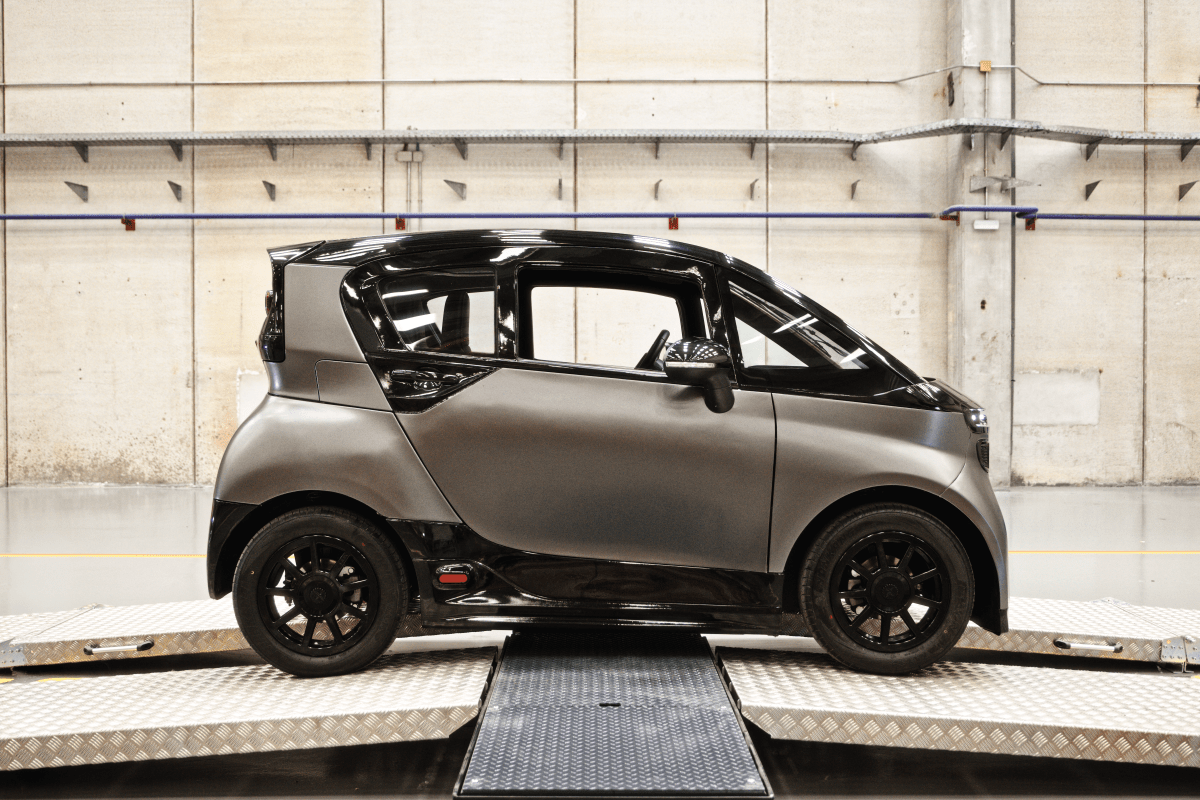
In the evolving landscape of urban mobility, Spanish startup Liux is setting its sights on revolutionizing the microcar segment with a strong emphasis on sustainability. As European cities embrace smaller vehicles, the emergence of affordable Chinese electric vehicles has made competition fiercer than ever. With its upcoming model, the Liux Big, the company aims to carve out a unique niche by prioritizing eco-friendly practices and innovative design.
The Liux Big, despite its playful name suggesting otherwise, is engineered for urban efficiency, even allowing for perpendicular parking. Co-founder Antonio Espinosa de los Monteros remarked, "The idea of a European car does not exist,” highlighting the startup's intent to challenge traditional notions within the automotive industry. Instead of pursuing a fully autonomous supply chain, Liux acknowledges the complexities of sourcing while keeping sustainability at the forefront of its mission.
The Liux Big is designed with several eco-conscious features. Its batteries can be recharged using home electricity, including energy from solar panels. The vehicle's body is constructed from a groundbreaking linen-based biocomposite, designed to be recyclable. Espinosa emphasized, “When you build something, you have to try to preserve the integrity of the material and the components so that a second life is possible.”
Espinosa’s journey into the automotive sector follows his success with Auara, a B Corp that offered eco-friendly bottled water. He joined forces with David Sancho, an engineer with impressive credentials, including the development of a hybrid supercar showcased at the prestigious 24 Hours of Le Mans. This partnership culminated in the creation of Liux, with the duo focusing on electric vehicles that rival traditional gas-powered options.
Their initial prototype, the Animal, showcased recycled and plant-based materials in a five-seater electric SUV, but after analysis, the team pivoted towards a smaller model, increasing their chances of market acceptance. By 2026, the Liux Big will achieve Europe-wide homologation, with sales expected to commence in the first half of next year. The startup has grown to 65 employees and is preparing to scale production across three facilities in Spain, including a compact factory in Azuqueca de Henares.
With a production capacity projected to reach 20,000 vehicles a year by 2030, Liux is already attracting interest. Over 7,500 individuals have signed up on the waiting list for the Liux Big, which is anticipated to serve as a secondary vehicle for many urban families. The startup recognizes the importance of understanding its target demographic, which largely comprises city dwellers aged 55 to 60.
Although microcars may not completely disrupt traditional car ownership, Liux is positioning itself strategically by remaining receptive to partnerships that could enhance its vehicles' capabilities, potentially leading to autonomous features in the future. Despite the competitive pricing landscape, the Liux Big is expected to retail for under €18,000 (approximately $21,000), placing it at the upper end of the microcar market.
Liux is tackling the inherent challenges of size and weight limitations within the microcar category. Unlike competitors, the company is focused on ensuring that the Liux Big feels like a genuine car rather than a lightweight alternative. The team has conducted rigorous tests to demonstrate the vehicle's safety and performance, even in scenarios not mandated by regulatory crash tests.
Initially, the Liux Big will offer two versions with different battery capacities, and a cargo variant is also in the works. With aspirations to expand beyond a single model, the founders are exploring additional product lines. The company has thus far secured €16 million (about $18.5 million) in funding, including support from European sources, to bring the urban version of the Liux Big to market through dealership partnerships across Europe.
Finally, Liux’s showroom experience is designed to reflect its commitment to sustainability and innovation, featuring eco-friendly materials and modern aesthetics. Head of brand Ana Terrado Leyva noted that these design choices are part of Liux’s strategy to distinguish itself from Chinese rivals.
Source: techcrunch.com