NASA's Roman Space Telescope Set to Redefine Cosmic Mapping
By Editor • August 30, 2026 • 1 min read
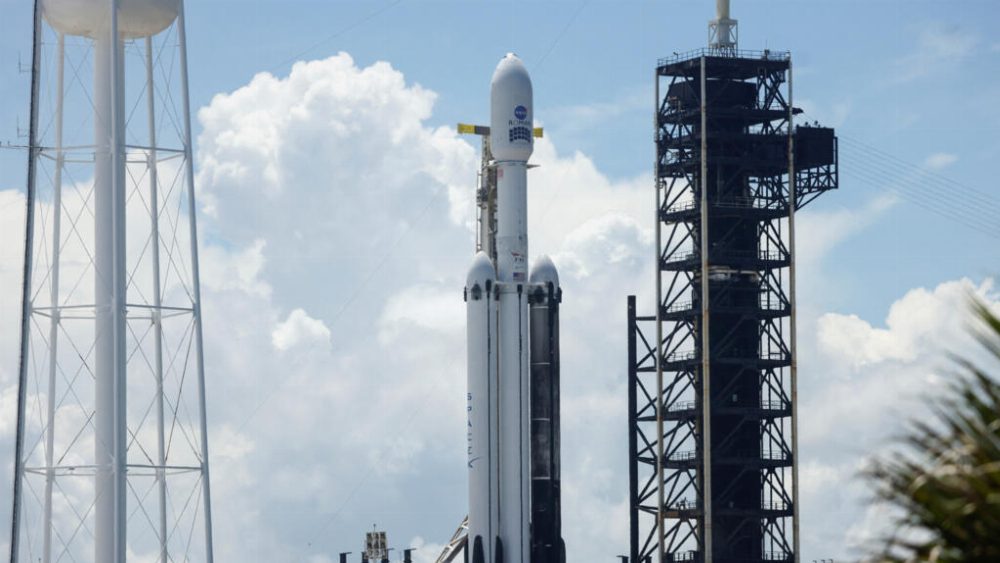
NASA is gearing up for a groundbreaking launch of its Roman Space Telescope this Sunday, aiming to embark on an ambitious mission that could reshape our understanding of the universe. Scheduled to lift off at 7:26 AM ET from Florida aboard a SpaceX Falcon Heavy rocket, this state-of-the-art observatory is taller than a 12-meter building and carries a hefty price tag of over $4 billion.
The telescope is named after Nancy Grace Roman, a pioneering astronomer often referred to as the "Mother of Hubble." With a field of view more than 100 times larger than its predecessor, the Hubble Space Telescope, Roman is set to probe the mysteries of dark matter and dark energy while also searching for exoplanets and supernovae.
NASA administrator Jared Isaacman noted that Roman will produce a "new atlas of the universe," significantly enhancing our celestial knowledge. Positioned 1.5 million kilometers from Earth, it will take approximately 100 days to reach its destination, where it will work alongside other observatories like the James Webb and the Rubin Observatory.
Roman's observations promise to complement existing scientific models, potentially challenging our understanding of the universe's expansion. Julie McEnery, the telescope's senior project scientist, emphasized that recent findings suggest our current models may be flawed, paving the way for Roman to either confirm or refute these theories.
Generating approximately 1.3 terabytes of data daily, the volume of information produced will be staggering, making traditional data-sharing methods impractical. Yet, both scientists and the public will have access to Roman's findings, which are anticipated to reveal insights beyond current predictions and set the stage for future explorations.
Source: www.france24.com
#Dark Matter #exoplanets #NASA #Roman Space Telescope #SpaceX