Architectural Innovation: Designing for Diverse Life Forms
By Editor • August 15, 2026 • 2 min read
Modern architecture is witnessing a transformative shift, where the designs are not solely for human comfort but also for the thriving of various species. This new approach emphasizes integrating living systems into the built environment, allowing architecture to evolve into habitats for both humans and wildlife.
One prominent example is the School of Science and Biodiversity in Boulogne-Billancourt, France, designed by ChartierDalix and completed in 2014. This structure was specifically crafted with ledges, hollows, and crevices, encouraging flora and fauna to inhabit its surfaces. Since its completion, ecological surveys have documented an impressive variety of life, including 207 plant species and 138 animal species, illustrating the building's role as a vibrant ecosystem.
The Buitenverblijf Nest in Norway, created by i29 and Namo Architecture, epitomizes this philosophy on a smaller scale. Resembling a giant birdhouse, it incorporates nesting spaces within its facade and provides a unique retreat for human guests while simultaneously serving as a sanctuary for local wildlife.
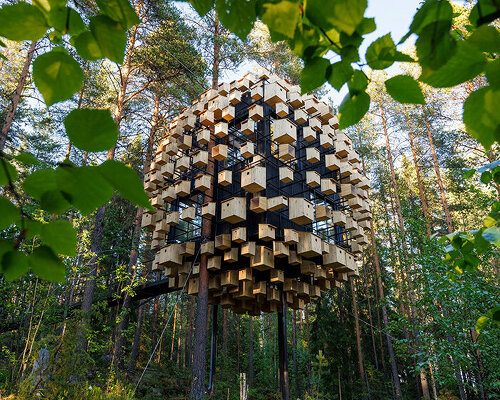
In Sweden, BIG’s Biosphere at Treehotel features a striking design that prioritizes avian life, housing 350 birdhouses within its spherical structure, which allows guests to enjoy nature from a unique perspective. This project illustrates how architecture can seamlessly blend human habitation with the needs of wildlife.
Furthering this concept, Andrés Jaque’s Rambla Climate-House in Spain not only restores local ecosystems but also integrates adaptive water management systems that support a living landscape within its design. Over time, the building has contributed to the resurgence of local wildlife and vegetation.
In Amsterdam, MVRDV’s De Oosterlingen project showcases a residential block that fosters biodiversity through diverse building materials and forms that attract various species, such as bees and bats. This innovative approach redefines community living by considering ecological needs alongside human residential requirements.
Henning Larsen’s Fælledby in Copenhagen takes this integration to an urban scale, preserving significant natural habitats and creating corridors for wildlife movement. This ambitious master plan incorporates nesting sites and green spaces into its design, ensuring that the needs of wildlife are prioritized alongside human habitation.
Across these projects, the incorporation of ecological considerations is reshaping architectural practices. The presence of various species within these buildings not only enhances biodiversity but also enriches the human experience, creating spaces that are alive and interconnected with nature.
Source: www.designboom.com
#architecture #biodiversity #design #sustainable living #wildlife