Sophie McIntosh's 'Benevolent': A Gripping Exploration of Female Resilience in a 1917 Reform School
By Editor • August 23, 2026 • 2 min read
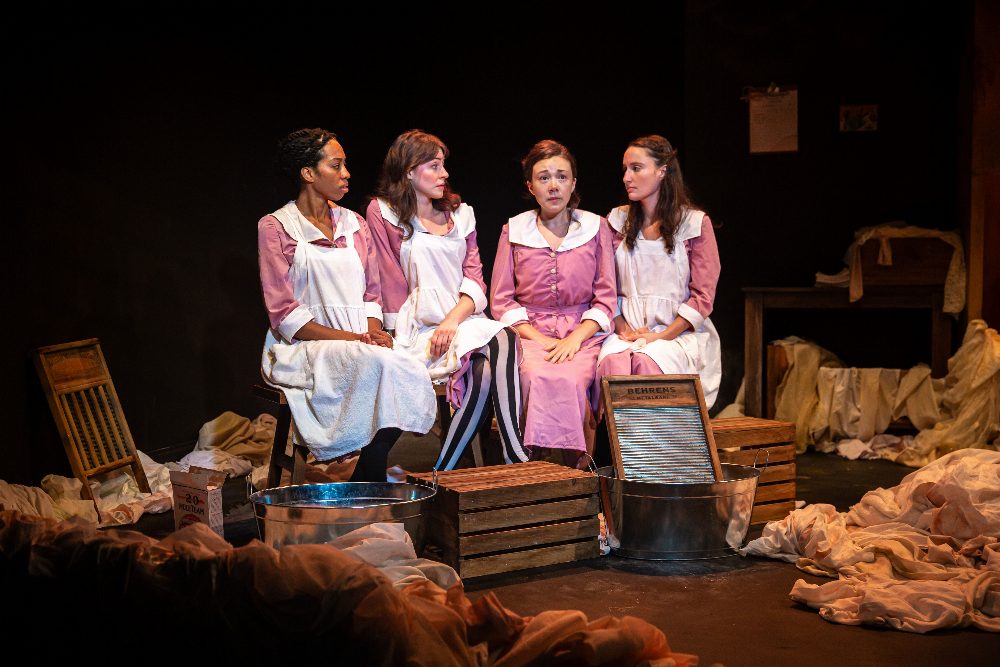
In a powerful portrayal of struggle and camaraderie, playwright Sophie McIntosh unveils her latest work, 'Benevolent,' which immerses audiences in the lives of four young women confined to a reformatory home in 1917 New York. Set in the dingy confines of a basement laundry room, the play explores their challenging realities as they scrub bloodstained sheets while navigating their complicated pasts and the harsh judgments of society.
Directed by McIntosh's trusted collaborator, Nina Goodheart, 'Benevolent' features a diverse cast that includes Livvy Marcus as the pampered Abby, Mia Fowler as the insightful Emma, Chani Reese as the assertive Margaret, and Rachel Ravel as the optimistic Sarah. Each character's journey reflects a different facet of their societal roles, from sex work to panhandling, underscoring the socio-economic struggles faced by women during this era.
McIntosh, who co-founded the Good Apples Collective, is dedicated to creating a supportive artistic environment that prioritizes high-quality storytelling without exploitation. In an interview shortly after the play's opening, she shared insights into her creative process and the historical context that inspired 'Benevolent.' She first encountered the stories of these reform institutions through local historian Cole Thompson, who highlighted the Magdalen Benevolent Society, a precursor to Inwood House, which sought to 'reform' women through questionable methods.
The initial draft of 'Benevolent' underwent significant evolution during its development. McIntosh originally envisioned a larger cast with a subplot involving spiritualism, but she ultimately honed the narrative to focus on the four main characters, emphasizing their shared labor and struggles. A notable shift occurred when McIntosh decided to include racial dynamics, a critical element that had been absent from earlier drafts. Collaborating closely with her cast, especially Fowler, she ensured that race was thoughtfully integrated into the characters' interactions, enhancing the play's depth.
As a period piece, McIntosh faced unique challenges in capturing the language and essence of the early 20th century. Her research involved examining court records, newspaper articles, and personal accounts from women of that time, as well as visits to the Tenement Museum. These explorations not only informed her writing but also connected her to the historical landscape of the story.
One particularly striking scene depicts an onstage medical abortion, a moment that resonates with contemporary issues surrounding women's rights. McIntosh acknowledges the political weight of her work, noting that the constraints of the American theater often complicate the intersection of art and activism. However, she remains committed to highlighting the stories of marginalized voices within her narratives.
'Benevolent' stands as a testament to the resilience of women amidst oppressive societal structures, illustrating the importance of solidarity and understanding among diverse experiences. With its rich character development and poignant themes, McIntosh's play invites viewers to reflect on the historical and ongoing struggles of women for autonomy and respect.
Source: www.vogue.com
#Benevolent #historical drama #Sophie McIntosh #Theater #women's rights