The Turning Point: How Messi's Retirement U-Turn Shaped His Legacy
By Editor • August 31, 2026 • 3 min read
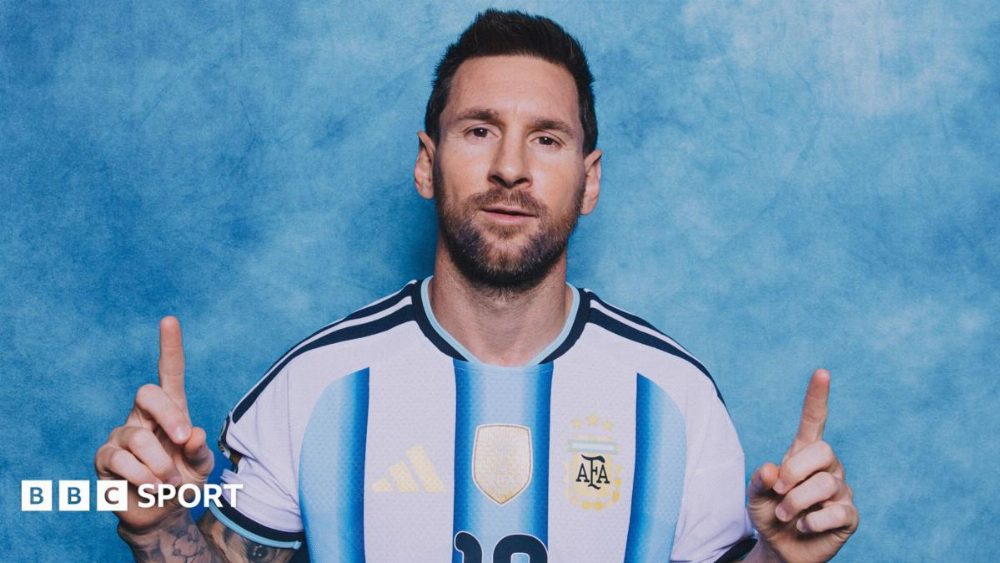
Lionel Messi's journey with the Argentine national team has been nothing short of a rollercoaster ride, culminating in a farewell that marks the end of an era. Recently, Messi announced his retirement from international football, leaving behind a legacy as Argentina's all-time leading scorer and most-capped player, having secured significant titles including the World Cup in Qatar 2022 and Copa America victories in 2021 and 2024.
However, it was a moment of despair in June 2016 that almost ended his illustrious international career prematurely. Just two days after his 29th birthday, Messi, emotionally drained from yet another Copa America final loss to Chile, declared, "For me, the national team is over. I’ve done all I can. It hurts not to be a champion." This sentiment echoed nationwide, as Argentina had suffered defeats in the finals of the World Cup 2014 and three Copa America tournaments (2007, 2015, and 2016).
Messi's retirement announcement sent shockwaves through the football community. Despite his impressive club achievements—like winning eight La Liga titles and four Champions League trophies with Barcelona—his international accolades were limited to an Olympic gold medal in 2008. Critics, including Argentine football legend Diego Maradona, questioned his character and leadership abilities, claiming he lacked the personality to be a true national hero.
In the aftermath of Messi's retirement announcement, a passionate campaign emerged, urging him to reconsider. Teammates and fans alike rallied, with goalkeeper Sergio Romero expressing, "I can’t imagine a national team without Messi." The hashtag #NoTeVayasMessi (Don’t go Messi) trended on social media, and even Argentine President Mauricio Macri reached out to persuade him to stay.
Amidst this uproar, new national team coach Edgardo Bauza made a significant move by flying to Barcelona to meet Messi. The overwhelming support from fans and teammates ultimately convinced him to return on August 12, 2016, as he stated, "I love this country and this shirt too much." This pivotal moment marked the beginning of a remarkable second chapter in his international career.
Despite the mounting pressure, Messi continued to perform at an elite level. Over the next several years, he amassed 70 goals in 94 appearances, leading Argentina to four major trophies. However, it wasn’t until the age of 34 that he finally broke his international trophy drought, winning four championships in just three years.
As he concluded his international career, Messi leaves behind a legacy that has evolved through trials and triumphs. Once criticized for his perceived failures, he is now celebrated as Argentina's greatest player, a status cemented by his achievements on the world stage. The debate over his comparison with Maradona has faded, with Messi's legacy firmly positioned in the pantheon of football greatness.
His final international appearance came during the 2026 World Cup, where he scored eight goals and assisted four times, leading Argentina to the final, only to fall to Spain. With a record of 125 goals in 207 games for his country, Messi’s contributions have been monumental. However, the passing of his father just weeks after this World Cup final adds a layer of poignancy to his decision to retire.
Looking ahead, while Messi’s return to international football seems unlikely, there is speculation that an official farewell match in Argentina could be on the horizon. The passion and love for Messi among fans remain palpable, as they reflect on a career that has forever changed the face of Argentine football.
Source: www.bbc.co.uk
#Argentina #Copa America #Diego Maradona #Lionel Messi #World Cup