Trump's Economic Warfare: Can He Curb Iran's Trade Partners?
By Editor • August 20, 2026 • 3 min read
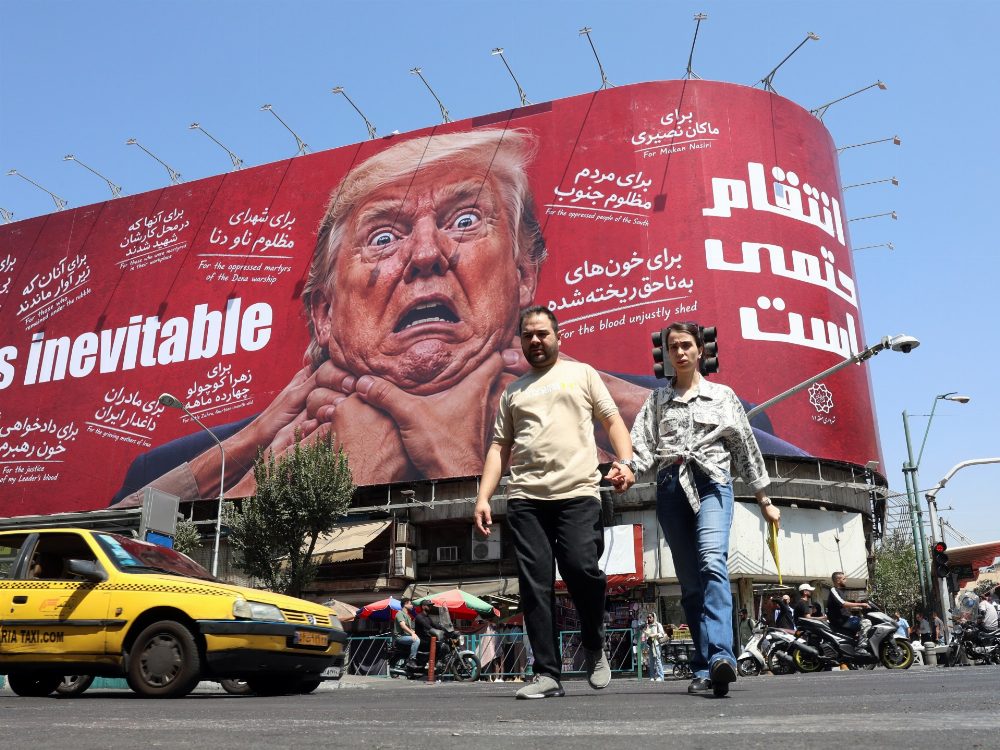
In a bold assertion, U.S. President Donald Trump has unveiled what he claims to be the "most crushing economic operation" against Iran, intensifying the ongoing economic and diplomatic tensions between the two nations. In a post on Truth Social, Trump expressed frustration over Iran's refusal to engage in negotiations, threatening unprecedented economic isolation for the country.
Trump's stern warning extends to any nation that continues to engage in trade with Iran, stating, "ANY country that allows its financial institutions, businesses, airports, or government entities to provide any type of lifeline to Iran will itself face TREMENDOUS Economic Consequences." He emphasized the need for allies to unite against what he calls the Iranian threat, urging an end to activities such as oil smuggling and cash transfers.
In stark contrast, Iranian officials have ridiculed Trump's threats. Iranian Foreign Minister Abbas Araghchi characterized the sanctions as a diversion from U.S. domestic issues, asserting that the American approach amounts to "economic terrorism" that endangers global economies. Meanwhile, Iran's state media dismissed Trump's comments as reiterations of failed strategies, suggesting that Tehran has effectively learned to navigate around U.S. sanctions.
This week, the United Arab Emirates (UAE) escalated matters by imposing an indefinite trade embargo on Iran, citing missile attacks allegedly launched by Iranian forces. Iran, however, has denied these accusations. In a separate development, Tajikistan and Iran have solidified an agreement that will facilitate Iranian oil exports to Dushanbe, suggesting that some nations may be willing to defy U.S. pressures.
Iran's economy, heavily reliant on oil exports, has faced significant challenges due to U.S. sanctions. Before the current conflict, Iran was exporting approximately 1.3 to 1.5 million barrels of crude oil daily, generating substantial revenue. However, recent reports indicate a dramatic decline in oil exports, dropping to below 300,000 barrels per day in May— the lowest output in six years.
The U.S. Treasury has reimposed sanctions on Iranian oil, coinciding with the war efforts. Trump had previously granted waivers on oil shipments already at sea to mitigate the energy crisis resulting from the conflict. However, the expiration of these waivers in August has further constrained Iran's oil revenue. Despite these hurdles, Iranian officials have reported that non-oil exports have reached nearly $15 billion since March, though overall trade has dipped by 24% compared to last year.
Key trading partners for Iran include the UAE, China, India, Turkey, and Germany. However, with the UAE's recent embargo, the landscape of Iran's trade is shifting. Frederic Schneider, a senior fellow at the Middle East Council on Global Affairs, points out that while U.S. sanctions aim to cripple Iranian oil exports, countries like China continue to engage in trade, having even barred its firms from complying with U.S. sanctions.
China is believed to account for a significant portion of Iran's oil trade, with estimates suggesting it purchases between $10 billion and $41 billion in goods annually. Despite sanctions, Iran managed to export considerable amounts of oil to China, utilizing methods to evade U.S. oversight. Similarly, while India ceased oil imports from Iran in 2019, it still engages in trade valued at around $1.6 billion, predominantly in agricultural products.
As the U.S. exerts pressure on Iran's economic ties, the effectiveness of these measures remains debatable. Analysts argue that while sanctions complicate trade with Iran, they have not entirely halted it. The dynamics of global trade and the resilience of Iran's economic relationships may leave Trump’s ambitions for total isolation unfulfilled.
Source: www.aljazeera.com