PISA 2025 Report Reveals Dismal Educational Performance in Latin America, With Argentina at Its Lowest
By Editor • September 8, 2026 • 1 min read
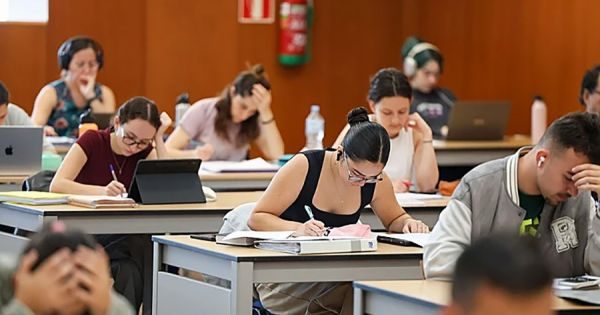
The latest PISA 2025 results, released on Tuesday, reveal a stark decline in educational performance across thirteen Latin American countries, with Argentina recording its worst results since the assessment began in 2006. This comprehensive evaluation, conducted by the Organisation for Economic Co-operation and Development (OECD), involved over 760,000 students from 91 nations, highlighting a troubling trend in educational standards throughout the region.
Argentina's Alarming Decline
Argentina's scores in PISA 2025 are particularly alarming, with the nation achieving just 367 points in mathematics, 389 in reading, and 393 in science. These figures represent drops of 11, 12, and 13 points respectively since the 2022 assessment, marking a significant downward trajectory. Only 24% of Argentine students reached the basic proficiency level in mathematics, a stark contrast to the OECD average of 65%. The gap between high and low-performing students in Argentina has widened, further emphasizing the critical state of education in the country.
Regional Comparisons
In contrast to Argentina, Uruguay emerged as the regional leader, scoring 444.5 points in science, its best performance ever, while also achieving 404.9 in mathematics and 423.2 in reading. Despite this, Uruguay still falls short of the OECD averages, with a significant percentage of students not meeting minimum proficiency in both math and reading. Chile and Brazil also faced challenges, with Chile experiencing declines in reading and mathematics, while Brazil's scores remained relatively stable.
Insights from the OECD
The OECD noted that the declines in countries like Colombia and Costa Rica may be influenced by the expansion of secondary school enrollment, which has included previously marginalized populations. This factor complicates the interpretation of results, as the PISA assessment evaluates only enrolled students, potentially skewing comparisons. Outside of Latin America, the United States also reported troubling results, achieving its lowest scores in reading and mathematics since 2000.
Source: en.mercopress.com