Remarkable Feather Found in Dinosaur Coprolite Offers Insights into Avian Survival
By Editor • September 10, 2026 • 1 min read
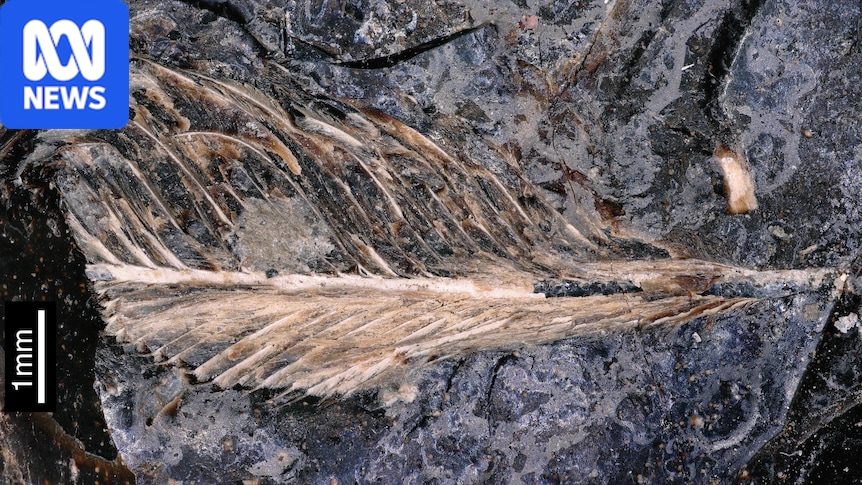
In a groundbreaking discovery, paleontologists have unearthed a remarkably preserved feather within fossilized dinosaur dung, potentially shedding light on the survival of avian ancestors during the mass extinction event that occurred 66 million years ago.
The feather, found in what is known as a coprolite—fossilized feces—could belong to a bird species related to modern birds, offering vital clues about the evolutionary adaptations that allowed some avian groups to endure when many species perished. Lead author Dr. Jingmai O'Connor from the Field Museum in Chicago noted the significance of this find, stating it is the first feather ever recorded in a coprolite.
A Chance Encounter
The feather was discovered by Dr. David DeMar in 2016 while he was searching for fish fossils at the Hell Creek Formation in Montana, an area renowned for its rich fossil record. DeMar recounted, "I was crawling up a rocky outcrop when I stumbled upon a dark, reddish-brown nodule about half the size of a golf ball." The discovery was unexpected, as feathers have never been previously identified in this locality.
Insights into the Past
Micro-CT scanning of the coprolite revealed not only the feather but also tiny fish scales and leg bones from a small bird, indicating a complex food web interaction at play. Although it's uncertain which dinosaur produced the coprolite, researchers speculate it could have come from a Tyrannosaurus rex or a Nanotyrannus, based on its size and contents.
Dr. O'Connor hypothesizes that the presence of fish scales suggests that the bird consumed fish before being eaten by the dinosaur, adding a layer of ecological intrigue to the find. This discovery could help scientists understand the evolutionary traits that allowed certain bird species to survive when others, including many non-avian dinosaurs, did not.
Source: www.abc.net.au