Cancer Crisis Shapes Iowa's Political Landscape Ahead of Midterms
By Editor • August 16, 2026 • 3 min read
The looming midterm elections in Iowa have taken a sharp turn, as candidates from both parties place significant emphasis on the state's alarming cancer rates. With Iowa facing the second-highest cancer incidence in the United States, the issue has transitioned from a health concern to a pivotal topic in political campaigns.
According to the National Institute on Minority Health and Health Disparities, Iowa, alongside Utah and West Virginia, is one of the few states where cancer rates are on the rise. As the November elections approach, candidates are feeling the pressure to address the crisis, which has become a focal point of public concern.
Sarah Green, executive director of the Iowa Environmental Council, notes that while state leadership and the agricultural sector have been reluctant to discuss the issue, there is a growing demand from the public for action and transparency regarding cancer's link to the state's farming practices. "I think the Iowa public is calling and demanding action and conversation and answers," Green remarked, highlighting the urgency of the matter as a campaign issue.
The uptick in cancer rates in Iowa diverged from national trends around 2012. Voters now rank cancer as their top concern, even surpassing the cost of living. This rising awareness has prompted candidates to incorporate health initiatives into their platforms as a way to resonate with constituents.
In the race for Iowa's open US Senate seat, Democrat Josh Turek has drawn on personal experiences, citing his father’s exposure to Agent Orange and his sister's battle with breast cancer. His opponent, Republican Congresswoman Ashley Hinson, has focused her campaign on health policy reforms in Washington.
Moreover, Republican and Democratic candidates vying for four GOP-held House districts are competing on who can better secure federal resources to tackle the cancer crisis in Iowa. In the gubernatorial race, Republican Zach Lahn, buoyed by a surprising primary victory, joins Democratic challenger Rob Sand in proposing extensive plans aimed at reducing cancer rates.
Seth Watkins, a farmer from southwest Iowa, expressed a deep concern over the state’s agricultural policies, suggesting that they contribute to a public health crisis. "The road I live on, I think there’s only one family that has not dealt with some kind of cancer," he shared, underscoring the widespread nature of the issue within the farming community.
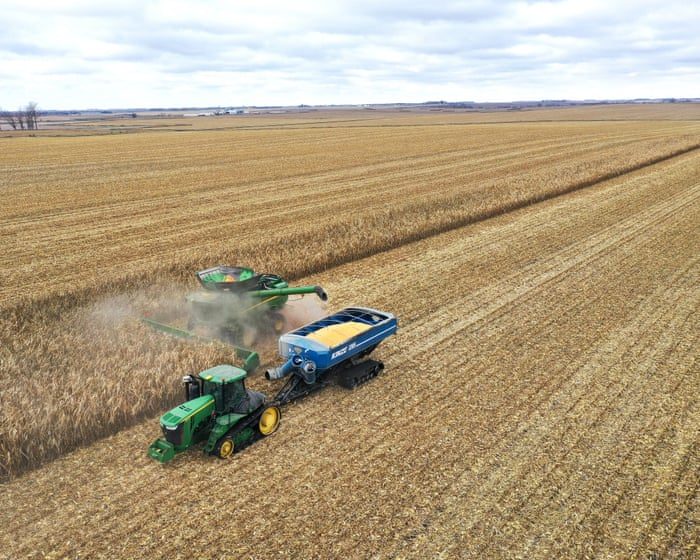
Iowa leads the nation in corn and pork production, yet this agricultural success comes with detrimental environmental effects. The state utilizes more fertilizer than any other, and the increasing number of concentrated animal feeding operations (CAFOs) has raised alarms about runoff pollution, which may be linked to higher cancer rates.
In 2022, Iowa reported approximately 506 cancer cases per 100,000 residents, surpassing the national average of 442. Elevated incidences of non-Hodgkin lymphoma and acute myeloid leukemia have also been noted, with potential connections to glyphosate, a common herbicide used in the state.
The links between agriculture and cancer have emerged as a sensitive topic. Green pointed out that many Iowans feel unsupported in raising their concerns about the agricultural impacts on health. In response, a coalition including the Iowa Environmental Council has conducted listening sessions to better understand the community’s experiences with cancer.
Recent legislative efforts, such as a new law mandating radon mitigation systems in homes, reflect some recognition of health risks, but many believe that these measures are insufficient. The state has also attempted to limit alcohol and tobacco use, while investing in water quality initiatives.
As candidates gear up for the elections, both Lahn and Sand have publicly opposed a recent Supreme Court ruling that complicates legal actions for those alleging cancer from glyphosate exposure. While Lahn’s campaign leans towards incentivizing sustainable farming practices, Sand emphasizes managing manure use and enhancing conservation efforts.
In a climate where health risks are intertwined with agricultural practices, the candidates' positions on cancer will likely influence the upcoming elections, making it a defining issue in Iowa's political arena.
Source: www.theguardian.com