Innovative Amphibious Homes Adapt to Rising Waters
By Editor • August 19, 2026 • 2 min read
As climate change intensifies the threat of flooding in various regions, innovative architectural designs are emerging to redefine the concept of home. These amphibious and floating houses are engineered to adapt seamlessly to rising water levels, offering new solutions for communities vulnerable to flooding.
One notable example is the Formosa project by Baca Architects in Buckinghamshire, UK. This 225-square-meter house is situated in a wet dock on the Thames and behaves like a traditional home in dry conditions. However, when floodwaters rise, the structure can elevate by more than 2.5 meters, thanks to a buoyant concrete base and vertical guideposts that ensure stability. During severe floods in 2019 and 2020, Formosa successfully lifted and settled back down as intended, maintaining a close relationship with its garden and minimizing the cost increase compared to conventional homes.
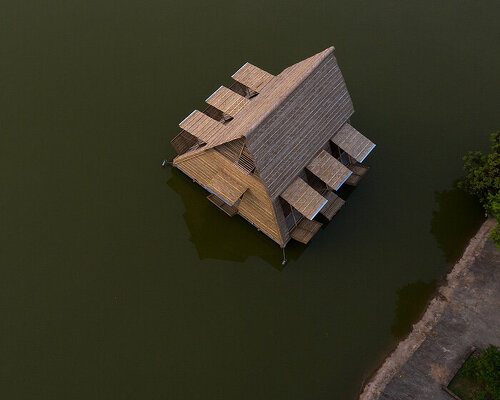
In Vietnam, H&P Architects have introduced the Floating Bamboo House, a prototype designed specifically for riverine communities. Constructed from solid-core bamboo and buoyed by reused plastic drums, this compact home features a broad pitched roof for rainwater collection and solar energy. The design emphasizes communal living, with options for multiple houses to connect through floating play areas, enhancing the potential for community engagement.
Meanwhile, Studio RAP's The Float in the Netherlands presents an artistic take on buoyant living. Completed in 2021, this houseboat features a unique faceted design and is constructed from solid cork and cross-laminated timber. By embracing water as a natural aspect of life rather than a challenge to overcome, it transforms the experience of living on the water into a seamless blend of space and material.
In Ecuador, Natura Futura’s Las Balsas project revives a longstanding tradition of floating habitation along the Babahoyo River. This initiative rehabilitates existing floating homes while integrating them into the community by providing mobile access points and floodable paths. By working with local knowledge and timber construction techniques, the project emphasizes the importance of cultural continuity in the face of modern climate challenges.
MAST has proposed a larger-scale solution with Spoorweghaven in Rotterdam, envisioning over 100 apartments on floating bases within a former dock. This ambitious project aims to create a sustainable neighborhood with connecting bridges and reed beds for water filtration, illustrating a vision where architecture is not just resilient but also relocatable, adapting to changing environmental conditions.
Lastly, i29’s Floating Home at Schoonschip in Amsterdam showcases an innovative design tailored to its water plot. Its striking geometric form opens vertically around a three-story atrium, maximizing usable space while offering picturesque views of the canal. This home is part of a collective of 46 households, reflecting a collaborative approach to living on water, with shared pathways and services enhancing community connectivity.
Source: www.designboom.com
#amphibious homes #architecture #floating homes #flood resilience #sustainable living