Iran Issues Stark Warning to Nations Supporting US Economic Sanctions
By Editor • August 23, 2026 • 3 min read
In a fervent declaration, Iran has signaled its readiness to retaliate against any country that aligns itself with the United States in what it terms the "economic war" against Tehran. This announcement comes in the wake of stalled diplomatic efforts to end the ongoing conflict, as shipping traffic through the critical Strait of Hormuz has significantly dwindled.
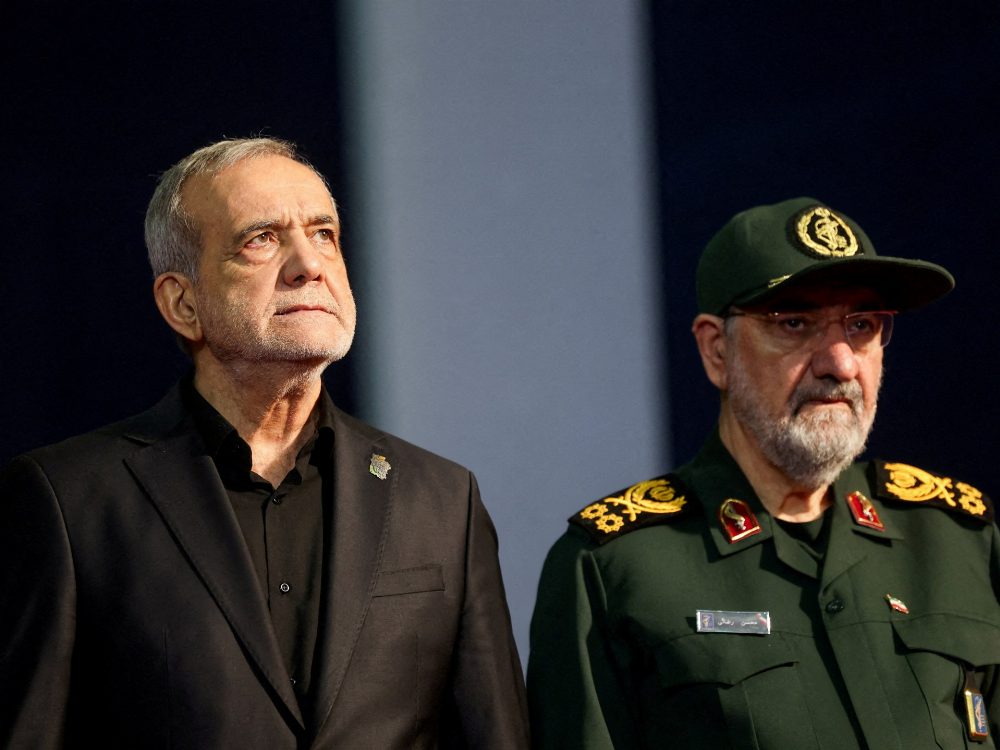
Mohsen Rezaei, secretary of Iran's Supreme National Security Council, conveyed this message on Saturday during an interview with the IRIB state broadcaster. He urged countries worldwide, particularly neighboring nations, to refrain from participating in the US-led sanctions. "Any country that takes part in imposing economic restrictions on us will be regarded as an enemy," he warned, hinting at potential "seismic" retaliation against those who comply.
Rezaei's warning underscored the strategic importance of the Strait of Hormuz, a vital passage for global oil and gas exports. He threatened that if neighboring countries join the economic warfare orchestrated by former President Donald Trump, "not even a drop of oil" would exit the Gulf region, including via alternative routes.
Since the conflict's escalation on February 28, Iran has launched attacks on US military installations and civilian targets, justifying its actions by claiming to be on the brink of acquiring nuclear weapons—a narrative that has been discredited by US intelligence and the UN's IAEA nuclear watchdog.
In a broader context, President Masoud Pezeshkian described Iran as engaged in an all-out economic, military, and security war against the US. He dismissed the US's predictions that Iran would collapse under pressure, stating instead that the nation has emerged more resilient than ever, exhibiting solidarity and cohesion.
Rezaei elaborated on Iran's strategic approach, proposing a three-step plan that begins with dialogue aimed at de-escalation with countries cooperating with the US. "Of course, we will first negotiate with them. We will hold talks and tell them to step aside and distance themselves from the United States," he explained, before warning that failure to comply would lead to targeted actions against those nations' interests.
Analysts suggest that Iran's posture represents a calculated effort to establish deterrence early on, signaling that even preparations for a potential strike could provoke a swift Iranian response. Hamidreza Azizi, a researcher at the Clingendael Institute, noted that Tehran's military strategy appears to be shifting towards preemptive actions and disproportionate retaliation, raising the stakes for any engagement.
As tensions mount, Gulf nations, which are both Iran's neighbors and US allies, find themselves caught in a precarious situation. While they have condemned Iranian aggression, they are also aware of the necessity of maintaining a functional relationship with Iran due to geographical realities. The UAE, having normalized relations with Iran in 2022, recently imposed a trade embargo after accusing Tehran of a missile attack, a claim that Iran vehemently denies.
Saudi Arabia, too, has recalibrated its approach to Iran, normalizing ties under a deal brokered by China this year, suggesting a recognition that dialogue might be more advantageous than perpetual confrontation. Yet, the threat of Iranian retaliation looms large, as the region grapples with the implications of continued conflict.
Ultimately, experts argue that Gulf countries cannot escape their geographical ties to Iran, highlighting the urgent need for stability in an area already fraught with volatility. Simon Mabon, a professor of international relations at Lancaster University, remarked that while some Gulf states might advocate for tougher measures against Iran, the overarching goal remains to prevent significant instability in the region.
Source: www.aljazeera.com
#Gulf nations #Iran #Mohsen Rezaei #Strait of Hormuz #US sanctions