Microbial Resilience: Study Reveals Life Can Survive on the Moon
By Editor • August 19, 2026 • 2 min read
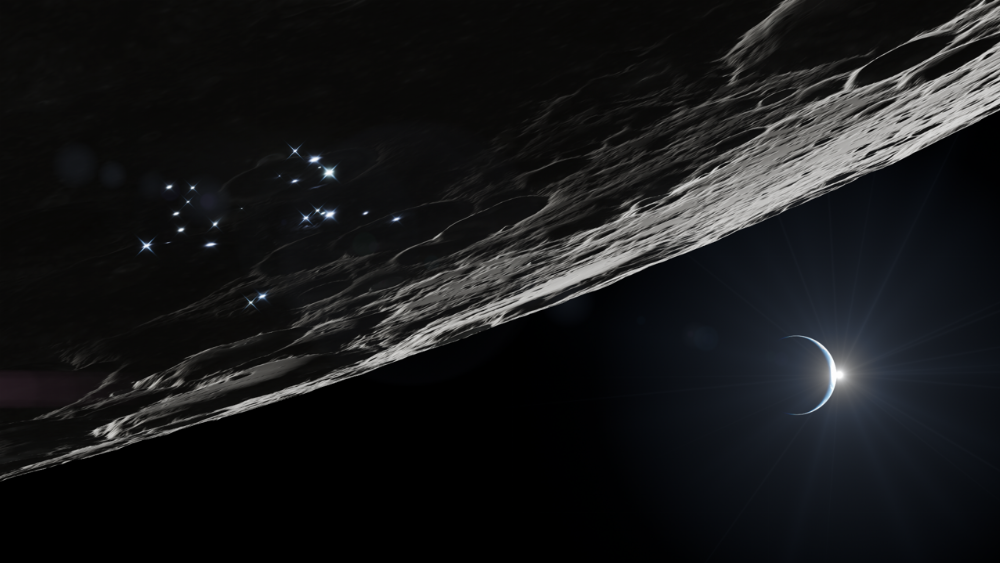
A recent study published in Sciences Advances has revealed that certain microbes from Earth have the potential to survive on the Moon for at least a week, challenging previous assumptions about the lunar environment's hostility. This finding could have significant implications for future human missions to the Moon, particularly as plans develop under the US-led Artemis program and a collaboration between China and Russia, targeting the lunar south pole in the 2030s.
The lunar south pole is particularly appealing to scientists due to its permanently shadowed regions that harbor water ice, a critical resource for sustaining life and supporting mission operations. Unlike much of the Moon, which is exposed to extreme temperatures and radiation, these shaded areas provide a more stable environment, potentially allowing life to endure.
Prabal Saxena, a research space scientist at NASA Goddard Space Flight Center, led the study, which involved analyzing the topography and surface conditions of the lunar poles. The team utilized remote-sensing data from NASA's Lunar Reconnaissance Orbiter and evaluated various bacteria and fungi commonly found on spacecraft. Their findings indicated that certain lunar polar regions might indeed be conducive to microbial survival.
Among the microorganisms tested, the fungus Aspergillus stood out for its remarkable resilience, with models suggesting it could endure up to seven Earth days in these shadowy locales. Saxena noted, "Aspergillus was our champion," highlighting its structural traits that protect it from harsh space conditions, including thick walls and dark pigments.
While the microbes are unlikely to thrive or reproduce on the Moon, their ability to survive raises important considerations for future missions. It underscores the need for careful planning to avoid contamination of the lunar surface and safeguard the health of astronauts. Saxena remarked, "The spatial regions and extent in time of survival was definitely surprising," indicating that previous expectations may have underestimated the adaptability of Earth life.
Additionally, the research hints at the possibility that microbial life could already exist on the Moon, transported there through meteoric exchanges. "We know that the Earth 'talks' to the Moon through particle and meteorite transfer," Saxena explained, further emphasizing the Moon's role as a time capsule of Earth's history and the universe.
Source: www.404media.co