Milky Way's Ancient Collision with 'Kraken' Galaxy Revealed by New Research
By Editor • August 17, 2026 • 2 min read
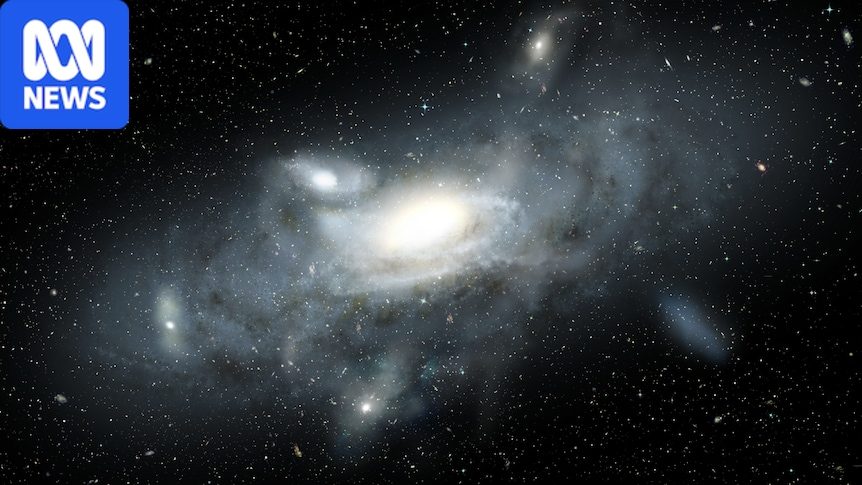
Recent astronomical research has unveiled that the Milky Way galaxy engaged in a significant cosmic collision with another galaxy, dubbed the 'Low-energy-Kraken-Heracles', approximately 12 billion years ago. This merger occurred between the formation of our galaxy and its later encounter with the infamous 'Gaia-Sausage-Enceladus' galaxy, an event believed to have taken place over 10 billion years ago.
The findings, published in the journal Nature Astronomy, were led by Davide Massari from the Italian National Institute for Astrophysics. The existence of this ancient merger has sparked considerable debate among astronomers, but the evidence gathered from the study of globular clusters—tight-knit groups of stars—has provided compelling insights.
Using data from the Hubble Space Telescope, researchers meticulously analyzed the ages and chemical compositions of these globular clusters. Their results revealed a distinct signature indicating that some clusters originated from the Low-energy-Kraken-Heracles galaxy before merging with the Milky Way. Dr. Massari expressed satisfaction at uncovering such a clear correlation in the ages of these clusters.
The Milky Way, which formed about 800 million years after the Big Bang, now spans about 100,000 light years and houses up to 400 billion stars. Most of these stars are believed to have formed between 11 and 7 billion years ago. Interestingly, younger galaxies observed closer to the Big Bang tend to be significantly smaller than the Milky Way.
In addition to the Milky Way's history of mergers, researchers identified a particular globular cluster, NGC 6535, located 22,000 light-years away, which they suggest was likely part of the Low-energy-Kraken-Heracles. This study's methodology, according to Duncan Forbes from Swinburne University, offers more statistical robustness than previous investigations.
The name 'Low-energy-Kraken-Heracles' combines elements from various research groups, where 'Low-energy' refers to the orbits of the clusters, 'Kraken' alludes to the legendary sea monster, and 'Heracles' nods to the Greek hero linked to the Milky Way’s formation. This informal naming convention parallels that of the Gaia-Sausage-Enceladus.
As the Milky Way continues to evolve, it is currently in the process of merging with the Sagittarius Dwarf Spheroidal Galaxy, a slow process that began around 6 billion years ago. Furthermore, a potential future collision with the larger Andromeda galaxy remains a topic of speculation, with astronomers uncertain about its likelihood. Dr. Massari noted that while the study is comprehensive, the possibility of undiscovered past mergers still exists, hinting at the complexity of our galaxy's formation.
Source: www.abc.net.au
#astronomy #galaxy merger #globular clusters #Low-energy-Kraken-Heracles #Milky Way