NASA’s Nancy Grace Roman Telescope Takes Flight to Explore Cosmic Mysteries
By Editor • August 30, 2026 • 2 min read
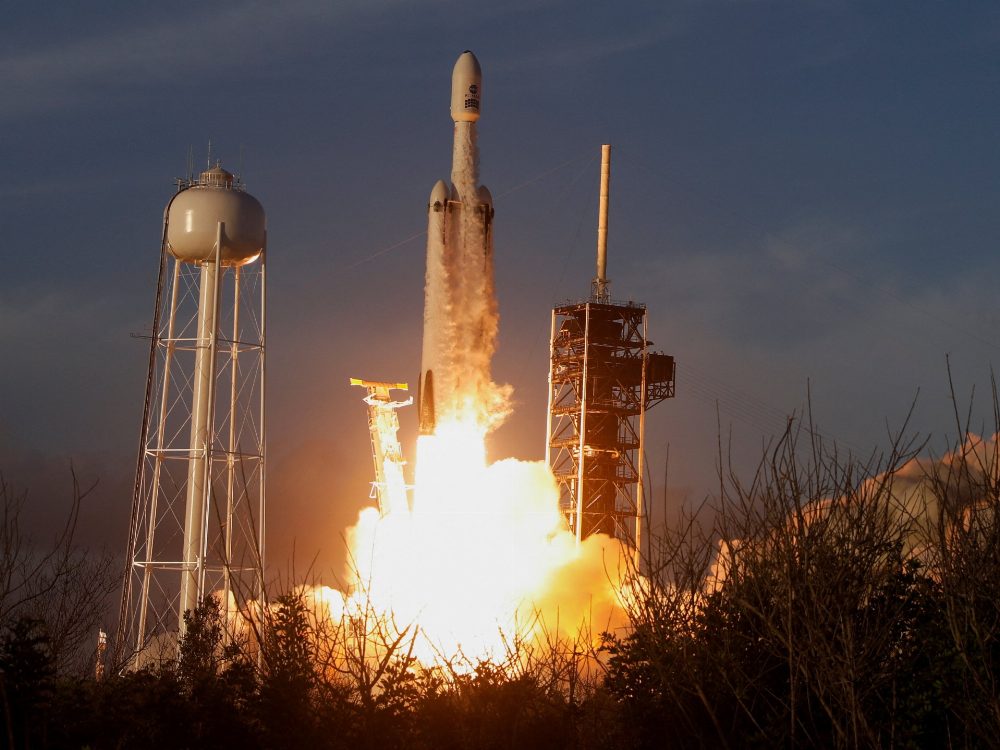
NASA has successfully launched its latest astronomical marvel, the Nancy Grace Roman Space Telescope, on a mission to unravel some of the universe’s most profound enigmas. This ambitious $4.3 billion project aims to explore dark energy, hunt for exoplanets, and investigate the mysteries of cosmic expansion.
The telescope was launched aboard a Falcon Heavy rocket from Kennedy Space Center in Florida early Sunday morning, marking a significant milestone in space exploration. It will travel to Lagrange Point 2, a strategic location about 1.6 million kilometers (1 million miles) from Earth, where it will join the Webb Space Telescope in orbit. The journey to its destination is expected to take over three months.
Designed with the capability to operate for up to ten years, the Roman Telescope is equipped to conduct groundbreaking research across a variety of astrophysical phenomena. NASA’s Science Mission Directorate chief, Nicky Fox, emphasized its potential, stating, “It’s going to find thousands of supernovae, tens of thousands of planets, billions of galaxies, and tens of billions of stars.” This telescope will provide astronomers with a comprehensive statistical analysis of planetary systems beyond our solar system.
The Roman Telescope is set to cover more than 2 billion galaxies in its main survey, which will take over a year to complete. This extensive catalog will be crucial in helping scientists understand the accelerating expansion of the universe, driven by dark energy and dark matter—components that constitute a substantial majority of the cosmos yet remain largely mysterious.
In a touching moment at the launch, ground control erupted in applause as the telescope successfully detached from the rocket, marking a joyful conclusion to a well-coordinated operation. This mission not only represents a leap in technological advancement but also honors the legacy of its namesake, Nancy Grace Roman, NASA’s first chief astronomer.
Ed Weiler, a retired NASA scientist who referred to Roman as the “Mother of Hubble,” expressed that the tribute is long overdue. Roman, who passed away in 2018 at the age of 93, played a pivotal role in advocating for space telescopes, emphasizing the advantages of placing observatories beyond Earth’s atmospheric constraints.
With its field of view over 100 times wider than that of the Hubble Space Telescope, the Roman Telescope will operate as a panoramic observer of the universe. In contrast, the James Webb Space Telescope focuses on deep-space exploration and high-resolution imaging. Together, these telescopes, along with other observatories, will collaborate to enhance our understanding of the universe.
Source: www.aljazeera.com
#dark energy #exoplanets #Falcon Heavy #NASA #Roman Telescope