The Looming Threat of a Two-Front War for NATO
By Editor • August 17, 2026 • 2 min read
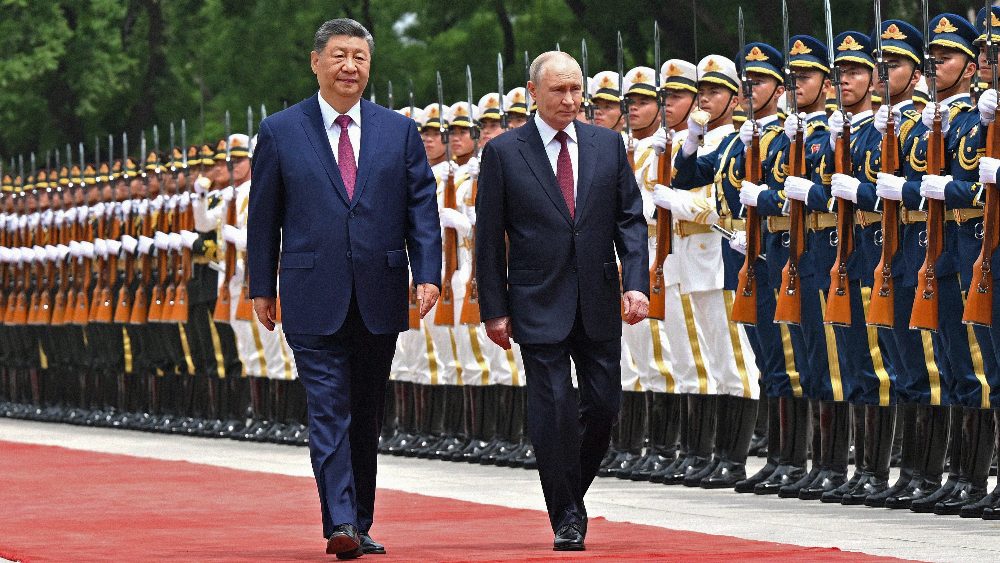
Military strategists within NATO are beginning to confront a nightmarish scenario that could unfold on a global scale: a simultaneous assault from Russia and China. This hypothetical conflict would see Russia targeting NATO members in Eastern Europe while China moves aggressively against Taiwan, demanding a multi-front response from the United States.
General Alexus Grynkewich, NATO's top commander in Europe, highlighted this potential crisis over a year ago, urging European allies to bolster preparations. Despite this warning, many military experts express concern over a lack of readiness and detailed planning to address such a predicament. Florence Gaub, director of research at the NATO Defense College in Rome, candidly stated, "Let’s just say this is the scenario we’re currently not ready for." Yet, NATO has made little progress in bridging this gap in their strategic planning.
While Russia and China have intensified their military collaboration, the West has conducted only a handful of low-profile exercises to explore the ramifications of a joint offensive. Former U.S. Navy Rear Admiral Mark Montgomery noted that the last substantial study on a two-front conflict occurred about 15 years ago and produced sobering results: the U.S. lacked sufficient weaponry and industrial capacity for prolonged warfare on multiple fronts, and the situation has deteriorated since then.
Despite U.S. allies increasing their defense budgets under pressure from the previous administration, the effectiveness of their forces has not significantly improved. On the other hand, both Russia and China have made strides in military readiness. Russia, despite setbacks in Ukraine, has shifted its industrial capacity to support war efforts, while China has amassed a formidable fleet of warships and long-range missiles.
The prospect of a coordinated attack on NATO appears increasingly plausible as the U.S. diverts resources to the Middle East, leaving its military stretched thin. Recent intelligence assessments indicate that Russia may seek to challenge NATO's resolve through cyberattacks or minor incursions, potentially coinciding with a Chinese assault on Taiwan. Admiral Rob Bauer, former chair of NATO’s Military Committee, emphasized the need for a clear strategy to address this worst-case scenario.
Historically, many military threats have been underestimated until they materialized, as seen in the lead-up to World War II and the attack on Pearl Harbor. David Santoro, president of the Pacific Forum, recounted recent tabletop exercises where scenarios involved simultaneous calls for assistance from allies under assault, revealing significant challenges in coordinating a response. Such exercises typically simplify complex military interactions, which may not reflect the chaotic nature of real-world warfare.
Despite the complexity of studying multi-crisis environments, experts like Eric Heginbotham from MIT argue that these scenarios warrant thorough examination. Discussions on the two-front war have gained traction in military circles, yet there remains a pressing need for more comprehensive analysis and strategic preparation.
Source: www.theatlantic.com