Trump's 'Economic D-Day': A New Strategy Against Iran's Resilience
By Editor • August 20, 2026 • 2 min read
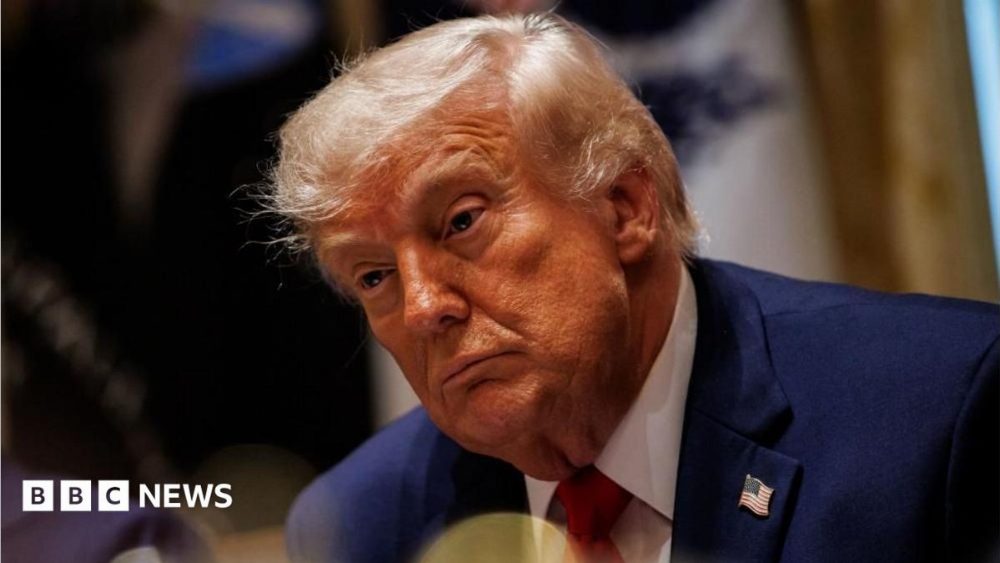
As tensions between the United States and Iran continue to simmer, President Donald Trump is escalating his approach with an initiative he's termed "economic D-Day." This new strategy aims to impose strict economic penalties on any nation that conducts business with Iran, reflecting a shift towards economic warfare in the ongoing conflict.
Despite Trump's assertive declaration nearly six months ago for a swift victory, the situation remains stagnant, with both military and negotiation avenues yielding little progress. The President's intentions were further outlined by Treasury Secretary Scott Bessent, who confirmed that the U.S. is prepared to act against any country that supports Iran's economy. In an interview with CNBC, Bessent stated, "You are either with us or against us," emphasizing the U.S. government's commitment to enforcing sanctions against entities engaging with Iran.
Vice-President JD Vance characterized the new sanctions as a "new phase" in the conflict, arguing that economic pressure is the most effective tool available to the U.S. He noted, "They’re going to try to apply economic pressure to us, but what has been true over the last couple of weeks is that they felt a lot more pressure than we have." Vance's remarks reflect a belief in the efficacy of sustained economic pressure to achieve desired outcomes.
Iran has a long history of enduring sanctions, especially since the U.S. withdrew from the Joint Comprehensive Plan of Action (JCPOA) in 2018. The new economic campaign, dubbed Operation Economic Fury, combines targeted sanctions with a naval blockade aimed at crippling Iranian ports. However, experts like Imran Bayoumi from the Atlantic Council suggest that this move indicates a growing frustration with the lack of results from previous strategies.
Bayoumi pointed out that the U.S. seems to be at an impasse, stating, "This is really a recognition that the US is almost stuck in this war." He questioned the clarity of the overall strategy, noting that the administration has not effectively communicated its objectives.
Michael Parker, a sanctions expert, speculated that the new campaign could expand the economic impact of sanctions by targeting third-party countries that engage with Iran. He explained that the U.S. has previously relied on the threat of secondary sanctions to encourage international compliance. However, Parker warns that Iran has proven adept at circumventing restrictions through unconventional means, such as using shadow vessels for oil transport.
Experts remain divided on the potential effectiveness of these sanctions. Parker highlighted that Iran's ability to evade sanctions heavily relies on the willingness of other nations to comply with U.S. policies. This raises questions about the cooperation of countries like China, which may not align with U.S. interests.
As the U.S. gears up for this economic offensive, the ultimate impact of Trump's "economic D-Day" remains uncertain, particularly in light of Iran's demonstrated resilience and adaptability in the face of sanctions.
Source: www.bbc.co.uk