Israeli Military Expands Operations in Southern Lebanon Amid Ongoing Tensions
By Editor • September 2, 2026 • 2 min read
In a region marked by conflict, the Israeli military's presence in southern Lebanon is growing as officials signal intentions for a long-term foothold. Recent developments have seen Israel solidifying its control over approximately 5% of Lebanese territory, strategically positioned just across the border.
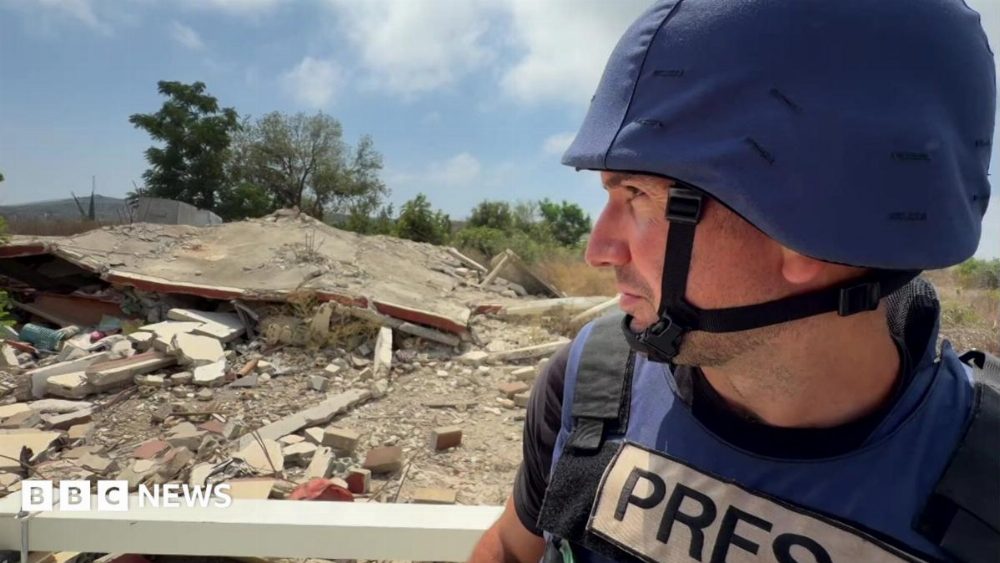
During a recent journey along the Mediterranean highway near Naqoura, the stark contrast of abandoned crops and bombed-out buildings painted a grim picture of life in the area. Lebanese military checkpoints were few and far between, with soldiers stationed behind concrete barriers, while empty roads indicated a stark lack of civilian activity. Just a stone's throw away, Israeli flags marked the entrance to occupied territory, where access is heavily restricted.
This region is predominantly inhabited by Lebanon's Shia Muslim community, which largely supports Hezbollah, the Iranian-backed militia that has faced multiple Israeli invasions over the last two decades. The most recent conflict reignited in March following Hezbollah's rocket attacks in response to the death of Iran's supreme leader, coinciding with escalating tensions between the US and Israel against Iran.
A BBC team recently accompanied a humanitarian mission led by the UN peacekeeping force, Unifil, to assess the situation on the ground. The convoy, composed of Finnish troops, was tasked with escorting civilians from Christian villages that largely escaped the devastation inflicted by Israel during the recent conflict. This marked one of the few permitted entries into the Israeli-controlled zones, where Israeli airstrikes have continued to demolish infrastructure even after a ceasefire was announced in June.
As the convoy traversed the region, it became evident that the Israeli military has established new bases, increasing their presence to nine locations within the occupied territories. Unifil reported observable changes, including the reinforcement of existing positions and the construction of protective infrastructure to counter perceived threats from Hezbollah.
Israeli Defence Minister Israel Katz emphasized the military's commitment to establishing a security zone to shield northern Israeli communities from attacks. However, the Israeli military maintains that their actions are lawful, asserting that the structures destroyed were utilized by Hezbollah for military purposes, despite allegations from human rights groups suggesting otherwise.
The situation remains fluid, with a Lebanese intelligence official noting over 5,000 violations attributed to Israel since the ceasefire. These include airstrikes and incursions that challenge the fragile peace established. The official expressed concern that Israel's actions not only target Hezbollah but also aim to prevent the return of displaced Lebanese citizens to their homes.
While discussions have taken place regarding potential withdrawal conditions, including Hezbollah's disarmament, progress seems stagnant. The Lebanese government faces challenges in negotiating with the militia, which firmly rejects any disarmament discussions without a complete Israeli withdrawal. Observers suggest that the prospect of establishing pilot zones for peace is bleak, leading to fears of a Gaza-like situation emerging in southern Lebanon.
Source: www.bbc.co.uk