Dreams Deferred: Migrants in Ceuta Face Uncertain Futures
By Editor • August 18, 2026 • 3 min read
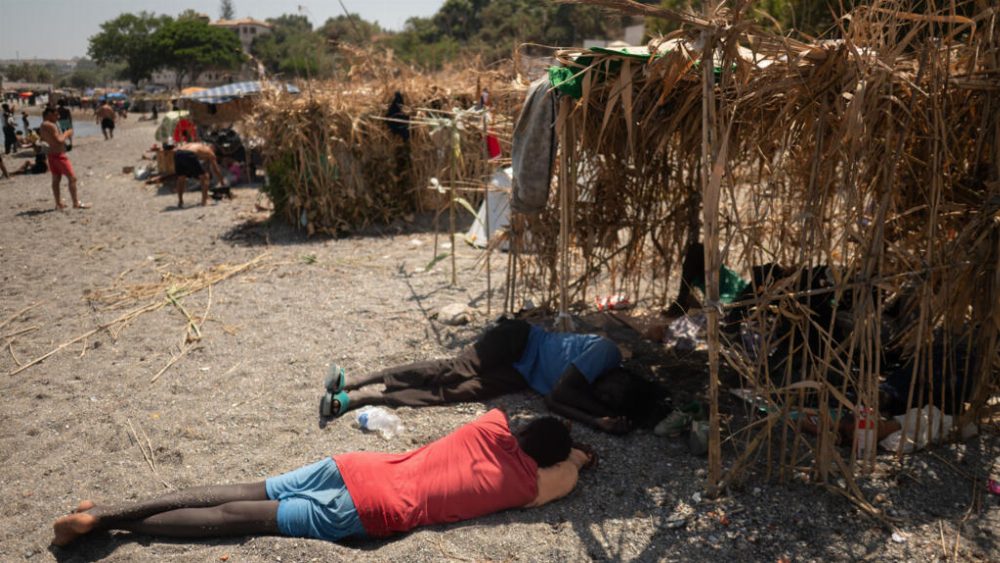
In Ceuta, a Spanish enclave in North Africa, a stark reality unfolds for hundreds of migrants who have chosen to remain after a massive surge earlier this summer. Initially, over 70,000 individuals made the perilous crossing from Morocco, hoping to find a better life in Europe. Now, an estimated 2,000 to 5,000 are left stranded on El Trampolin beach, caught between hope and despair.
The beach, which on the surface seems like a picturesque getaway, is home to makeshift huts crafted from reeds and scraps. Here, the lives of these migrants intersect, with stories from various nations merging into a collective experience of uncertainty. They wash their clothes in the sea and share scant resources, all while police patrol the area, vigilant against potential disturbances.
Among them is Kamara, a 35-year-old Nigerian, who struggles to find food after nearly a day without a meal. Despite the hardships, he refuses to return to Morocco, hoping for a resolution to his situation. “I’m tired of this whole situation, but I’ll stay here until they decide our fate,” he shares, reflecting the sentiment of many in a similar plight.
Another migrant, Mamadou from Senegal, has also turned to Spain for asylum. He expresses frustration at watching peers build lives while he feels trapped in a cycle of suffering. “The problem now isn’t just reaching Europe… but the uncertainty about what comes next,” he states, voicing concerns shared by countless others.
Among the group is Abdelmajid from Yemen, who swam nearly eight kilometers to reach the beach, only to find himself homeless and without support. His plight highlights the harsh conditions faced by many who fled war and chaos at home, clinging to the hope that their asylum applications will provide a pathway to a brighter future.
As the days drag on, the migrants face mounting challenges. Tarek and Ramadan, two Egyptians, recount their harrowing journey through North Africa, revealing the dangers they encountered along the way. “We walk long distances before getting close to the border fences, then turn back, only to try again,” Tarek recalls, describing the trauma that lingers from their experiences.
The situation is particularly dire for young women like Sabah, an 18-year-old Moroccan who is anxious about her future while waiting in line for food. Though she has secured a spot in a temporary shelter, the uncertainty of her next steps weighs heavily on her.
For many, including Rachid, an Algerian who arrived in late July, the dream of a better life in Europe feels increasingly unattainable. He has resorted to eating just one meal a day and has even attempted to return to Morocco, only to be denied entry. “I came looking for a more organised, more advanced, and freer society, but I found myself facing conditions that have led me to consider returning to Algeria,” he explains.
The legal limbo in which these migrants find themselves is compounded by the need for urgent intervention, as noted by migration lawyer Mohamed Sano. The current situation poses significant challenges for Spanish authorities, who are grappling with an unprecedented influx of migrants. “There do not appear to be any immediate solutions to manage it,” he remarks.
As the migrants await decisions on their applications, they confront the harsh realities of life on the fringes of society. With legal processes underway, many cling to the hope that they will one day find stability and the opportunity to pursue their dreams in Europe.
Source: www.france24.com