Escalating Trade War: U.S. Hits Canada with 50% Tariffs, Retaliation Looms
By Editor • August 22, 2026 • 3 min read
In a dramatic escalation of trade tensions, the United States has imposed a staggering 50% tariff on $20 billion worth of Canadian goods. This decision, announced early on Saturday, August 22, 2026, marks a significant shift in the already strained relationship between the two neighboring countries, once regarded as close allies.
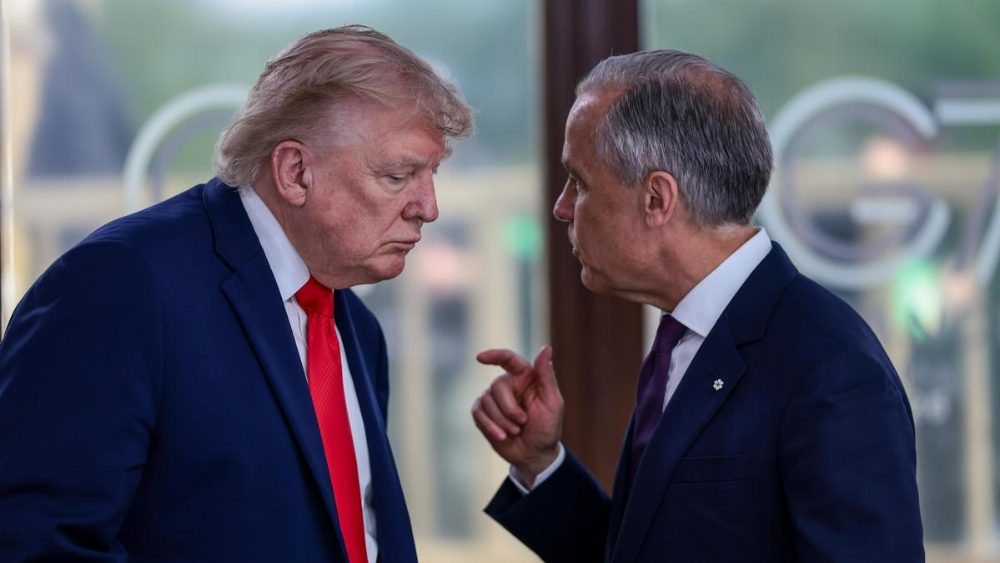
The tariffs, affecting approximately 5% of Canada's annual exports to the U.S., will target a wide range of products, from hockey sticks to tongue depressors. In immediate response, Canadian Prime Minister Mark Carney vowed that Canada would retaliate by matching the tariffs dollar for dollar, stating, "Canada will match those tariffs dollar for dollar to protect our workers and businesses." This tit-for-tat escalation raises serious questions about the future of trade relations and the North American trade pact involving the U.S., Canada, and Mexico.
The recent round of negotiations, which had initially appeared promising, ultimately collapsed as the U.S. and Canada failed to finalize terms. A senior Trump administration official indicated that Canada’s refusal to agree to certain terms led to the breakdown. U.S. Trade Representative Jamieson Greer noted, "Tonight, Canada declined to finalize the trade deal under the terms agreed earlier this week," citing new demands from Canada as a key factor in the impasse.
Prime Minister Carney criticized Washington for last-minute changes to the proposed terms, describing them as "unfair" and "uneconomic." Following this setback, he ordered Canada’s negotiating team to return to Ottawa and announced plans for additional support for Canadian workers and businesses in the coming days.
Trade between the two countries is substantial, with mutual goods and services trades amounting to $880 billion last year. Yet, the political implications of this tariff increase could be even more profound than the economic consequences. As nearly 72% of Canada's goods exports are directed to the U.S., the impact of these tariffs may reverberate across the North American economy.
The tariffs were initially set to take effect at 12:01 a.m. on August 19, 2026, but President Trump extended the deadline in a last-ditch effort to facilitate negotiations. Despite this grace period, the two sides were unable to reach an agreement.
Historically, the U.S. and Canada have navigated trade disputes while maintaining a cooperative relationship. However, Trump’s administration has dramatically shifted this dynamic, with tariffs becoming a central theme of his economic strategy. The president has invoked the Tariff Act of 1930, specifically Section 338, to justify these new tariffs—an unprecedented move that recalls the controversial Smoot-Hawley tariffs from the Great Depression.
Experts suggest that both nations are now under significant pressure to find a resolution. Ryan Majerus, a former U.S. trade official, commented on the situation, stating, "Either side will be under immense pressure in the coming days to still find an off-ramp."
Furthermore, the public sentiment in Canada reflects growing frustration. A petition demanding the expulsion of U.S. Ambassador Pete Hoekstra has garnered nearly 248,000 signatures, accusing him of normalizing the inflammatory rhetoric surrounding Canada's potential annexation. This growing discontent may complicate future negotiations.
As the U.S., Canada, and Mexico continue discussions regarding the U.S.-Mexico-Canada Agreement (USMCA), the ongoing trade conflict casts a shadow over the potential for a fruitful resolution.
Source: www.thehindu.com
#Donald Trump #Prime Minister Mark Carney #tariffs #trade negotiations #US-Canada Trade